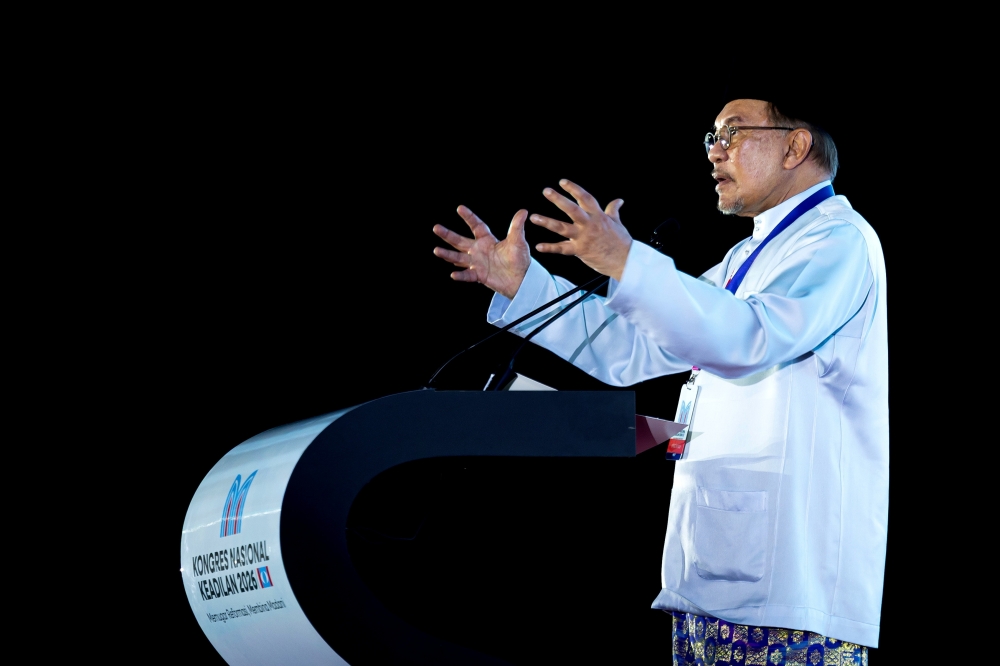
Prime Minister Datuk Seri Anwar Ibrahim has signalled that his administration will roll out a series of consequential policy reforms in the lead-up to Budget 2027, marking a significant shift in governance direction. Speaking in Melaka on August 15, the Prime Minister confirmed that the first of these announcements would be unveiled on Monday, setting the stage for what government officials have described as a recalibration of key economic and administrative priorities.
The timing of these reforms carries considerable weight in Malaysia's political calendar. Coming before the formal presentation of the 2027 Budget, the announcements appear designed to build public momentum and set expectations for the fiscal direction ahead. This sequencing suggests the government intends to use the interim period to establish policy frameworks that will then be reflected in detailed budget allocations and spending priorities.
Anwar's statement underscores a pattern of strategic communication that has become characteristic of his administration. By previewing major changes before formal budget announcements, the government creates space for public dialogue and positions itself as responsive to evolving economic conditions. For Malaysian businesses and investors, these early signals provide an opportunity to anticipate regulatory and fiscal adjustments that may affect their operations and investment decisions.
The nature of the specific changes remained undisclosed during the Melaka announcement, though government insiders have suggested they span multiple policy domains. The breadth of anticipated reforms indicates this is not merely technical fine-tuning but rather a more comprehensive review of government priorities. This approach reflects ongoing debates within Putrajaya about how to balance fiscal sustainability with social obligations and economic growth imperatives.
Regional observers are watching these developments with particular attention, as Malaysia's policy direction influences broader Southeast Asian economic trends. Changes in Malaysian fiscal policy, investment frameworks, or regulatory structures often reverberate across the region, affecting foreign direct investment patterns and regional supply chains. The uncertainty surrounding the precise nature of these reforms means regional business chambers and multinational corporations are monitoring official announcements closely.
The Monday launch date provides a deadline for media and business analysts to prepare their responses. Given Malaysia's interconnected media landscape and the swift spread of policy analysis through digital channels, the initial announcements will likely trigger immediate market reaction and commentary from business associations, think tanks, and political observers. This rapid feedback loop means the government's messaging must be both clear and sufficiently detailed to prevent speculation and misinterpretation.
For ordinary Malaysians, the impact of these changes may vary significantly depending on their economic circumstances and sectors. Workers in industries targeted by reform efforts may face uncertainty, while businesses positioned to benefit from policy shifts may see new opportunities. The government's challenge lies in communicating how these changes ultimately serve broader national interests, even where they create short-term disruption or adjustment costs.
Anwar's public confidence in announcing these changes suggests the government has conducted extensive internal analysis and believes the proposed reforms are defensible on policy grounds. This level of advance notice, rather than surprise announcements, typically indicates the administration feels sufficiently secure politically to weather any opposition that might emerge. It also allows various stakeholder groups time to mobilise their responses and engage constructively with the reform process.
The budget cycle itself has become an increasingly important moment for signalling government intent in Malaysia. Beyond the immediate fiscal allocations, budget season provides a platform for articulating vision and priorities. By front-loading announcements before the formal budget presentation, Anwar's government shapes the narrative framework within which the budget will be discussed and evaluated. This approach mirrors international best practice, where major policy shifts are often previewed before detailed financial allocations are revealed.
Politically, these announcements also serve to remind Malaysians that their government remains active and engaged in addressing national challenges. At a time when opposition voices continue to critique the stability and direction of the current administration, high-profile policy announcements demonstrate decision-making momentum. The government signals that it is not simply managing continuity but actively pursuing its reform agenda.
For the civil service and statutory bodies implementing government policy, the Monday announcements will initiate new workstreams and potentially redirect existing projects. Federal and state-level agencies will need to align their operations with new policy directives, suggesting the next weeks will see significant bureaucratic activity as ministries and departments issue implementation guidelines and adjust operational budgets.
The Road to the 2027 Budget represents a critical juncture for Malaysian economic policy. With global economic uncertainty, domestic inflation concerns, and long-standing structural challenges, the government's reform agenda will be scrutinised both for its economic logic and its political sustainability. Whether these changes succeed in addressing identified problems while maintaining coalition unity and public support will substantially influence Malaysia's economic trajectory and political stability through 2027 and beyond.

