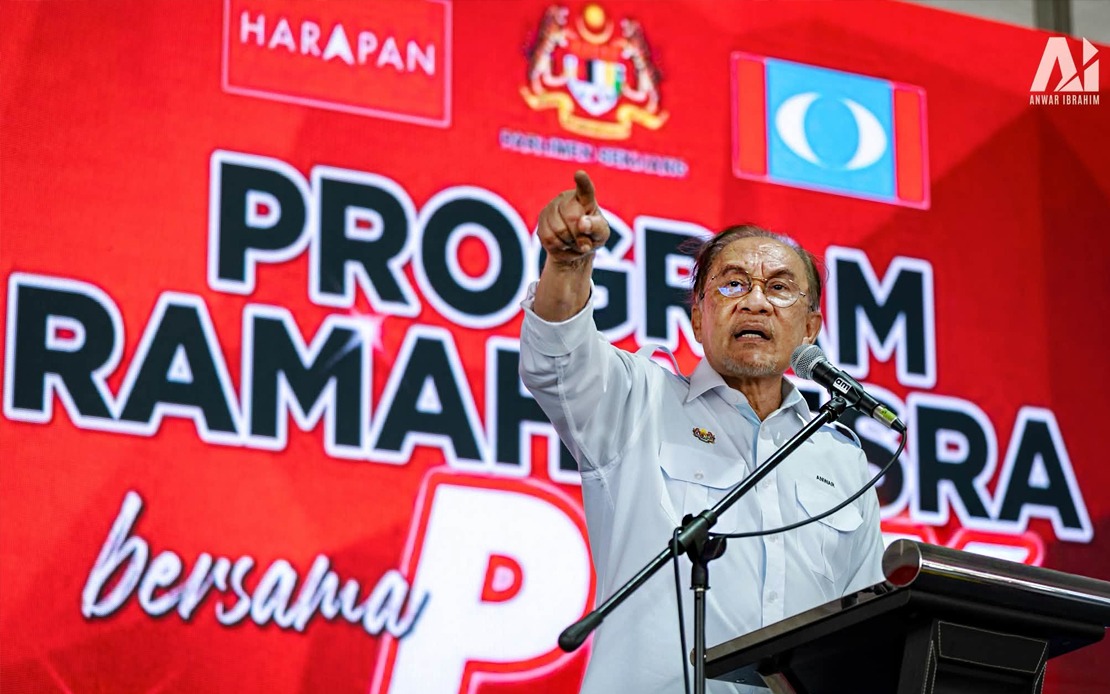
Prime Minister Datuk Seri Anwar Ibrahim has committed to leveraging his upcoming bilateral engagement with China to address the deepening economic crisis facing Malaysia's durian farming community, whose incomes have been devastated by a sharp collapse in market prices triggered by a confluence of peak harvests across Peninsular Malaysia. Speaking at a constituency meet-and-greet in Tangkak's Gambir state seat, Anwar outlined a strategic approach centred on negotiating expanded market access in China, a critical export destination whose consumption patterns significantly influence global durian pricing dynamics.
The timing of the announcement reflects the urgency facing farmers in major durian-producing regions, where simultaneous peak seasons have flooded domestic and international markets with supply, depressing prices precisely when growers depend on seasonal revenue to sustain their operations. By framing the issue as a bilateral trade opportunity rather than merely a sectoral subsidy question, Anwar signalled recognition that the solution requires sustained international market development rather than temporary government handouts. The durian sector represents a significant component of Malaysia's agricultural export value, with China representing an increasingly important destination for premium Malaysian fruit exports seeking premium pricing in a sophisticated consumer market.
Anwar acknowledged the structural complexity of accessing China's rigorous quality and safety standards, which have historically served as both a protective mechanism for domestic Chinese producers and a legitimising filter for international suppliers. His stated willingness to engage directly with Premier Li Qiang demonstrates the political weight attached to the issue at the highest levels of government, signalling that agricultural trade concerns are being integrated into broader strategic bilateral conversations rather than relegated to technical ministerial channels. The diplomatic framing of the problem—emphasizing personal relationships and economic opportunity rather than crisis management—reflects a calculated approach to maintaining Malaysia's standing with Beijing while advancing farmer interests.
The interconnection between Malaysia's bilateral relationships and sectoral economic performance highlights how agricultural competitiveness increasingly depends on geopolitical positioning and diplomatic capital. China's purchasing power and consumer preferences wield outsized influence on global durian markets, making access to that market a matter of national economic importance extending well beyond individual farm viability. Anwar's commitment to raise the matter during his China visit establishes an accountability mechanism while also potentially creating diplomatic leverage if price stabilisation requires Chinese consumer behaviour adjustments or import quota modifications that benefit Malaysian suppliers relative to regional competitors from Thailand and Vietnam.
Simultaneously addressing fuel price pressures, Anwar reaffirmed the government's commitment to subsidising petrol and diesel despite mounting global oil price volatility triggered by geopolitical tensions in the Middle East. He articulated the government's position that market economics would ordinarily dictate fuel price increases given supply disruptions and regional uncertainty, yet Malaysia's policy framework prioritises consumer protection through sustained subsidy mechanisms. Current retail prices stand at RM3.37 per litre for RON95 and RM3.97 per litre for diesel, but these figures mask substantial government expenditure, with citizens accessing petrol at RM1.99 per litre and diesel at RM2.10 per litre through the BUDI MADANI initiative—a mechanism representing ongoing fiscal commitments that compete with resources potentially available for agricultural support programs.
Anwar's assertion that Malaysia maintains the world's lowest fuel prices reflects a comparative positioning strategy designed to highlight government achievement in shielding constituents from global economic headwinds. This rhetorical emphasis on subsidised fuel serves multiple political purposes: it demonstrates tangible government intervention in cost-of-living concerns, distinguishes Malaysia from peers facing inflation pressures, and frames the administration's economic management as prioritising ordinary citizens over market orthodoxy. The juxtaposition of fuel subsidy discussions with agricultural sector challenges illustrates the broader policy tension between maintaining consumer price stability through government expenditure and addressing production-sector profitability concerns that require market development rather than price supports.
The durian pricing crisis exemplifies structural vulnerabilities in Malaysia's agricultural export economy, where production decisions made by individual farmers responding to previous season's prices create periodic oversupply conditions that depress returns precisely when capital constraints prevent farmers from absorbing losses or investing in diversification. Unlike manufactured exports that can respond relatively quickly to demand signals through production adjustments, tree crop production involves multi-year gestation periods and high sunk costs, creating asymmetric adjustment dynamics that leave farmers vulnerable to price volatility. Government interventions addressing these structural challenges require either market development strategies that durably expand demand, or income support mechanisms that buffer farmers during downturns—both approaches carry different fiscal implications and political trade-offs that shape policy formulation.
The involvement of Deputy Natural Resources and Environmental Sustainability Minister Syed Ibrahim Syed Noh and Pakatan Harapan election machinery at the Tangkak event underscores the political dimensions of agricultural policy, where sectoral challenges intersect with electoral considerations and constituency representation. Johor's significance as an agricultural heartland creates particular political sensitivity around farmer livelihoods, with electoral outcomes potentially influenced by perceptions of government responsiveness to production-sector distress. Anwar's public commitment at a grassroots political event creates measurable expectations for subsequent diplomatic outcomes, establishing a political accountability standard that extends beyond routine bilateral conversations into constituent-facing government performance metrics.
Navigating the durian market challenge requires sustained engagement across multiple dimensions: technical negotiations regarding Chinese import standards and quota arrangements, domestic supply management to prevent future simultaneous peak season crises, and potentially domestic price support mechanisms for farmers unable to absorb current market returns. The diplomatic approach privileging China market access reflects an assessment that demand-side solutions through expanded export opportunities offer more sustainable and economically efficient outcomes than supply-side interventions through artificial price supports. This strategy implicitly assumes that Chinese demand can absorb increased Malaysian supply at prices enabling farmer profitability, a calculation dependent on evolving Chinese consumer preferences for durian and the competitive positioning of Malaysian producers relative to regional alternatives.
Looking forward, the outcome of Anwar's planned conversations with Premier Li Qiang will substantially influence both durian sector prospects and broader perceptions of Malaysia's ability to leverage diplomatic relationships for sectoral economic benefit. Success in meaningfully expanding Chinese market access would validate the bilateral engagement strategy and establish a diplomatic precedent for addressing similar sectoral export challenges through high-level relationship leveraging. Conversely, limited outcomes might necessitate complementary domestic policy approaches including supply coordination mechanisms or targeted income support for affected farmers. The convergence of diplomatic maneuvering, agricultural economics, and political accountability creates a complex policy landscape where technological solutions, market development, and bilateral engagement intersect to determine farmer welfare outcomes.

