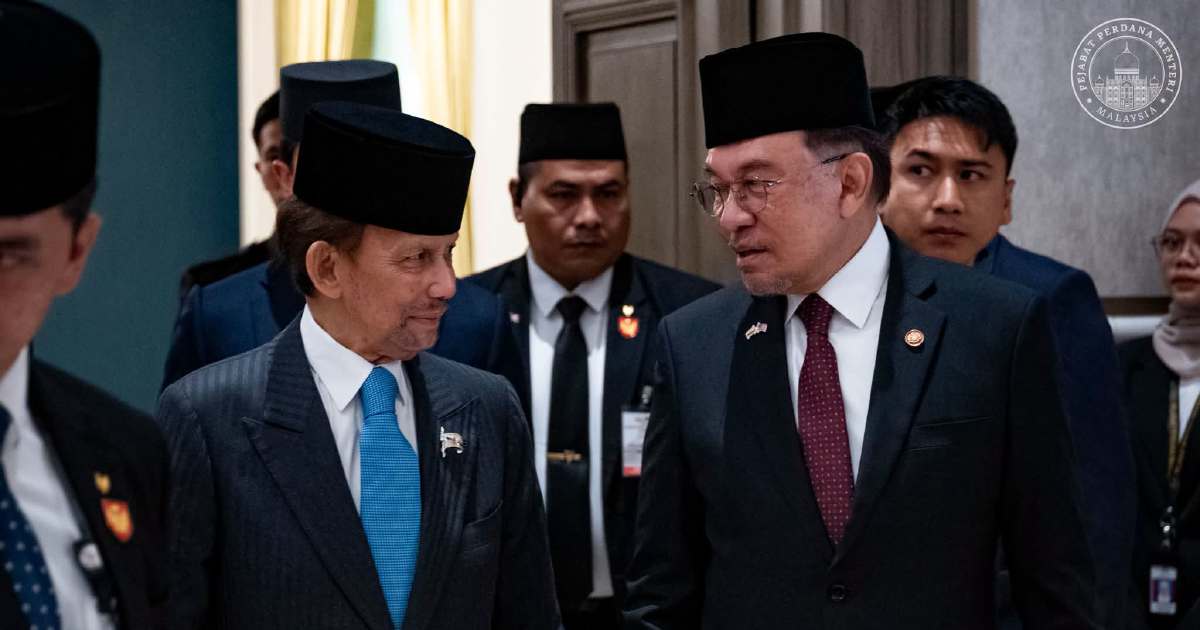
Prime Minister Datuk Seri Anwar Ibrahim is set to undertake a diplomatic visit to Brunei Darussalam next week, where he will hold talks with Sultan Hassanal Bolkiah in Bandar Seri Begawan. The meeting marks the 27th iteration of the Annual Leaders' Consultation, a cornerstone institutional arrangement that has facilitated regular dialogue between Malaysia and Brunei since its inception decades ago.
The consultation format represents one of the most enduring bilateral mechanisms in Southeast Asia, underscoring the depth of Malaysia-Brunei relations that extend far beyond formal state visits. These gatherings provide leaders with a structured platform to address matters of mutual concern, ranging from trade and investment to security cooperation and cultural exchanges, away from the formality of multilateral forums.
Malaysia and Brunei share extensive historical and cultural ties, with the sultanate having once formed part of broader Malay kingdoms before colonial administration carved out distinct political entities. Today, the two nations maintain regular interaction through multiple channels, and this annual consultation serves as a bellwether for the health of bilateral relationships.
Over the years, these consultations have addressed critical regional issues including maritime boundary demarcation, cross-border movement of citizens, labour mobility, and environmental management in shared ecosystems. The meetings also provide a venue for discussing ASEAN matters and coordinating positions on regional security concerns, reflecting both nations' commitment to maintaining stability in Southeast Asia.
The timing of this visit comes as Malaysia continues to navigate complex regional dynamics, particularly concerning territorial claims in the South China Sea and competition over maritime resources. Brunei, as a smaller coastal nation with its own maritime interests, shares several strategic concerns with Malaysia, making bilateral consultation particularly valuable for aligning perspectives on regional challenges.
Economic cooperation forms another pillar of the bilateral relationship that typically features prominently in these discussions. Both nations have explored deepening trade linkages, though the disparity in economic size means discussions often focus on niche areas where complementarities exist, such as energy cooperation and investment in specific sectors. The consultation provides an opportunity to review progress on previous economic agreements and explore new avenues for partnership.
These high-level visits also carry symbolic importance in Malaysian-Brunei relations, demonstrating sustained political commitment despite occasional tensions that naturally arise between neighbouring states. By maintaining this tradition of annual consultations at the leaders' level, both countries signal to regional observers that they value stable, predictable ties and are committed to resolving issues through dialogue rather than confrontation.
From a broader Southeast Asian perspective, robust Malaysia-Brunei cooperation contributes to regional cohesion within ASEAN. Both nations are active participants in regional mechanisms and maintain stakes in ensuring the Association remains united on key regional questions. The bilateral relationship thus has implications extending beyond the two countries themselves, influencing ASEAN's collective positions on various matters.
The consultation framework also allows leaders to engage in substantive discussions on matters that might be politically sensitive or require confidential deliberation away from public scrutiny. This privacy enables frank exchanges that can sometimes be difficult to achieve in larger multilateral settings or when cameras and media presence are pervasive.
Looking forward, the 27th consultation is likely to address several contemporary issues, including recovery efforts following pandemic disruptions, climate change adaptation in the region, and the implications of great power competition for Southeast Asian nations. Both Malaysia and Brunei, while of different scales, face similar pressures and opportunities in the current regional and global environment.
The continuation of this annual tradition also reflects institutional resilience in Malaysia-Brunei relations. Despite changes in leadership, shifting political circumstances, and evolving regional dynamics, the commitment to holding these consultations has remained consistent, suggesting deep-rooted appreciation for the dialogue mechanism among both nations' leadership echelons.
Anwar Ibrahim's visit will be closely monitored by regional observers for any announcements regarding expanded cooperation or new initiatives between the two countries. Such consultations frequently yield bilateral statements outlining areas of agreement and mapped pathways for future collaboration, which then guide implementation by relevant government agencies and private sectors.

