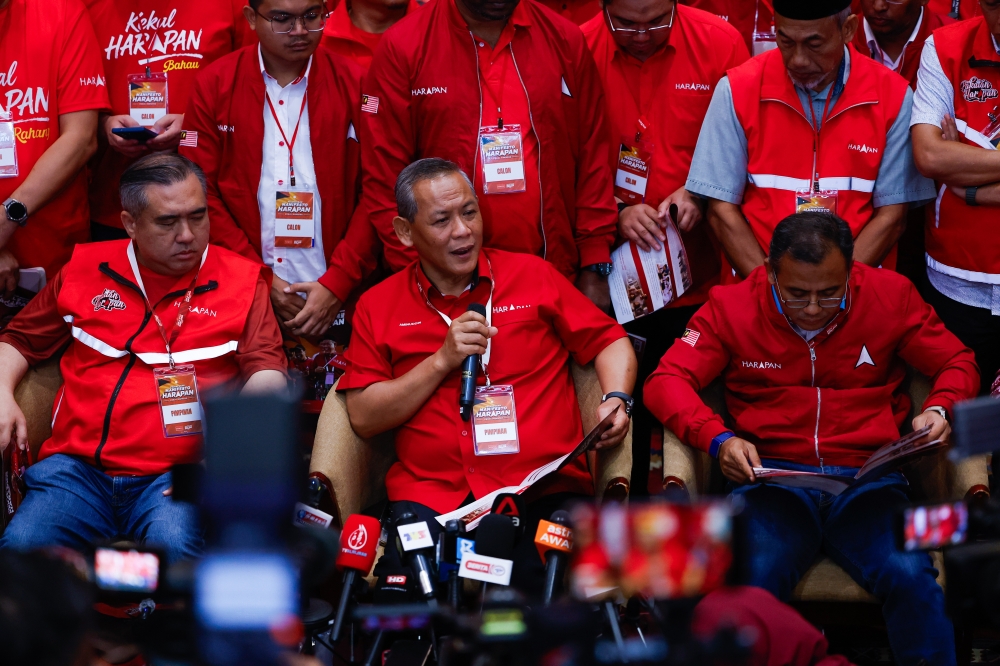
Prime Minister Datuk Seri Anwar Ibrahim is expected to join Pakatan Harapan's campaign push in Negeri Sembilan on Wednesday, according to Selangor Menteri Besar Aminuddin Harun, signalling the federal leadership's commitment to securing victory in the upcoming state elections. The confirmation reflects Pakatan's strategy of deploying senior party figures to key battlegrounds as the coalition seeks to consolidate its political position across Malaysia's states.
Aminuddin's announcement underscores the significance Pakatan places on Negeri Sembilan in its broader electoral calculus. As chairman of the coalition, Anwar's direct involvement on the campaign trail carries symbolic weight and demonstrates the party's determination to retain or expand its foothold in the state. The decision to have the Prime Minister personally engage with voters and party machinery suggests Negeri Sembilan remains contested territory where every advantage matters.
For Malaysian political observers, the timing of such high-level interventions typically indicates either strong competition from opposition parties or an opportunity Pakatan believes it can exploit. Negeri Sembilan, a state with significant economic importance and a diverse electorate spanning urban and rural communities, has long been a swing battleground. The presence of the Prime Minister serves both to energise party workers and to command media attention, amplifying the coalition's campaign message across the state.
Anwar's participation in the Negeri Sembilan campaign is part of a broader pattern in Malaysian politics where federal leaders increasingly involve themselves in state-level contests. This centralisation of campaign efforts reflects the interconnected nature of Malaysian federalism, where state governments influence the balance of power in Parliament and vice versa. For Pakatan, maintaining or strengthening state positions translates directly into leverage at the federal level.
The coalition has faced varying degrees of success across different states since the 2018 general election transformation in Malaysian politics. Negeri Sembilan represents a test of whether Pakatan can maintain momentum and attract voters in contests where local issues intersect with national sentiments. The state's economy, driven by manufacturing and commerce, means voters are responsive to economic management narratives—an area where Anwar has sought to build credibility through his finance ministry tenure and economic policy announcements.
Aminuddin's role as a prominent Selangor leader highlights the interconnectedness of state-level Pakatan structures. Mentri Besar across PH-governed states often campaign for sister states, creating a network effect that strengthens the coalition's campaign infrastructure. This cross-state mobilisation also allows leaders to build national profiles and demonstrate their commitment to the broader coalition agenda beyond their own territories.
For Southeast Asian analysts watching Malaysian politics, the sophistication of Pakatan's campaign machinery and its ability to deploy leadership resources strategically reflects lessons learned from previous electoral contests. The coalition's organisational capacity has evolved significantly since 2018, and state campaigns now benefit from refined targeting strategies and resource allocation based on data-driven decision-making.
The Negeri Sembilan campaign also provides a barometer for assessing public sentiment ahead of any anticipated general election. State polls serve as mid-term assessments of voter confidence in governing coalitions, and Anwar's personal engagement suggests Pakatan views this particular contest as consequential for broader political narratives. How voters respond to the Prime Minister's campaign message—whether focused on economic delivery, institutional reform, or factional unity—will offer insights into whether the coalition's political brand has solidified or eroded since its 2022 transformation.
Opposition parties will likely recognise the challenge posed by Anwar's direct involvement and potentially escalate their own campaign efforts in response. In Malaysia's competitive political environment, the presence of a sitting Prime Minister can shift dynamics meaningfully, as it elevates the stakes and attracts donor support, volunteer engagement, and media amplification beyond what local campaigns alone might generate.
The Wednesday campaign visit represents a moment where national political calculus meets grassroots electoral competition. For Negeri Sembilan voters, it presents an opportunity to engage directly with Malaysia's highest political office holder and articulate local concerns through the prism of the coalition's campaign. For Anwar and Pakatan, it represents an investment in demonstrating that the federal government remains attentive to state-level needs and competitive across the nation's electoral landscape.
As Malaysia's political system continues to evolve following the fluid coalition dynamics of recent years, state elections serve as crucial validation mechanisms for governing arrangements. Anwar's presence in Negeri Sembilan underscores that despite coalition complexities and factional tensions within Pakatan, the central leadership maintains cohesion and commitment to competitive electoral politics. The campaign visit will be closely monitored both domestically and regionally as an indicator of where Malaysian politics is heading in the lead-up to the next general election.

