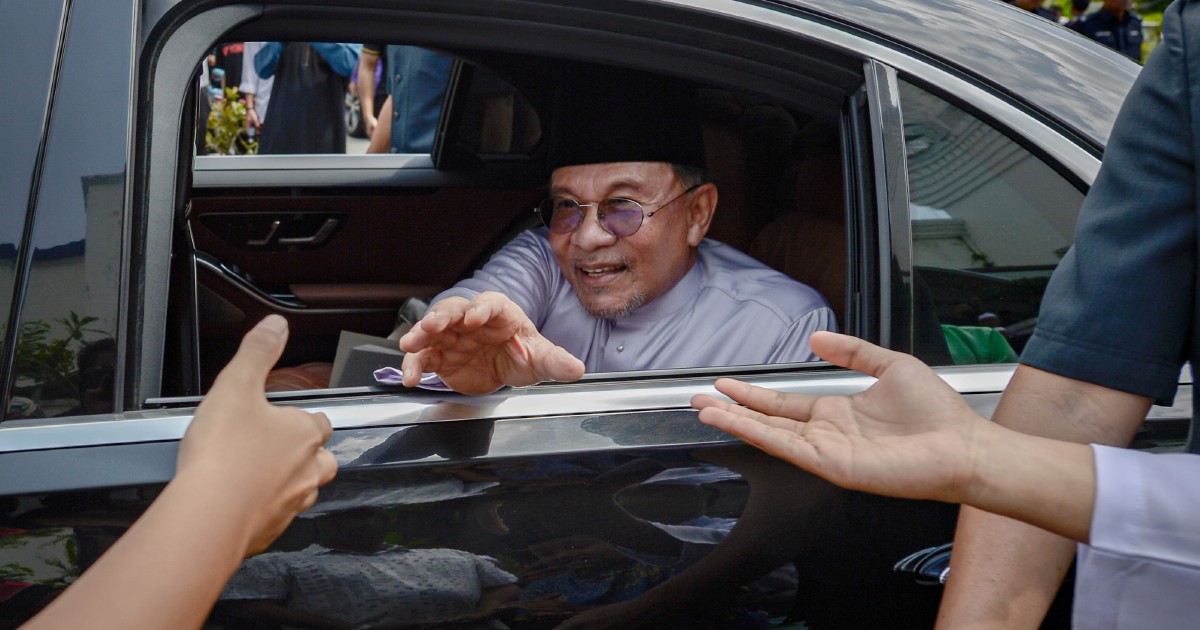
Prime Minister Datuk Seri Anwar Ibrahim is taking his campaign message directly to voters in Negeri Sembilan, marking a significant moment in the ongoing state election as Pakatan Harapan seeks to consolidate its electoral momentum. The decision to have the nation's top political leader traverse the state underscores the importance the coalition places on the outcome, particularly as polling day approaches and the race tightens across key constituencies.
Anwar's ground campaign reflects a broader strategy within Pakatan Harapan to activate grassroots support in a state that has historically served as a political bellwether. Negeri Sembilan's voting patterns often provide early signals of broader national sentiment, making the state crucial for any coalition aiming to demonstrate electoral strength. By personally visiting the state, Anwar is attempting to energise party workers and undecided voters who may still be weighing their options between competing coalitions.
The timing of the campaign push appears deliberate, coming at a critical juncture when election dynamics are still fluid and voter engagement remains high. Strategic deployment of senior leadership during state elections has become a hallmark of Malaysian electoral politics, with prime ministers increasingly visible on the campaign trail to validate party candidates and reinforce core messaging. Anwar's presence signals confidence within Pakatan Harapan's campaign machinery, though it also suggests the coalition recognises that sustained effort is necessary to achieve victory.
Negeri Sembilan has long been viewed as an important battleground between competing political forces. The state's blend of rural constituencies and urban centres means that a successful campaign must navigate diverse voter interests and concerns. Issues ranging from economic development and employment to education and social services feature prominently in local discourse, and candidates across all parties have been addressing these themes throughout the campaign period.
For Pakatan Harapan, the campaign in Negeri Sembilan represents an opportunity to reinforce the coalition's narrative around economic competence, institutional reform, and inclusive governance. The coalition has been emphasising its track record of delivering tangible improvements to citizens' lives, while also positioning itself as the guardian of democratic values and constitutional governance. These messages are designed to resonate particularly with middle-class voters and those concerned about political stability.
The opposition coalitions contesting the election have meanwhile been pursuing their own ground strategies, attempting to capitalise on any dissatisfaction with incumbent administration or to mobilise traditional support bases. The multi-cornered contest nature of Malaysian state elections means that victory often hinges not merely on absolute vote share but on how effectively each coalition can consolidate its core supporters whilst peeling away marginal voters from competitors.
Anwar's campaign activities will likely focus on key marginal constituencies where the election is expected to be closely contested. These battleground areas often determine overall state outcomes and frequently witness the highest concentration of campaign resources from all participating coalitions. Candidates operating on narrow margins will benefit enormously from the visible support of the Prime Minister, as his endorsement carries significant weight with many voters.
The broader context of Malaysian state elections shows that local campaigns increasingly intertwine with national political narratives. Voters are no longer purely focused on parochial state-level concerns but are making decisions influenced by their perceptions of national government performance, economic conditions, and wider political dynamics. This convergence of state and national politics means that Anwar's campaign message must simultaneously address immediate Negeri Sembilan issues whilst connecting these to the larger national agenda that his government is pursuing.
Pakatan Harapan's performance in Negeri Sembilan will carry implications extending well beyond the state's boundaries. A decisive victory would provide the coalition with valuable momentum and psychological advantage heading into any future electoral contests. Conversely, a disappointing result would supply ammunition to critics questioning the coalition's electoral viability and would energise opposition parties to intensify their own campaigns elsewhere.
The Negeri Sembilan state election thus represents a microcosm of Malaysian electoral competition, encompassing fundamental questions about voter preferences, coalition strength, and the direction of the nation's political trajectory. By committing his personal presence and campaign energy to the state, Anwar is placing a strategic bet on Pakatan Harapan's ability to win over sufficient voters to secure a working majority in the state assembly. The results will provide important signals about voter sentiment as Malaysia's political landscape continues to evolve and realign following major electoral and institutional changes of recent years.

