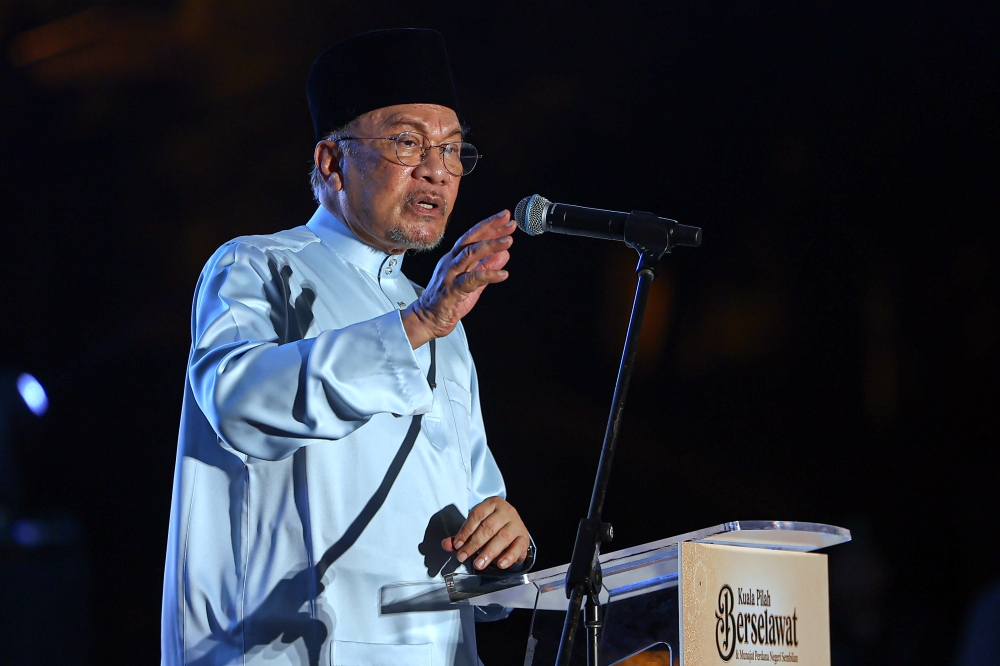
Parti Keadilan Rakyat (PKR) leadership under Anwar Ibrahim has renewed calls for the party to remain anchored in its foundational principles as a genuine mass movement, signalling concern that the organisation risks losing sight of its broader social mission amid the demands of competitive electoral politics. The emphasis on preserving PKR's grassroots character and values-driven approach reflects ongoing internal deliberations about the party's direction and cultural identity as it navigates an increasingly complex political landscape in Malaysia.
Anwar's insistence that PKR function as more than merely a machine for winning elections speaks to a broader tension within opposition politics in the region. Political parties across Southeast Asia often struggle to balance the immediate pressures of electoral competition with the longer-term work of building institutional legitimacy and public trust. For PKR, which has positioned itself as a reformist force championing democratic renewal and social justice, this distinction carries particular weight. The party's founding principles emphasised grassroots participation and accountability to ordinary Malaysians, ideals that risk being subordinated when party machinery becomes primarily focused on capturing power.
The distinction Anwar draws between a mass movement and an electoral vehicle carries practical implications for how PKR organises and engages with supporters. A mass movement typically operates through broader networks of community activism, civil society engagement, and issue-based mobilisation that extends beyond the immediate cycle of elections. Such an approach requires sustained investment in member education, local governance initiatives, and policy development independent of campaign schedules. Conversely, electoral-focused operations tend to concentrate resources on voter targeting, campaign messaging, and candidate selection in ways that may sacrifice long-term institutional building.
PKR's experience in government as part of the Pakatan Harapan coalition and subsequently the Madani government provides context for these concerns. As a governing party, PKR faces expectations to deliver concrete policy outcomes and administrative performance. Yet this responsibility need not preclude maintaining parallel grassroots structures and advocacy programs. The challenge lies in allocating party resources and leadership attention effectively across both dimensions without allowing electoral imperatives to overwhelm other functions.
The integrity dimension that Anwar emphasises underscores another critical concern: public perception of political authenticity. Malaysian voters have demonstrated significant appetite for parties that appear to stand for principles beyond mere power-seeking, particularly following the collapse of the previous Barisan Nasional administration. PKR's identity as a reform party committed to accountability and clean governance forms a cornerstone of its appeal to urban and younger voters, as well as communities motivated by good governance rather than patronage networks. Allowing that identity to erode into standard electoral pragmatism could damage the party's distinctive positioning.
Within Southeast Asia's broader political context, PKR's struggles echo patterns visible in other democracies in the region. Indonesian and Thai opposition parties have similarly grappled with maintaining movement character while building electoral competitiveness. The Philippines' experience with multiple cycles of reform parties gaining and losing momentum suggests that sustainability requires deliberate choices to preserve institutional identity even during electoral success.
The practical mechanisms through which PKR could strengthen its mass movement credentials warrant examination. Enhanced grassroots participation in policy formulation, decentralised decision-making that empowers local chapter leaders, and active engagement with civil society organisations representing workers, youth, and marginalised communities all represent possible avenues. Such approaches require party leadership to resist the centralising tendencies that often accompany electoral success, distributing both authority and resources to peripheral structures.
Anwar's message also appears calibrated toward internal party constituencies who may feel that PKR's institutional culture has shifted since entering government. Long-time activists and members who joined the party during periods of opposition often cite concerns that the organisation has become more hierarchical and technocratic, with decision-making concentrated among senior figures. Reaffirming the party's commitment to mass movement principles signals responsiveness to these perspectives and attempts to prevent alienation among the activist base.
The timing of these statements reflects careful attention to PKR's standing ahead of potentially consequential electoral cycles. Whether at state or federal level, electoral contests present opportunities for the party to demonstrate authentic connection with communities rather than merely appearing during campaign seasons. The distinction matters enormously for voters assessing which opposition or coalition parties merit their support.
For Malaysian observers and the regional political community, the sustainability of PKR's reform credentials depends significantly on whether party leadership follows through on these emphases through actual institutional practice. Maintaining a mass movement character requires consistency in resource allocation, visible commitment to participatory processes, and willingness to sometimes prioritise principle over short-term electoral advantage. These choices will become more visible and contested in coming months, revealing whether PKR can genuinely balance its dual identity as both reform movement and competitive electoral force.
The broader lesson extends across the region: political parties seeking to differentiate themselves through commitment to democratic values and social justice cannot assume that these assets persist automatically once gained. Active cultivation and institutional protection of movement character represents ongoing work rather than a legacy to be assumed.

