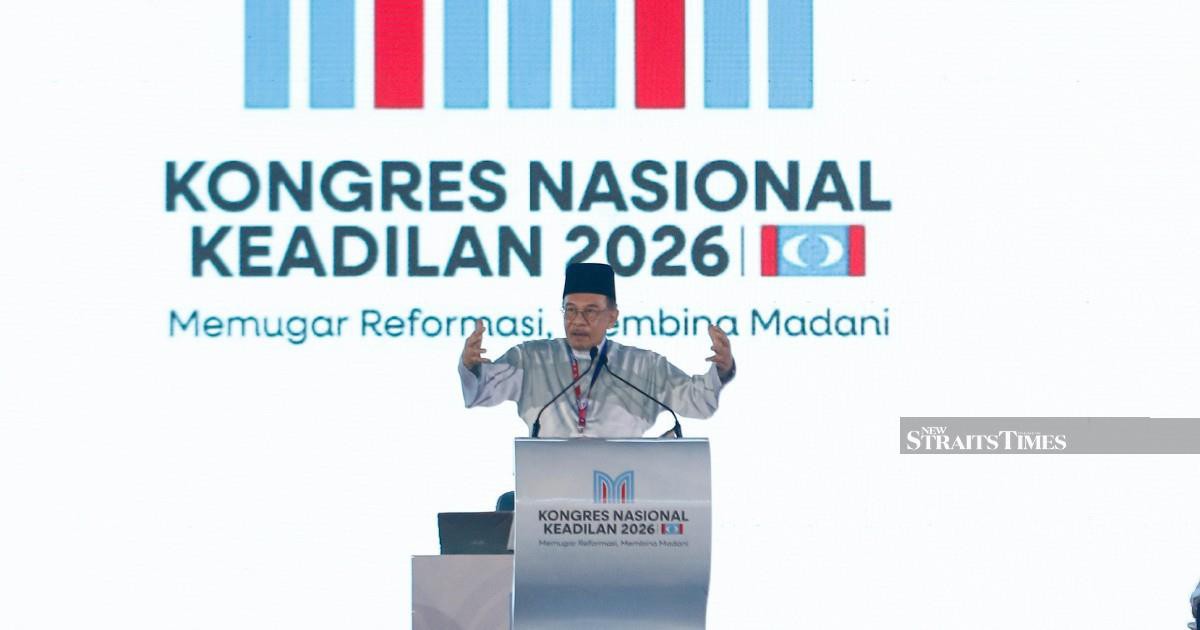
Prime Minister Datuk Seri Anwar Ibrahim announced in Ayer Keroh today that the government intends to abolish the Universities and University Colleges Act 1971, commonly referred to as Act 30, marking a significant shift in how Malaysia's higher education sector will be administered and regulated going forward.
The Act 1971 has served as the foundational legislation governing public universities and university colleges in Malaysia for over five decades. Its repeal would represent one of the most substantial regulatory changes to the sector since the legislation's original enactment, potentially affecting everything from institutional autonomy to student governance and academic freedom frameworks.
The move reflects broader policy directions the current administration has signalled regarding education modernisation. By dismantling this particular legislative framework, the government appears intent on updating how universities operate within contemporary Malaysian society, addressing concerns that may have accumulated over decades of governance under a statute drafted for a significantly different economic and educational landscape.
Act 30 has historically shaped the relationship between government and public universities, defining institutional structures, administrative procedures, and the extent to which universities can operate independently from ministerial oversight. The legislation has been scrutinised in recent years by academics, student advocates, and policy analysts who argue that certain provisions may restrict institutional flexibility and responsiveness to modern challenges facing tertiary education.
The abolition would necessitate replacement legislation or alternative regulatory mechanisms to fill the governance vacuum. The government would need to establish new frameworks to address fundamental questions about university autonomy, student representation, institutional accountability, and the role of the Ministry of Higher Education in directing sector policy. The transition period could prove consequential for how Malaysian universities position themselves internationally and domestically.
For Malaysian university students and academics, the announcement carries implications extending beyond administrative technicalities. Existing provisions within Act 30 governing matters such as student unions, protest rights, and academic appointments could potentially be reimagined under new legislative arrangements. This presents both opportunities for expanded freedoms and uncertainties about what safeguards might be preserved or modified.
The timing of this announcement reflects the government's broader agenda to undertake legislative modernisation across various sectors. Higher education reform has featured prominently in recent policy discussions, with stakeholders consistently advocating for regulatory frameworks that balance institutional autonomy with public accountability, while maintaining Malaysia's competitive position in regional and global education rankings.
From a regional perspective, Malaysia's decision to overhaul university legislation comes as other Southeast Asian nations examine their own tertiary education governance models. Such moves can influence how the region's universities attract international partnerships, research funding, and talented academics—factors increasingly central to institutional reputation and research output across Asia.
The practical implementation of this reform will depend significantly on what legislative model the government proposes as a replacement. Whether the government opts for a comprehensive new statute, sector-specific regulations, or a more decentralised approach will shape institutional behaviour and student experiences for years to come. Different approaches would carry distinct implications for university competitiveness and academic freedom.
Stakeholders in Malaysia's education sector, including university administrators, student organisations, and faculty representatives, will likely engage intensively during any legislative reform process. Their input will be crucial in ensuring that new governance arrangements address legitimate concerns about modernisation while preserving institutional strengths that have contributed to Malaysian universities' regional standing.
The announcement also raises questions about transitional arrangements. Existing regulations, policies, and administrative practices derived from Act 30 would require careful review and possible reformulation to ensure continuity while implementing intended reforms. The government will need to provide clear timelines and stakeholder engagement processes throughout this significant regulatory transition.

