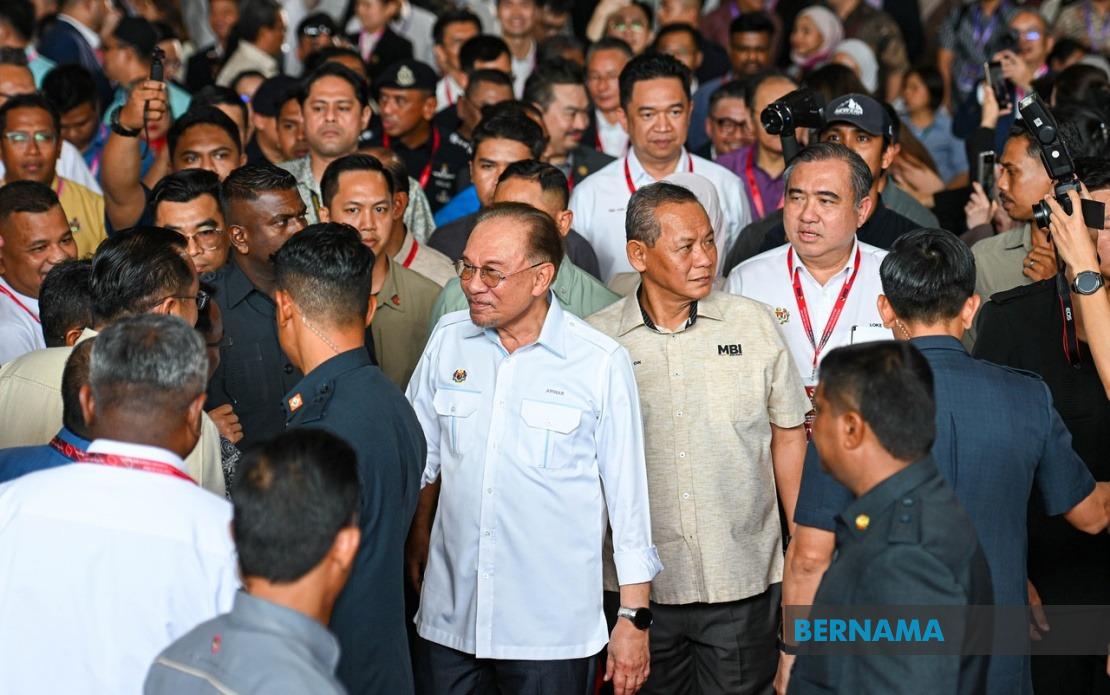
Prime Minister Datuk Seri Anwar Ibrahim has called on Melaka DAP to pause its withdrawal from the state government, emphasizing that doing so would allow the administration to prioritize development initiatives and public welfare. Speaking at Port Dickson after inaugurating the AI-powered Midport Smart Container Terminal project, Anwar indicated he had already engaged DAP secretary-general Anthony Loke and Melaka Chief Minister Datuk Seri Ab Rauf Yusoh on the matter, with hopes that further discussions could yield a mutually acceptable outcome.
The intervention comes following Melaka DAP's announcement of immediate withdrawal from the state coalition after the Melaka State Legislative Assembly voted to amend the State Constitution to enable the appointment of nominated assemblymen. Melaka DAP chairman Khoo Poay Tiong justified the decision by asserting that the constitutional amendment contravenes fundamental democratic principles and undermines the integrity of electoral processes, arguing that nominated posts circumvent the democratic mandate of voters.
As Pakatan Harapan chairman, Anwar framed the situation within the broader context of managing internal coalition dynamics. He acknowledged that ideological and policy differences among component parties in a ruling coalition are inevitable and natural, yet argued that such disagreements need not compromise the government's primary obligation to deliver economic growth and improve public living standards. His argument suggests that the coalition's shared commitment to governance outcomes should supersede individual parties' positions on procedural matters.
Anwar's appeal represents a delicate balancing act within the Pakatan Harapan framework. By publicly requesting postponement rather than demanding DAP's continued participation, he has acknowledged the legitimate concerns of the DAP while simultaneously positioning maintenance of the state coalition as essential for effective administration. The Prime Minister's emphasis on postponement—rather than abandonment of the withdrawal—implies recognition that the constitutional amendment issue remains contentious and unresolved within coalition discussions.
The controversy over nominated assemblymen carries significant implications for Malaysia's political architecture and federalism. Nominated positions in state legislatures have historically been contentious, with critics arguing they dilute electoral accountability and concentrate power in the hands of party leadership. For Melaka DAP, particularly, the constitutional amendment appears to represent a departure from coalition principles regarding democratic governance and transparency, explaining the party's willingness to exit the government over the issue.
From a broader Southeast Asian perspective, this incident illustrates the structural challenges facing multi-party coalitions in managing diverse ideological positions while maintaining government stability. Similar tensions have emerged across the region in jurisdictions where ideologically diverse parties must form working governments. The test case in Melaka will likely influence how other Malaysian coalitions navigate comparable disagreements in future.
Anwar's intervention also carries practical implications for Melaka's development agenda. A state government fractured by coalition withdrawals typically experiences reduced legislative capacity, delayed policy implementation, and diminished investor confidence. The AI-powered container terminal project Anwar inaugurated exemplifies the kind of strategic infrastructure initiatives that require sustained political stability and multi-year government commitment. Coalition instability threatens the continuity required for such ventures.
The timeline leading to state elections adds urgency to Anwar's appeal. Government coalitions approaching electoral contests typically seek to project stability and accomplishment, as these factors influence voter behavior and coalition performance. A DAP exit, conversely, would signal internal disunity and governance challenges, potentially benefiting opposition parties that might exploit the apparent rift for electoral advantage.
Anwar's public advocacy for postponement also signals to other coalition partners that the Pakatan Harapan framework remains flexible and amenable to negotiation. This messaging may encourage other component parties to raise concerns through dialogue rather than unilateral exit, establishing a precedent for managing coalition tensions through sustained negotiation. However, DAP's principled stance on the constitutional amendment suggests that some issues transcend ordinary coalition politics for certain parties.
The Melaka situation reflects broader questions about executive power and legislative constitution within Malaysian federalism. Nominated assemblymen expand executive patronage and reduce direct electoral accountability, concerns that resonate particularly strongly within DAP's organizational culture and electoral base. For the party, acquiescing to the constitutional amendment might have carried greater political costs than withdrawal, particularly if maintaining credibility with supporters on democratic governance principles remained paramount.
Moving forward, the outcome of Anwar's intervention will likely establish precedent for how Pakatan Harapan manages ideological conflicts among component parties. A successful negotiation could demonstrate the coalition's maturity and adaptability, potentially strengthening its electoral positioning. Conversely, if DAP proceeds with withdrawal despite the PM's appeal, it would signal that certain principle-based positions override coalition maintenance within the ruling alliance.
The container terminal project Anwar highlighted during his remarks underscores the opportunity costs of coalition instability. Port development, digital transformation, and economic infrastructure require political continuity and coordinated governance. Melaka DAP's withdrawal would impede the state government's ability to advance such initiatives, creating collateral damage beyond the immediate constitutional dispute. Anwar's framing therefore positions coalition maintenance not as mere political convenience but as essential to economic development and improved living standards for Melaka residents.

