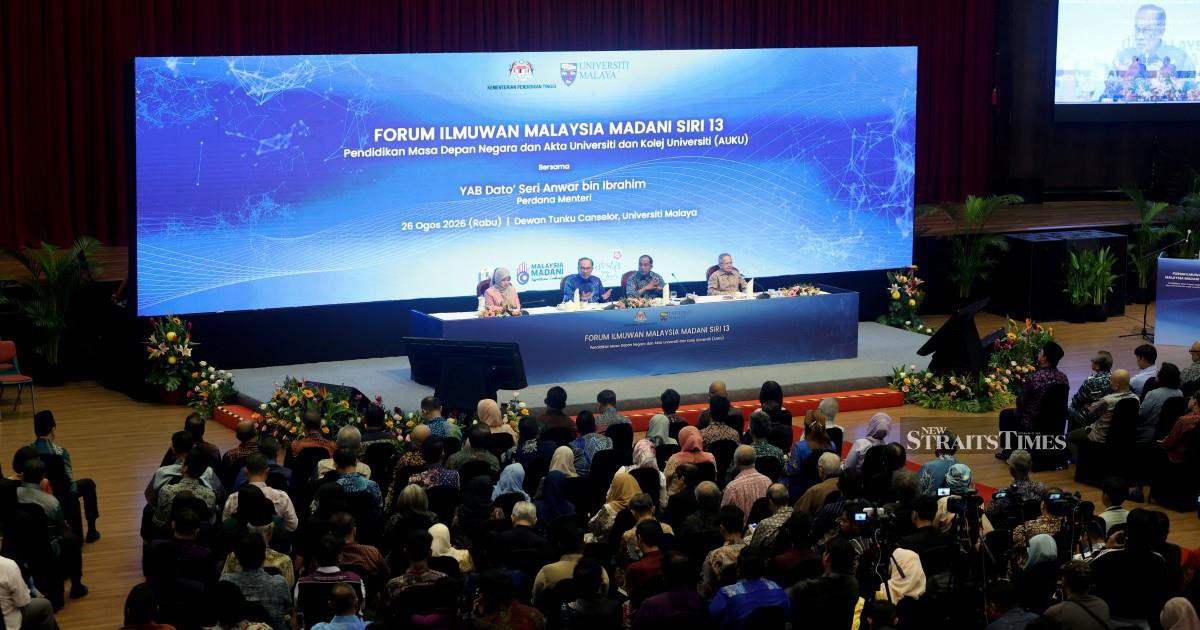
Prime Minister Datuk Seri Anwar Ibrahim has appealed for patience from university communities and interested parties as the government charts a course toward reforming the controversial Academic Freedom and Student Code of Conduct, commonly known as AUKU. Speaking to concerns about the restrictive regulatory framework, Anwar has requested that stakeholders place faith in the comprehensive suite of policy modifications being crafted by his administration.
The AUKU regulations have long drawn criticism from student activists, civil society organisations, and academic freedom advocates who argue that the rules unduly constrain student political expression and assembly rights on university campuses. Universities in Malaysia operate under stringent regulations that are often cited as among the most restrictive in the Asia-Pacific region, limiting students' ability to organise political activities, join external organisations, and participate in public discourse on matters beyond campus boundaries. Student groups have repeatedly called for the outright repeal of these restrictions, viewing them as barriers to democratic participation and personal freedoms that are fundamental to university education.
Anwar's request for temporal leeway suggests the government recognises the need for careful deliberation rather than hasty action. Repealing or substantially reforming AUKU requires navigating competing interests: student demands for expanded freedoms, institutional concerns about campus stability, government considerations regarding national security, and parliamentary procedures for legislative change. The Prime Minister appears to be signalling that the government is committed to change but will pursue it through structured channels rather than immediate executive action.
The political context surrounding this issue is significant for Malaysian higher education policy. Student activism and campus politics have historically been flashpoints in Malaysian society, with campus unrest occasionally escalating into broader social movements. By requesting stakeholder patience, Anwar is likely seeking to build consensus across multiple groups before proposing formal legislative amendments. This approach could help prevent the polarisation that might arise from sudden policy reversals.
For Malaysian students, who represent a crucial demographic bloc in the country's democratic participation, this represents both promise and uncertainty. Many university undergraduates have grown up under AUKU restrictions and view their relaxation as essential to their educational experience and personal development. International students and their families likewise monitor Malaysian campus policies closely, as restrictive regulations can deter overseas enrolments. Universities themselves face pressure to maintain competitive standing globally, and overly restrictive student codes can affect institutional reputation and the recruitment of international academic talent.
The government's reform approach may also reflect lessons from similar policy transitions in other Southeast Asian nations. Neighbouring countries have attempted various strategies for balancing campus freedom with institutional stability, with mixed results. Thailand's student activism in recent years demonstrated how restrictions can prove counterproductive, driving protests onto public streets rather than containing them within university grounds. Conversely, other regional systems have managed expanded student freedoms without sacrificing academic integrity or institutional governance.
Implementing AUKU reforms will likely require coordination between multiple government agencies. The Ministry of Higher Education would lead policy development, but implementation involves university administrations, student affairs divisions, and potentially other authorities. Stakeholder engagement must therefore include university leaders, student representatives, academic staff unions, and civil society observers to ensure that revised frameworks address legitimate concerns while accommoding institutional requirements.
The timeline for such reforms remains unclear. Anwar's language suggests that comprehensive improvements are under active development rather than distant aspirations, yet the absence of specific target dates allows flexibility for consultative processes. For Malaysian students eager for change, this patience may feel frustrating, particularly for final-year undergraduates whose entire university experience has occurred under existing restrictions. However, rushed reforms could introduce unintended consequences or face legal challenges that further delay implementation.
Regionally, Malaysia's approach to student freedoms carries implications for the broader Southeast Asian educational landscape. Singapore's tightly controlled campus environment contrasts sharply with Indonesia's more permissive framework, and Malaysia's positioning between these extremes influences how the nation attracts talent and shapes its soft power narrative. A government that appears responsive to legitimate demands for academic freedom enhancement may strengthen its appeal to younger demographics, both domestically and among students considering regional study options.
The successful resolution of AUKU reform will depend significantly on whether the government delivers substantive improvements rather than symbolic gestures. Students and civil rights organisations will likely scrutinise any proposals carefully, assessing whether modifications represent genuine expansion of freedoms or merely superficial amendments that preserve restrictive essentials. Trust, which Anwar explicitly sought in his appeal, must be earned through transparent consultation and measurable policy change.
Looking forward, the government faces pressure to demonstrate that the time requested is being used productively. Stakeholder conferences, working groups, and parliamentary dialogue will provide evidence of genuine reform efforts. The effectiveness of this consultative period will substantially determine whether resulting policies command broad acceptance or face renewed student activism and advocacy campaigns demanding more fundamental changes to Malaysia's university governance structures.

