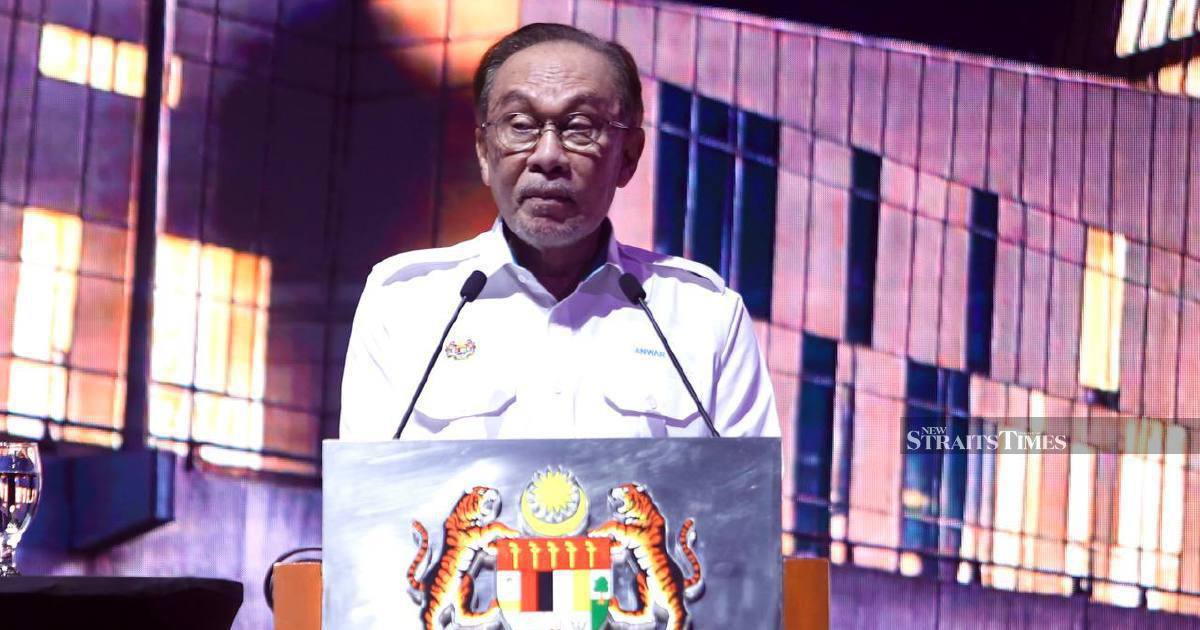
Prime Minister Datuk Seri Anwar Ibrahim has advocated for an expanded scope of artistic liberty within Malaysia's filmmaking landscape, positioning creative expression as vital to the industry's growth while simultaneously anchoring such freedoms within the country's established cultural and ethical frameworks.
Anwar's statement represents a nuanced approach to a longstanding tension within Malaysian creative industries. The film sector has historically operated under various regulatory pressures, with censorship concerns and content guidelines often limiting subject matter and artistic direction. The Prime Minister's intervention suggests movement toward a more permissive environment, though one deliberately calibrated to align with national identity markers rather than operating without guardrails.
The entertainment industry in Malaysia generates significant economic value through both domestic production and foreign investment attraction. However, industry observers have noted that overly restrictive content policies can disadvantage local productions when competing regionally or globally. Films from Thailand, Indonesia, and the Philippines have increasingly captured audiences by tackling complex social themes that Malaysian productions have historically avoided. Anwar's remarks appear cognisant of this competitive dynamic, positioning creative liberalisation as an economic and cultural necessity.
The statement emphasises that freedom should not be interpreted as unconstrained expression. Instead, filmmakers are encouraged to exercise their creative faculties within boundaries defined by Malaysian values—a deliberate formulation that preserves governmental and societal input into content standards. This reflects a broader Southeast Asian pattern where nations seek to modernise regulatory frameworks while maintaining cultural sovereignty and moral authority over media production.
For Malaysian filmmakers, this messaging carries practical implications. Directors, screenwriters, and producers have long navigated complex questions about which narratives remain permissible, which social issues can be explored, and how sensitive topics must be portrayed. Anwar's framing suggests these conversations will shift toward greater collaboration rather than top-down restriction, potentially enabling more sophisticated storytelling that reflects Malaysian society's actual complexity.
The timing of these remarks is significant within Malaysia's broader governance trajectory. The government has positioned itself as reform-oriented across multiple sectors, from economic policy to judicial independence. In this context, articulating a more liberal arts policy reinforces a modernising narrative while avoiding the perception of abandoning national foundations. This dual messaging appeals to younger, internationally-influenced audiences seeking creative expression while reassuring traditionalist constituencies concerned about cultural erosion.
Regionally, Malaysia competes for creative talent and investment against countries with varying regulatory approaches. Singapore's relatively open media environment attracts productions seeking sophisticated urban settings, while Indonesia and Thailand have developed robust local industries despite content restrictions. Anwar's statement positions Malaysia as capable of supporting world-class filmmaking without sacrificing cultural identity—a positioning critical for maintaining industry competitiveness as Southeast Asian entertainment markets globalise.
The practical implementation of Anwar's vision remains to be defined. The Film Censorship Board and other regulatory bodies will likely face pressure to interpret guidelines more expansively while maintaining their institutional role. Industry associations and filmmaker groups may now accelerate discussions about specific reforms—whether relating to appeal processes for rejected films, clearer content classification standards, or expanded permitted themes and narratives.
Malaysian filmmakers have demonstrated capacity to produce acclaimed work within existing constraints, with several achieving recognition at international festivals. Greater creative latitude could enable more directors to pursue ambitious projects currently deemed too sensitive for local audiences. This might particularly benefit narratives exploring religious identity, political dissent, LGBTQ+ experiences, and other historically circumscribed topics that resonate internationally but faced domestic distribution challenges.
The balance Anwar articulates—between freedom and values, between creative autonomy and social responsibility—mirrors ongoing debates globally about cultural production in diverse societies. Nations attempting to position themselves as culturally sophisticated while socially conservative face inherent tensions. Malaysia's approach, as now articulated by its Prime Minister, suggests these tensions warrant deliberation rather than resolution through blanket restrictions.
Industry stakeholders will scrutinise how this policy orientation translates into concrete regulatory changes. Ambiguity regarding what constitutes acceptable expression within Malaysia's values framework could leave filmmakers uncertain about boundaries even with increased stated openness. Clarity alongside freedom will prove essential for instilling the confidence necessary for increased investment in local production.
Ultimately, Anwar's call reflects recognition that creative industries drive economic growth, soft power projection, and youth engagement in contemporary economies. Malaysia's development aspirations depend partly on cultivating a vibrant cultural sector capable of producing globally resonant content. The challenge lies in achieving this without either abandoning cultural moorings or reverting to restrictive practices that diminish creative potential.

