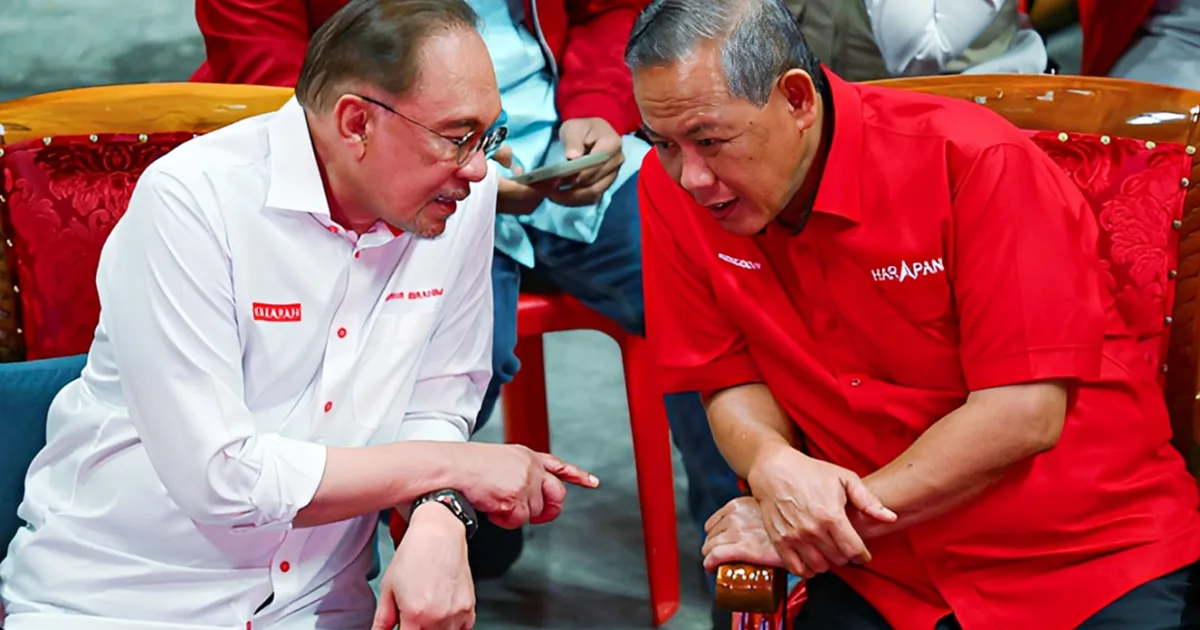
PKR president Anwar Ibrahim has signalled that Aminuddin Baki, the former Negeri Sembilan menteri besar, maintains a critical role within the party hierarchy as a mentor and guide for emerging political talent. The statement comes as the party navigates succession planning and the development of its next generation of leaders, a perennial challenge for Malaysian political organisations seeking to balance institutional memory with fresh perspectives.
Anwar's remarks underscore a broader recognition within PKR that Aminuddin possesses qualities increasingly rare in Malaysian politics—the capacity to accept electoral reversal with grace and without casting blame on party structures, rivals, or external circumstances. In a political landscape often characterised by recrimination and internal finger-pointing following electoral defeats, such conduct carries symbolic weight that extends beyond individual character assessment. The PKR president appears to be positioning Aminuddin's conduct as a template for how party members, particularly those with ambitions within the organisation, ought to comport themselves during difficult moments.
The timing of these remarks holds significance within the context of Malaysian politics' evolving dynamics. As coalitions realign and electoral calculations shift, the ability to absorb defeat without fracturing party unity becomes strategically valuable. Aminuddin's previous tenure as menteri besar of Negeri Sembilan provided him with executive experience and a political profile that distinguishes him from purely parliamentary figures. His loss of the position thus represents a tangible setback, yet Anwar's comments suggest the party views this not as a reason for marginalisation but rather as an opportunity to deepen Aminuddin's contribution through mentoring activities.
Mentorship programmes within Malaysian political parties have historically been haphazard, often depending more on personal relationships and patronage networks than structured institutional frameworks. Anwar's public acknowledgement of Aminuddin's mentoring value may indicate PKR's intention to formalise or at least elevate the visibility of such developmental work. For younger party members navigating the complexities of electoral politics, exposure to someone who has experienced both high office and electoral defeat provides practical wisdom that classroom learning cannot replicate.
The political culture within Malaysian parties has often rewarded combativeness and unyielding commitment to one's own factional interests. Anwar's elevation of Aminuddin's contrary approach—dignified acceptance combined with continued service—suggests a deliberate effort to reshape party norms and values. This reflects broader concerns within PKR about internal cohesion following factional tensions that have marked the coalition's evolution, particularly as it has incorporated diverse groups with different political histories and organisational cultures.
For Malaysian readers observing PKR's trajectory, this statement indicates that the party leadership recognises the distinction between electoral defeat and political irrelevance. Rather than consigning Aminuddin to the margins, Anwar has opted to define a new avenue through which his experience and judgment can continue benefiting the organisation. This approach potentially offers a model for how other parties might retain the institutional knowledge of experienced members who fail to retain elected office, a persistent challenge in a political system where electoral performance often determines a politician's continued influence.
The emphasis on Aminuddin's willingness to avoid blame-shifting carries particular resonance in a Malaysian context where political actors frequently attribute electoral losses to external factors—hostile media coverage, electoral commission decisions, or manipulation by rival coalitions. While some of these claims may contain validity, the pattern of externalising responsibility can undermine a party's capacity for genuine reflection and improvement. Anwar's highlighting of an alternative response model addresses this challenge directly, suggesting that PKR values self-reflection and institutional learning over defensive posturing.
Within the broader Southeast Asian context, where political parties in democracies often struggle with succession and talent development, Malaysia's experiences offer instructive examples. The challenge of retaining experienced politicians in meaningful roles despite electoral setbacks tests both individual political maturity and organisational flexibility. Aminuddin's situation illustrates how parties can navigate this tension constructively rather than allowing defeated candidates to drift toward irrelevance or, alternatively, festering within party structures as sources of discontent and division.
Anwar's comments also suggest strategic thinking about PKR's composition and cohesion as the party continues to evolve. With membership drawn from diverse backgrounds and organisational traditions, explicit endorsement of particular leadership virtues—in this case, dignified acceptance of defeat—serves a normative function. Younger members observing how the party treats someone in Aminuddin's position receive clear signals about the behaviours and attitudes that the leadership values and wishes to encourage.
The mention of mentoring younger leaders addresses a genuine institutional need within Malaysian political parties, where formal training and development programmes remain underdeveloped compared to mature democracies. By publicly valuing Aminuddin's potential contribution to younger members' political education, Anwar acknowledges that electoral success alone should not define a politician's utility to their party. This distinction matters particularly for a party like PKR, which draws membership from activists, professionals, and political newcomers who may benefit substantially from guidance offered by those with prior governmental experience.
Moving forward, the practical manifestation of this mentoring role will likely shape perceptions of both Aminuddin's continued relevance and PKR's organisational priorities. Whether the party establishes formal structures to facilitate such mentoring or relies on informal relationships will signal the seriousness with which leadership development is pursued. For Malaysian political observers tracking PKR's internal dynamics and succession planning, this public statement about Aminuddin's value deserves monitoring as an indicator of the party's broader institutional maturation and strategic priorities.

