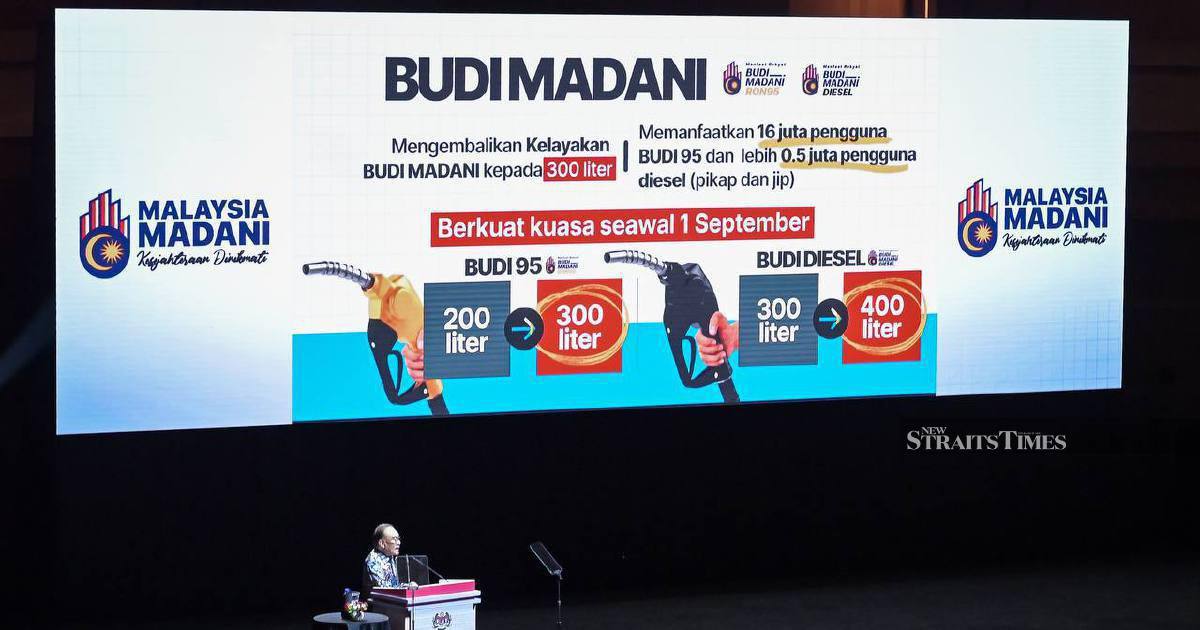
Prime Minister Datuk Seri Anwar Ibrahim has rolled out a six-point package of relief measures aimed at easing the financial squeeze facing ordinary Malaysians and bolstering the nation's business environment. The announcement, made during his National Day Eve address in Putrajaya, signals the government's intention to address mounting cost-of-living concerns before the tabling of the 2027 Budget in October, positioning these steps as a precursor to broader fiscal planning.
The timing of the announcement carries significant political weight. By unveiling these measures ahead of the formal budget session, the Prime Minister is demonstrating responsiveness to public sentiment regarding household expenses and economic pressures that have dominated public discourse throughout the year. This approach allows the government to show tangible action before the comprehensive budget negotiations, which typically involve lengthy parliamentary deliberations and detailed policy scrutiny.
For Malaysian households already grappling with inflationary pressures spanning food, fuel, transportation, and utilities, the government's focus on immediate relief measures reflects a recognition that citizens require quick intervention rather than promises tied to future fiscal years. The package targets multiple economic strata, acknowledging that cost-of-living challenges cut across income groups and business sizes, from small traders struggling with input costs to consumers navigating higher prices at the supermarket and petrol pump.
The emphasis on business support within the six measures indicates the government's understanding that economic relief for households and enterprises are interconnected. When businesses face reduced operational costs or improved cash flow conditions, they can theoretically pass benefits to consumers through competitive pricing and expanded employment opportunities. This integrated approach suggests policymakers recognise that targeted support must address both the supply and demand sides of Malaysia's economic equation.
In the Southeast Asian context, Malaysia's proactive stance on cost-of-living pressures mirrors challenges faced across the region. Countries including Indonesia, Thailand, and the Philippines have grappled with similar inflation dynamics, and their respective governments have implemented various relief packages. Malaysia's approach places it within a broader regional conversation about balancing fiscal responsibility with immediate social welfare needs during economically uncertain periods.
The announcement's placement during National Day Eve carries symbolic resonance beyond mere scheduling. By framing these economic measures within the context of national celebration and unity, the Prime Minister links economic policy to national progress and shared prosperity. This rhetorical framing attempts to position government intervention as patriotic responsibility rather than temporary populist measures, a distinction that matters for long-term policy credibility.
The relationship between these immediate measures and the October budget tabling warrants close attention from economists and policy observers. These pre-budget announcements typically serve as testing grounds for policy approaches that may feature more prominently in the full fiscal framework. The six measures may therefore provide early indicators of the government's broader budgetary priorities, spending allocations, and tax policy directions for the coming financial year.
Public services constitute one pillar of the relief package, suggesting the government recognises that Malaysia's citizens depend significantly on state-provided infrastructure, healthcare, education, and transportation systems. Improvements in these areas directly impact household budgets by reducing out-of-pocket expenses for essential services, effectively providing cost-of-living relief without direct cash transfers. This efficiency-focused approach appeals to fiscal conservatives concerned about budget deficits while addressing practical economic concerns among voters.
The announcement arrives at a juncture when Malaysian consumers face competing pressures from multiple directions. Global commodity price volatility continues affecting domestic fuel and food costs, while the ringgit's exchange rate fluctuations impact import-dependent sectors. Against this backdrop, government measures providing price stabilisation, subsidies, or efficiency improvements can provide meaningful breathing room for household finances and business operations already stretched by accumulated economic headwinds.
Looking ahead to October's budget tabling, these six measures effectively set the stage for more comprehensive economic planning. Parliamentary discussion of the full 2027 Budget can reference these foundational measures, debating whether they adequately address underlying structural issues or whether deeper reforms remain necessary. The measures also establish baseline public expectations, creating a framework within which the government's subsequent budgetary proposals will be evaluated and judged by voters and legislators alike.
The Prime Minister's emphasis on business strengthening alongside consumer relief reflects pragmatic economic logic. Malaysian businesses, particularly small and medium enterprises that form the backbone of local economic activity, face pressures from rising operational costs, financing challenges, and competitive dynamics. Government support measures targeting these enterprises can enhance their resilience and competitiveness, ultimately contributing to broader economic stability and employment preservation across the nation's diverse regional economies.

