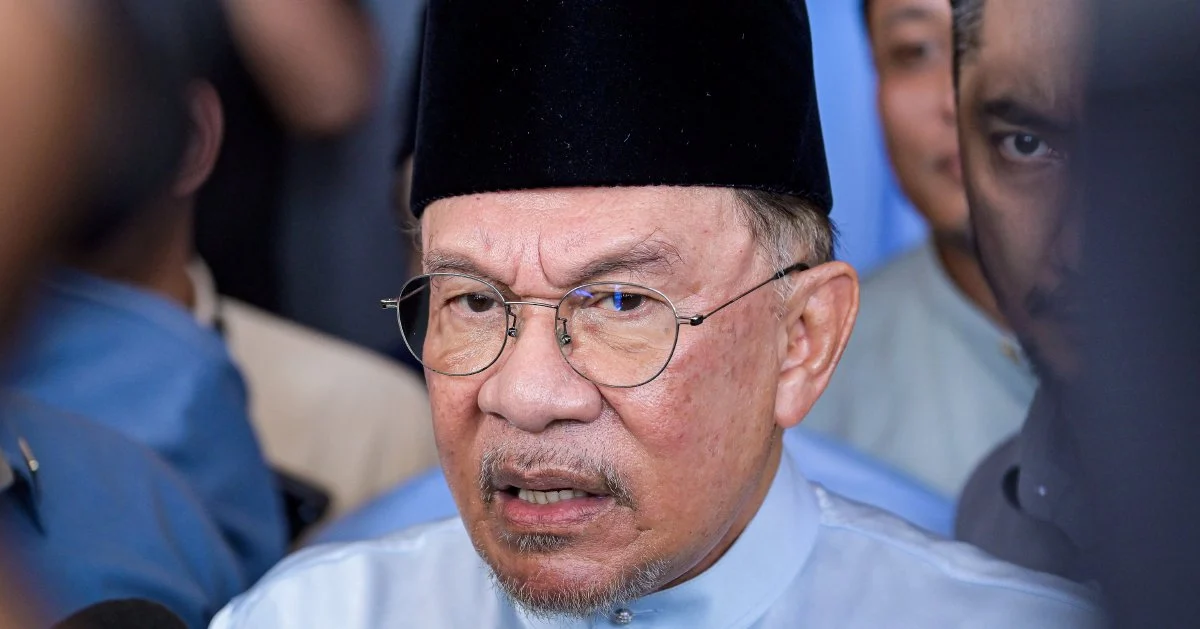
Prime Minister Datuk Seri Anwar Ibrahim has emphatically refuted allegations that instructions were issued to prevent Johor's caretaker Menteri Besar Datuk Onn Hafiz Ghazi from participating in activities at Felda settlements. Speaking in Dengkil, the Prime Minister sought to put to rest reports of an exclusion directive, describing the claims as baseless and suggesting they may have been misrepresented or taken out of context.
The incident centred on questions about access and participation in Felda-related events, a matter that had begun circulating among political observers in Johor. Felda, the Federal Land Development Authority, manages approximately 830,000 hectares across the country and represents a politically significant constituency, particularly in East Coast and southern states where it maintains considerable influence among rural communities. Allegations of selective participation in Felda activities could carry implications for inter-party relations and the broader coalition dynamics shaping Malaysian politics during this transition period.
Anwar's swift and direct denial signals concern about the narrative taking hold in political circles, particularly given the sensitive position of Johor's administration during the caretaker period. The timing of such claims—occurring in the context of state-level political manoeuvring—underscores the heightened scrutiny surrounding official functions and who is permitted to participate in them. State leadership, even in a caretaker capacity, typically maintains visibility at major community and institutional events as part of routine governance and public relations duties.
Onn Hafiz, representing the United Malays National Organisation (UMNO), holds significant influence within Johor's political structure despite the interim nature of his position. Any effective exclusion from Felda platforms would carry symbolic weight, potentially signalling divisions within the ruling coalition or attempts to marginalise particular figures. The caretaker framework itself creates a delicate balance—these officials retain executive authority while operating under constraints imposed by the electoral calendar and inter-coalition agreements.
The Prime Minister's intervention reflects the broader context of federal-state relations and coalition management. Anwar leads a government comprising multiple parties with sometimes competing interests, and maintaining cohesion requires careful navigation of symbolic gestures and access to state institutions and public platforms. The assertion that no such instruction existed carries political weight precisely because the alternative—that a directive had been issued—would suggest fractures in the coalition or an exercise of federal influence over state-level activities.
Felda settlements historically serve as important political battlegrounds, with residents representing a concentrated bloc of voters who have traditionally responded to governance outcomes and development promises. These communities have proven sensitive to perceptions of fair treatment and access, making controversies involving institutional exclusion potentially significant for electoral calculations. The fact that such allegations emerged and required a denial from the Prime Minister's office suggests they had gained sufficient traction to warrant a clarification at the highest level.
The caretaker period typically involves constraints on campaign activities and political engagement, with officials expected to maintain a degree of impartiality while continuing to discharge essential administrative duties. The distinction between political campaigning and the performance of official functions—such as Menteri Besar activities related to state administration—remains important, and confusion between the two categories can generate friction. Anwar's statement appears designed to reestablish clarity on this boundary and to depoliticise what some had attempted to characterise as discriminatory action.
Johor's political situation carries particular weight within the Malaysian federation. As the largest state by population and possessing significant economic output, developments there influence national political currents and coalition stability. UMNO's standing within Johor remains crucial to the party's relevance at the national level, and any perception of systematic disadvantage for UMNO figures could complicate Anwar's coalition management objectives, particularly as the election cycle progresses and political alignments face further tests.
The incident also illustrates how contemporary Malaysian politics operates with considerable attention to symbolic actions and institutional access. In the absence of substantive policy disagreements or programmatic disputes, allegations about participation and inclusion gain outsized importance as proxies for perceived power dynamics and coalition health. The speed with which such claims spread and the apparent need for prime ministerial intervention to address them reveal the febrile environment of state-level politics during transition periods.
Moving forward, the Prime Minister's unequivocal rejection of the allegations sets a baseline for expectations about inclusive governance practices and equal treatment of coalition partners in accessing state institutions and community platforms. Whether this statement fully resolves underlying tensions or merely postpones further friction will likely depend on broader developments in the coalition's trajectory and the electoral outcome that eventually ends the caretaker arrangement. For now, Anwar has placed himself on record as opposing any exclusionary practices affecting state leaders, a position that carries implications for how federal-state relations are managed in the coming months.

