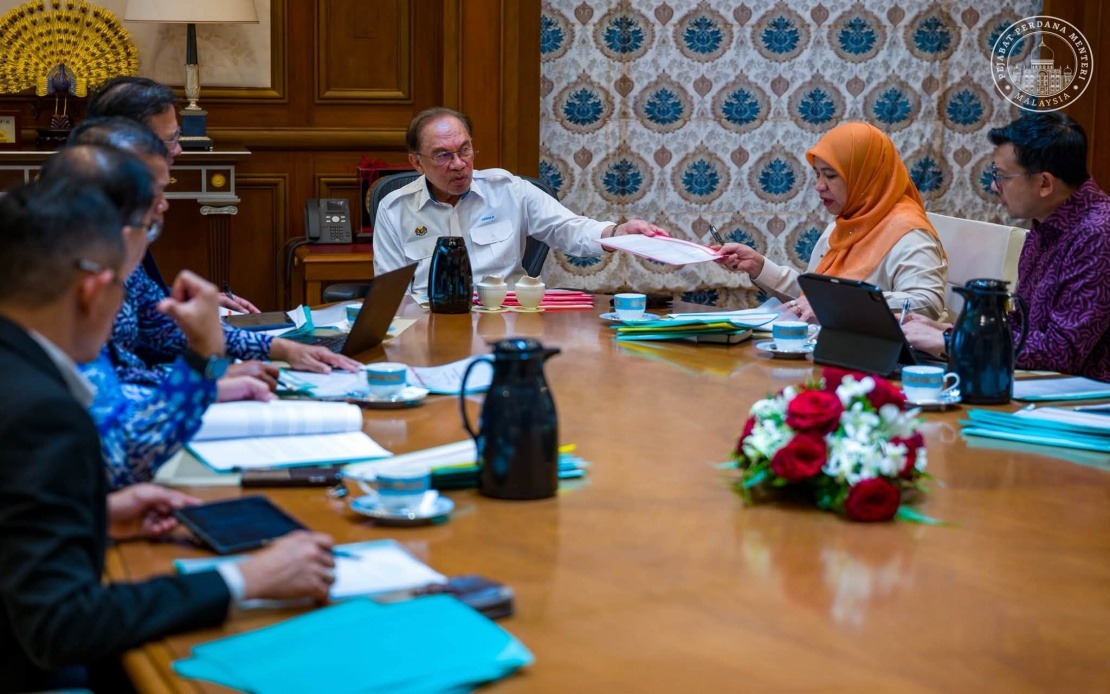
Prime Minister Datuk Seri Anwar Ibrahim has signalled that resolving longstanding difficulties confronting FELDA settlers cannot wait any longer, calling on the Federal Land Development Authority to prioritise second-generation housing and land ownership complications that have festered for years. His directive, communicated through social media, emphasises that the current administration will not tolerate further delays in tackling grievances that have accumulated within settler communities across the country's plantation schemes.
The specific mention of second-generation concerns reflects a critical gap in FELDA's operational mandate. Many original settlers who were allocated plots decades ago are now passing land rights to their children, yet the regulatory and administrative frameworks governing such transitions remain unclear or inadequately implemented. This generational shift has created a vacuum where younger beneficiaries face uncertainty about their legal standing, inheritance procedures, and the extent of their land utilisation rights. Without clear mechanisms, disputes between family members and between settlers and FELDA management have proliferated, leaving families in limbo regarding their economic security.
Anwar's public statement carries particular weight because it demonstrates executive-level frustration with delays that have accumulated despite numerous previous commitments to reform. By framing the issue as one requiring "careful examination" followed by a "clear solution plan," the Prime Minister implicitly acknowledges that FELDA's existing approaches have proven insufficient. This suggests that piecemeal remedies and departmental band-aids will no longer satisfy political leadership, demanding instead comprehensive restructuring of how the authority manages settler assets and intergenerational succession.
The housing dimension of FELDA's challenges extends beyond mere infrastructure provision. Many settlers live in accommodation constructed decades ago that now requires substantial renovation or replacement. Second-generation residents often find themselves unable to upgrade these dwellings because ownership ambiguities prevent them from accessing credit or making capital improvements. Banks hesitate to finance property improvements on land where title clarity remains questionable, creating a vicious cycle where housing stock deteriorates while residents lack both ownership certainty and financing pathways.
From a policy perspective, FELDA represents one of Malaysia's most significant social enterprises, having historically resettled hundreds of thousands of rural households and indigenous communities onto developed agricultural land. However, the scheme's original design reflected mid-twentieth-century assumptions about agricultural viability, family structures, and economic opportunity. Current reality has diverged sharply from those founding premises, with agricultural income often proving insufficient for family needs, leading younger generation members to seek alternative livelihoods while maintaining nominal connections to family land allocations.
The Malaysian context adds layers of complexity to these land questions. Federal-state jurisdictions, Malay reservation laws, and the constitutional status of customary land rights create legal frameworks that FELDA must navigate while seeking solutions. Moreover, the MADANI Government's stated emphasis on social justice and inclusive development makes FELDA settler grievances a politically salient issue, particularly in rural constituencies where such communities maintain significant electoral weight. Anwar's intervention signals that addressing these concerns aligns with broader governance priorities.
What makes this directive particularly significant is its acknowledgement that no single solution will suffice. Some settlers require housing assistance, others need clarity on inheritance procedures, while still others may need flexibility in land use permissions to pursue livelihood diversification. The Prime Minister's call for problem-specific solutions tailored to settler needs rather than standardised bureaucratic responses suggests openness to flexible, context-sensitive policymaking. This represents a departure from traditional FELDA approaches that have often applied uniform rules regardless of individual circumstances.
The economic implications for settler households are substantial. Land represents their primary asset and inheritance for children. Without clear ownership and usage rights, this intergenerational wealth transfer becomes fraught, potentially driving younger members to abandon agricultural communities entirely. Simultaneously, ambiguous title creates obstacles to leveraging land for economic activity beyond traditional agriculture, whether through small business enterprises, tourism ventures, or other income diversification strategies.
Regionally, Malaysia's FELDA experience offers lessons for other Southeast Asian nations grappling with agricultural settlement schemes and land tenure complexities. Countries facing similar pressures around rural development, generational succession, and land rights could observe whether Malaysian policy innovations emerge from this political directive. The region's broader development challenges around land security, agricultural viability, and rural community welfare make FELDA outcomes relevant beyond Malaysia's borders.
Implementation will test the government's resolve and FELDA's capacity for rapid institutional adaptation. Creating comprehensive solutions requires coordination across multiple government agencies, legal reforms to clarify ownership and succession procedures, and potentially substantial financial commitments for housing rehabilitation. The timeline for delivering results remains undefined in Anwar's public statement, yet the emphatic language suggests political pressure for visible progress within the near term.
Longer-term, how FELDA responds to this directive could reshape the institution's role within Malaysian rural development architecture. Rather than simply administering land allocations, FELDA might evolve toward facilitating settlers' economic empowerment through clarified property rights, improved housing stock, and diversified livelihood opportunities. Such transformation would require genuine institutional commitment rather than rhetorical acknowledgement of problems.

