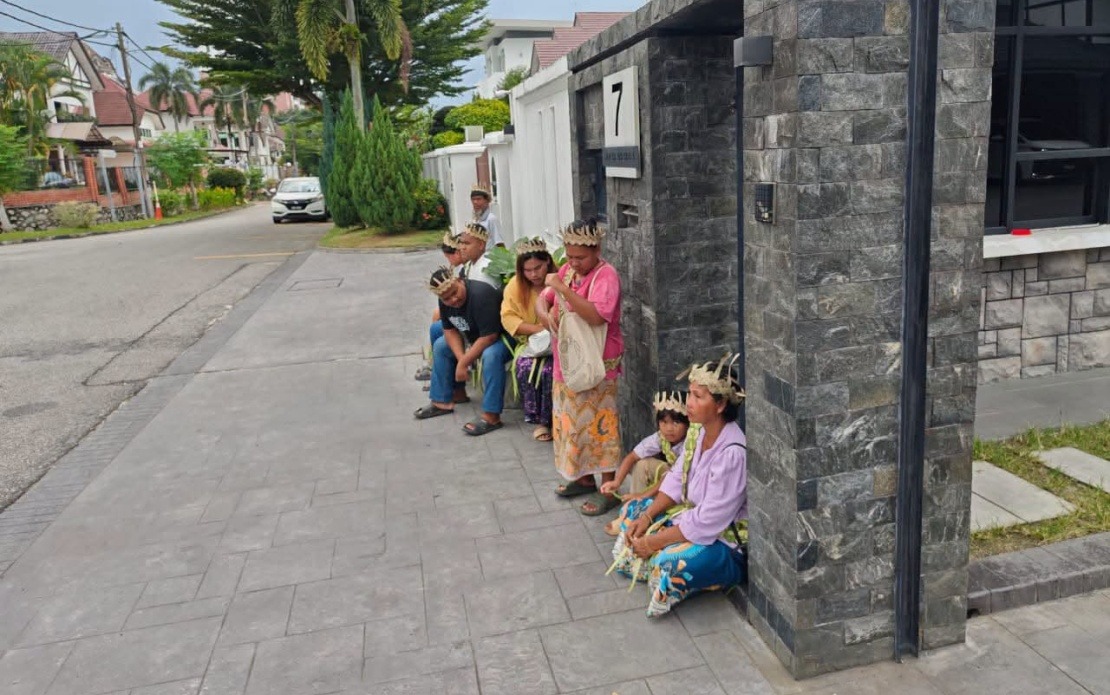
Prime Minister Datuk Seri Anwar Ibrahim has committed to bringing the unresolved land dispute affecting the Orang Asli residents of Kampung Sungai Cot in Maran, Pahang to the attention of state authorities. The pledge came after Anwar spoke directly with community representatives who visited his residence to air their grievances about the contentious matter, signalling renewed focus on indigenous land rights at the federal level.
In a statement posted on Facebook, Anwar indicated that he had engaged in meaningful dialogue with the Orang Asli delegation, during which he gained firsthand understanding of their predicament. The interaction underscores the continuing vulnerability of indigenous communities in Malaysia when it comes to land ownership and security of tenure, issues that have plagued several Orang Asli settlements across the peninsula for decades.
The Prime Minister's acknowledgment of the detention of three Orang Asli residents from the village suggests that the dispute had escalated beyond civil disagreement into a matter involving law enforcement intervention. Anwar noted with apparent relief that those detained individuals have since been released by police, though he did not elaborate on the circumstances surrounding their apprehension or the charges, if any, that had been levelled against them.
The Orang Asli of Kampung Sungai Cot represent one of numerous indigenous settlements facing pressure over ancestral lands. These communities have historically struggled against encroachment, whether from commercial development, state land classifications that fail to recognise customary rights, or competing claims from neighbouring parties. The intervention by federal leadership on such matters remains inconsistent, making Anwar's public commitment notable within that context.
In his statement, Anwar emphasised the necessity of approaching the situation with restraint and adherence to legal processes, cautioning against attempts to exploit the controversy for political advantage. This framing suggests awareness that land disputes involving indigenous peoples can become flashpoints for broader tensions, particularly if various parties use the issue to advance separate agendas rather than pursue genuine resolution.
The involvement of Pahang state government in resolving the matter is crucial, given that land administration in Malaysia falls primarily under state jurisdiction. Unlike federal territories, state governments retain significant autonomy over land policy, tenure registration, and disputes. Coordinating between federal and state levels remains essential for meaningful progress on such issues, requiring sustained political will and institutional cooperation.
For the Orang Asli community, the willingness of the Prime Minister to engage directly carries symbolic weight beyond immediate legal remedies. Many indigenous settlements report feeling marginalised in policy discussions and development planning, their concerns deprioritised relative to national economic imperatives. A clear escalation of their grievance to the highest level signals that such matters warrant serious attention within government machinery.
The broader context of Orang Asli land issues in Malaysia reveals patterns of systematic disadvantage. Many indigenous communities possess only informal or communal claims to territories their ancestors have occupied for generations, leaving them vulnerable when those lands attract interest from developers, agricultural enterprises, or state-initiated projects. Legal frameworks that might adequately protect these claims remain inadequate or poorly enforced in practice.
Anwar's caution against manipulation of the issue reflects the sensitivity surrounding indigenous affairs in Malaysia. Land disputes can quickly become politicised, with various parties seeking to leverage public sympathy or factional support. Insulating the resolution process from such pressures would ideally allow for outcomes based on law and equity rather than political calculation.
The path forward will require cooperation between federal intervention, state administrative machinery, and presumably dialogue with the Orang Asli representatives themselves. Establishing what legal grounds exist for the community's land claims, determining whether prior customary rights have been properly documented, and addressing any competing interests would form essential steps in any comprehensive resolution.
For Malaysian indigenous communities more broadly, the episode serves as a reminder that federal-level attention to their concerns remains contingent on organised advocacy and political will. The Orang Asli's decision to approach the Prime Minister directly reflects their understanding that escalation sometimes proves necessary when local mechanisms fail to deliver results. Whether that federal attention translates into concrete outcomes for Kampung Sungai Cot will likely influence whether other communities attempt similar approaches.
The resolution of the Kampung Sungai Cot dispute will be closely watched by indigenous advocacy groups and civil society organisations monitoring Orang Asli rights across Southeast Asia. Malaysia's handling of such matters carries implications for regional standards on indigenous land protection and government accountability to marginalised communities. A fair and lawful resolution could set positive precedent; failure to address the underlying issues meaningfully risks perpetuating the cycles of dispute and marginalisation that have characterised Orang Asli experiences historically.

