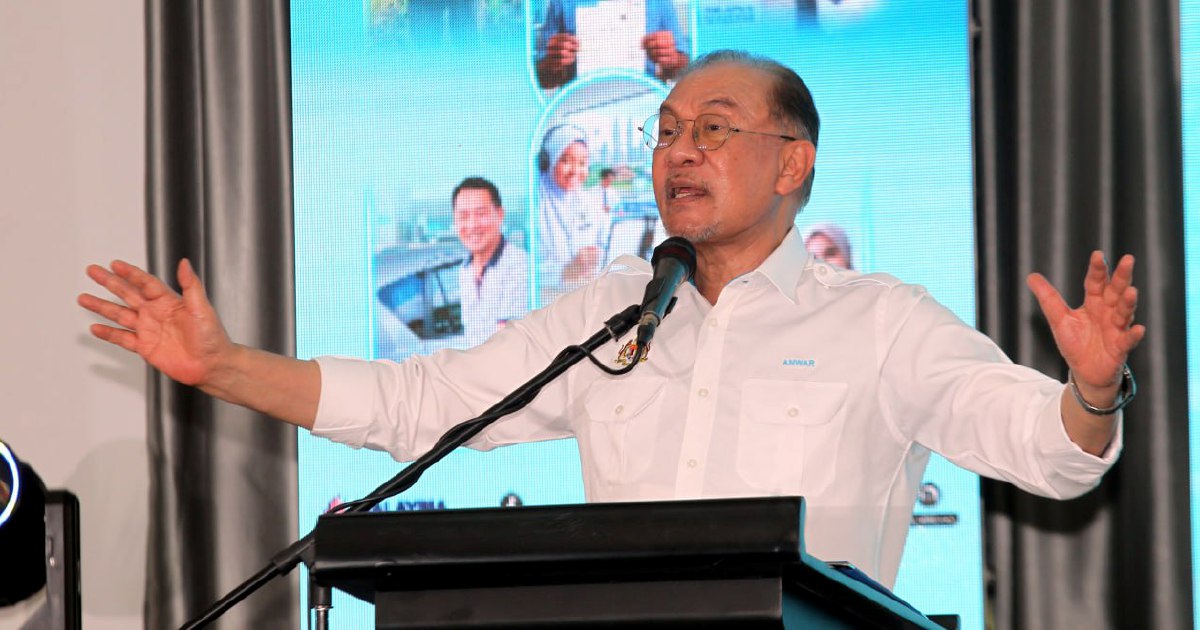
Prime Minister Datuk Seri Anwar Ibrahim has announced a RM15.3 million allocation targeted at enhancing Perak's religious and pondok schools, signalling the Madani administration's renewed dedication to bolstering Islamic education throughout the country. The commitment, unveiled during his engagement with educational stakeholders in Ipoh, underscores the government's recognition of the pivotal role these institutions play in shaping Malaysia's religious and moral education landscape.
Religious and pondok schools occupy a distinctive position within Malaysia's education ecosystem, serving as custodians of Islamic knowledge and spiritual development for thousands of students across the nation. These establishments, ranging from traditional pesantren-style facilities to more contemporary Islamic secondary institutions, have historically operated with varying degrees of government support. Perak, with its significant Muslim population and established network of such schools, stands to benefit considerably from this targeted investment, which aims to address long-standing infrastructure and operational challenges that have constrained their effectiveness.
The scale of the allocation reflects a broader policy shift within the Madani framework, which has increasingly positioned Islamic education as integral to national educational priorities rather than peripheral to them. By designating RM15.3 million specifically for Perak's institutions, the government signals intent to address regional disparities in education funding and ensure that Islamic schools receive comparable support to their conventional counterparts. This move carries significance beyond immediate financial metrics, as it validates the educational mission these schools pursue and acknowledges their contribution to national cohesion and religious literacy.
The funding mechanisms and deployment strategy remain crucial considerations for maximising impact. Historical patterns suggest that monies allocated to religious education have been directed toward infrastructure development, teacher training enhancement, curriculum modernisation, and facility upgrades. In Perak's context, where some pondok schools operate from aging premises with limited resources, such investment could catalyse tangible improvements in learning environments and educational delivery quality. The government's involvement also signals potential pathways to standardising quality assurance mechanisms across these institutions, which have traditionally operated with considerable autonomy.
For Malaysian education policy more broadly, this commitment illustrates the Madani government's attempt to navigate the delicate balance between promoting Islamic education and maintaining the nation's pluralistic educational philosophy. Rather than channelling funds exclusively toward government-managed institutions, targeted support for religious schools demonstrates recognition that Malaysia's education sector encompasses diverse approaches and ideologies. This inclusive stance potentially strengthens social cohesion by affirming that religious educational traditions receive legitimate government backing alongside secular and vocational pathways.
The implications extend to educational access and social mobility for students within Perak's religious school system. Enhanced infrastructure and improved teaching resources can directly influence academic outcomes and student experiences, potentially widening opportunities for pupils to pursue higher education or professional careers. Strengthened facilities and updated curricula also position these schools to better compete for enrolment, addressing concerns about declining student numbers at some institutions as families increasingly gravitate toward conventional schools perceived as offering superior employment prospects.
Teacher development emerges as another critical dimension the funding might address. Religious and pondok schools frequently struggle to attract qualified educators due to lower remuneration and limited career progression compared to government schools. Investment in professional development programmes, improved compensation structures, and enhanced working conditions could help these institutions recruit and retain talented educators, ultimately benefiting student learning outcomes and institutional sustainability. Perak's religious education sector could thus transition from a talent-deficit environment toward one capable of offering competitive professional opportunities.
The announcement also carries implications for the broader Southeast Asian education landscape, where Islamic schools function prominently across Malaysia, Indonesia, Thailand, and Brunei. Malaysia's approach to funding and supporting such institutions may influence regional perspectives on integrating religious education within state-supported systems. The RM15.3 million commitment demonstrates that substantial Islamic education need not exist in opposition to state oversight or modernisation, potentially providing a model for other nations grappling with similar educational pluralism questions.
Challenges accompanying such investments warrant consideration. Ensuring transparent fund utilisation, preventing corruption, and maintaining educational quality standards across diverse institutions present administrative complexities. The government's ability to monitor outcomes and enforce accountability measures while respecting the autonomy religious schools traditionally enjoy will determine whether this funding translates into meaningful improvements. Clear performance metrics and regular evaluation mechanisms would strengthen the likelihood of achieving intended educational outcomes.
The announcement reflects Anwar's personal investment in Islamic education development, a concern that has featured consistently throughout his political career. This continuity suggests the funding commitment aligns with longer-term educational strategy rather than constituting a temporary gesture. However, sustaining momentum beyond initial allocations will require ongoing budgetary commitments and political will to prioritise Islamic education in subsequent fiscal cycles.
Moving forward, the success of this initiative depends on collaborative engagement between government agencies, school administrators, educators, and community stakeholders in Perak. Implementation strategies should accommodate the heterogeneity of religious school models—from traditional pondoks to integrated secondary institutions—ensuring that support mechanisms suit diverse institutional contexts. Regional coordination with other state governments could furthermore amplify best practices and foster knowledge-sharing about effective approaches to Islamic education enhancement, ultimately benefiting the entire national system.
The RM15.3 million allocation represents more than budgetary reallocation; it constitutes recognition that Malaysia's educational future depends upon strengthening all educational pathways, including those grounded in religious tradition and values. As the nation continues developing its human capital, ensuring that religious schools possess adequate resources and governmental support remains essential to educational equity and national cohesion, particularly in states like Perak where these institutions serve substantial student populations.

