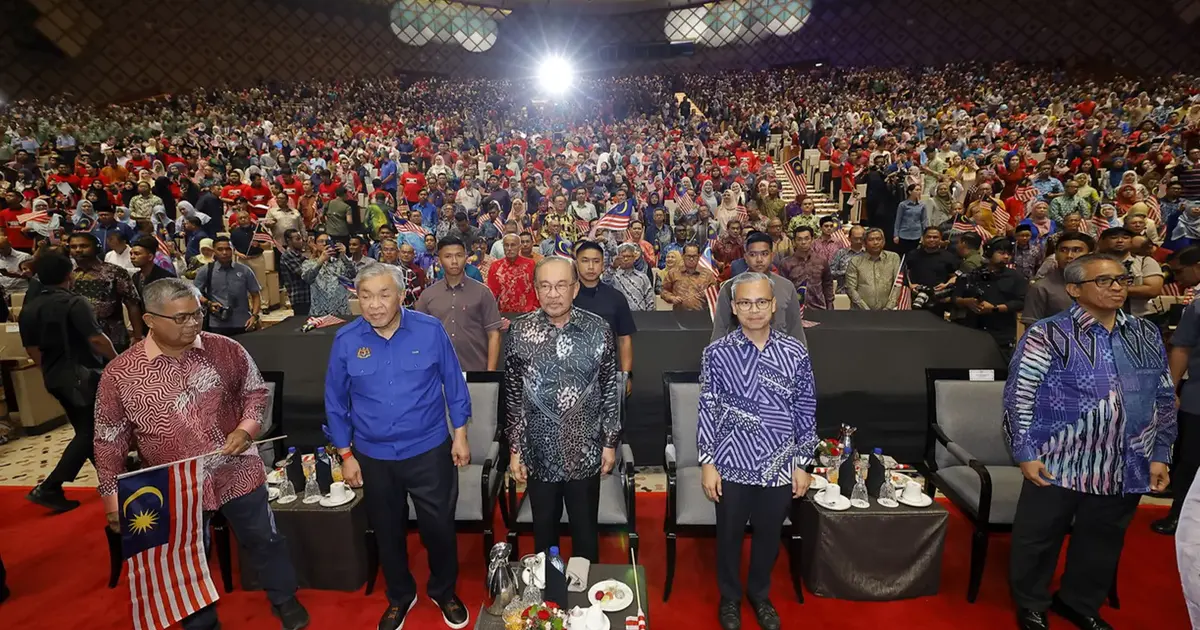
Prime Minister Anwar Ibrahim has announced plans to return substantial sums of seized funds directly to the Malaysian rakyat, signalling a significant shift in how the government manages recovered assets. The commitment reflects what Anwar characterises as a core principle of his administration: that the nation's accumulated wealth should ultimately benefit its ordinary citizens rather than remaining locked in state coffers or bureaucratic channels.
This pronouncement carries particular weight in the Malaysian context, where public frustration over financial mismanagement and asset seizures has simmered for years. The return of seized funds—which typically accumulate through criminal investigations, anti-corruption operations, and regulatory enforcement—represents more than a simple accounting adjustment. It signals an ideological commitment to wealth redistribution and democratic accountability that resonates with voters who have witnessed major corruption cases unfold in recent years.
The announcement lacks specific details about the quantum of seized funds involved, the mechanism for distribution, and the timeline for implementation. Nevertheless, the framing itself is instructive. By positioning the return of seized assets as a matter of principle rather than policy convenience, Anwar is attempting to embed this approach within his government's broader narrative about restoring public trust and reversing decades of institutional decay.
The practical implications for ordinary Malaysians remain unclear. Questions naturally arise about whether funds will be distributed universally, targeted toward specific groups, or channelled through existing welfare mechanisms. The administrative machinery required to manage and disperse billions of ringgit poses logistical challenges that government agencies have not yet publicly addressed. Previous attempts at direct cash transfers in Malaysia have encountered implementation hurdles, suggesting that execution will test the government's capacity as much as its intentions.
From an economic perspective, the return of seized funds could stimulate consumer spending if distributed widely, though the macroeconomic impact would depend substantially on how citizens allocate these windfall sums. Whether recipients would prioritise immediate consumption, debt reduction, or savings would shape downstream effects on inflation, credit markets, and domestic demand. Economists will likely scrutinise the timing and scale of any distribution carefully.
The announcement also carries political messaging beyond economics. In Malaysian electoral politics, promises of direct wealth transfers have proven potent tools for building voter coalitions. By making this commitment, Anwar is attempting to demonstrate that his government delivers tangible benefits to ordinary people—a crucial challenge for any administration facing public skepticism about elite governance. The symbolic power of returning seized assets to citizens cannot be separated from the political benefits such a move generates.
International observers may view this development through the lens of Malaysia's anti-corruption trajectory. While returning seized funds aligns with populist wealth-sharing rhetoric, it also requires robust institutions to ensure that the seizure and recovery processes themselves remain transparent and legally sound. Malaysia's recent history includes major asset recovery cases that have attracted international attention, and the government's handling of these funds will be closely watched by accountability advocates.
The statement raises important questions about Malaysia's approach to criminal proceeds and regulatory enforcement. Other Southeast Asian nations have experimented with similar fund-return schemes, with mixed results. Thailand's efforts to redistribute seized assets, for instance, have faced implementation challenges and corruption concerns. Malaysia will need to design robust safeguards to prevent any repeating of past problems.
Within the broader context of Anwar's governance agenda, this commitment sits alongside other initiatives aimed at rebuilding institutional credibility. The return of seized wealth projects an image of government that prioritises people over state institutions—a deliberate contrast to narratives about how previous administrations allocated national resources. Whether this rhetorical positioning translates into sustained policy action will significantly influence public perception of the government's commitment to reform.
The timing of Anwar's announcement also matters. Malaysia faces ongoing inflation pressures and cost-of-living challenges that have eroded household purchasing power. A visible infusion of seized funds back to citizens could provide welcome relief and demonstrate responsiveness to bread-and-butter concerns, though the scale of any distribution would need to be substantial to meaningfully address these structural economic pressures.
Looking ahead, the government faces the critical task of moving from announcement to implementation. Establishing clear eligibility criteria, designing efficient distribution mechanisms, and maintaining public transparency throughout the process will be essential. The success or failure of this initiative will likely shape voter perceptions of Anwar's administration ahead of future electoral contests, making execution quality a matter of considerable political importance.
The emphasis on returning seized assets to ordinary Malaysians ultimately reflects Anwar's attempt to position his government as fundamentally different from its predecessors—one that views national resources as belonging to the people rather than to political elites or state institutions. Whether this vision can be realised through concrete policy will determine whether it remains aspirational rhetoric or becomes a defining feature of his tenure.

