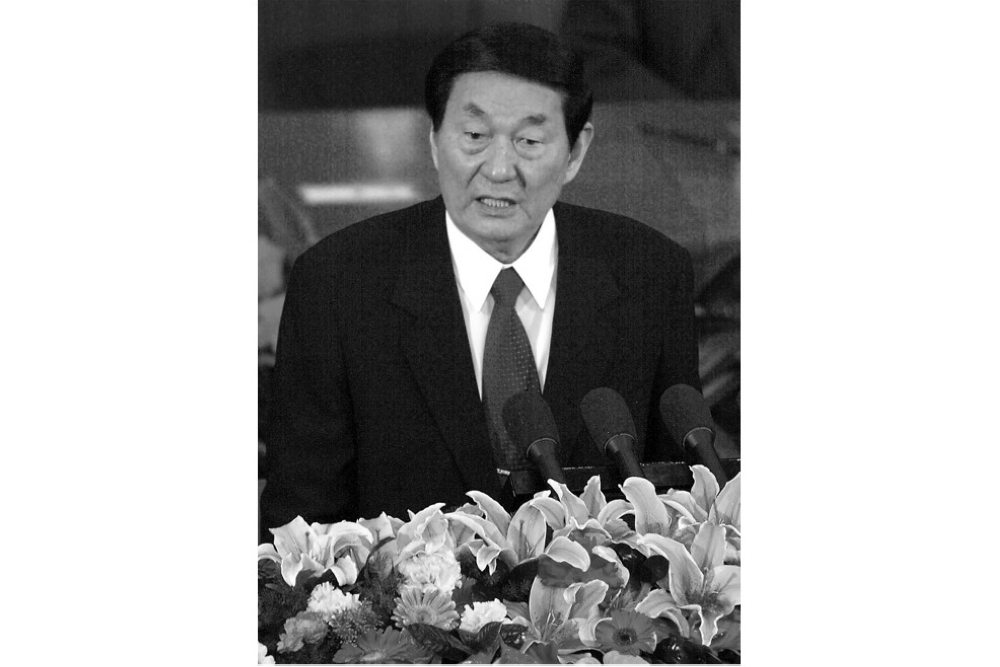
Prime Minister Datuk Seri Anwar Ibrahim has extended his heartfelt sympathies to the family and relatives of Zhu Rongji, the former Premier of China who passed away recently. In his statement, Anwar reflected on the significant contributions the late Chinese leader made toward strengthening the longstanding relationship between Malaysia and China, describing him as a trusted ally in advancing shared interests between the two nations.
Zhu Rongji, who served as Premier from 1998 to 2003, occupied a pivotal position during a transformative period in contemporary Chinese history. His tenure spanned critical economic reforms and China's integration into the global trading system, including the nation's accession to the World Trade Organization in 2001. The late premier's pragmatic approach to governance and emphasis on economic modernisation left an indelible mark on China's development trajectory and its emerging role as a major economic force in Asia and beyond.
Anwar's tribute underscores the personal dimension of diplomatic relationships between high-ranking officials, particularly those who have witnessed decades of regional change. During his various roles in government—as Finance Minister, Deputy Prime Minister, and currently as Prime Minister—Anwar has maintained extensive engagement with Chinese leadership across multiple generations. His recognition of Zhu Rongji as a "good friend" reflects the depth of personal bonds that often underpin formal state relations, particularly in Southeast Asia where personal networks carry considerable diplomatic weight.
The Malaysia-China relationship, which Zhu Rongji helped cultivate during his premiership, remains among the most consequential partnerships for Malaysia today. Economic ties have deepened substantially since the late 1990s, with Chinese investment flowing into Malaysian infrastructure, manufacturing, and technology sectors. The relationship extends beyond economics to encompass cultural exchanges, educational cooperation, and strategic dialogue, making the bilateral connection vital to Malaysia's positioning in the region.
During Zhu Rongji's time as Premier, China was transitioning toward becoming a more market-oriented economy while simultaneously increasing its regional engagement. His administration's policies created the conditions for enhanced commercial interaction with neighbouring states, including Malaysia. The framework established during that era has provided the foundation for contemporary cooperation, from the Belt and Road Initiative to ongoing trade partnerships and joint development projects.
For Malaysian readers, the significance of Zhu Rongji's legacy extends to understanding how historical figures shape long-term diplomatic patterns. The late premier's tenure coincided with Malaysia's own economic development ambitions, and the synergies forged during that period have influenced subsequent administrations' approach to managing the China relationship. This historical continuity helps explain why current Malaysian leaders maintain strong engagement with Beijing across multiple dimensions.
Anwar's condolences also serve as a reminder of the generational transitions occurring among Asia's political leadership. As elder statesmen from the region pass away, they leave behind legacies that continue influencing contemporary foreign policy decisions. Zhu Rongji represented a cohort of pragmatic reformers who shaped modern China, and their impact ripples through regional partnerships years after they have left office.
The relationship between Malaysia and China under Zhu Rongji's stewardship established important precedents for how the two nations could cooperate despite their different political systems and governance models. This pragmatic coexistence model has become increasingly relevant as Malaysia navigates complex regional dynamics involving multiple great powers with competing interests in Southeast Asia.
Looking forward, Anwar's acknowledgement of Zhu Rongji's contributions points toward continuity in Malaysia's China policy. Despite periodic tensions and shifting geopolitical circumstances, Malaysian governments have generally maintained constructive relations with Beijing, rooted partly in the goodwill and institutional frameworks established during Zhu's era. This consistency reflects both Malaysia's economic interests and its strategic calculation that balanced engagement serves the nation's broader regional position.
The passing of figures like Zhu Rongji prompts reflection on how bilateral relationships evolve across leadership changes. While individual personalities and personal relationships matter, the institutional mechanisms and patterns of cooperation established over decades tend to persist. Malaysia and China have developed such deep commercial, cultural, and diplomatic networks that the relationship transcends any single leader, even one as influential as Zhu Rongji.
For Southeast Asian observers, Zhu Rongji's death represents the conclusion of an era when China's development was still relatively nascent compared to its current standing. The former premier helped position China as an increasingly confident regional actor, changes that have profoundly shaped the regional environment in which Malaysia and its neighbours operate. Understanding figures like Zhu Rongji thus provides crucial context for comprehending contemporary Southeast Asian geopolitics and the deeply rooted nature of major power relationships within the region.

