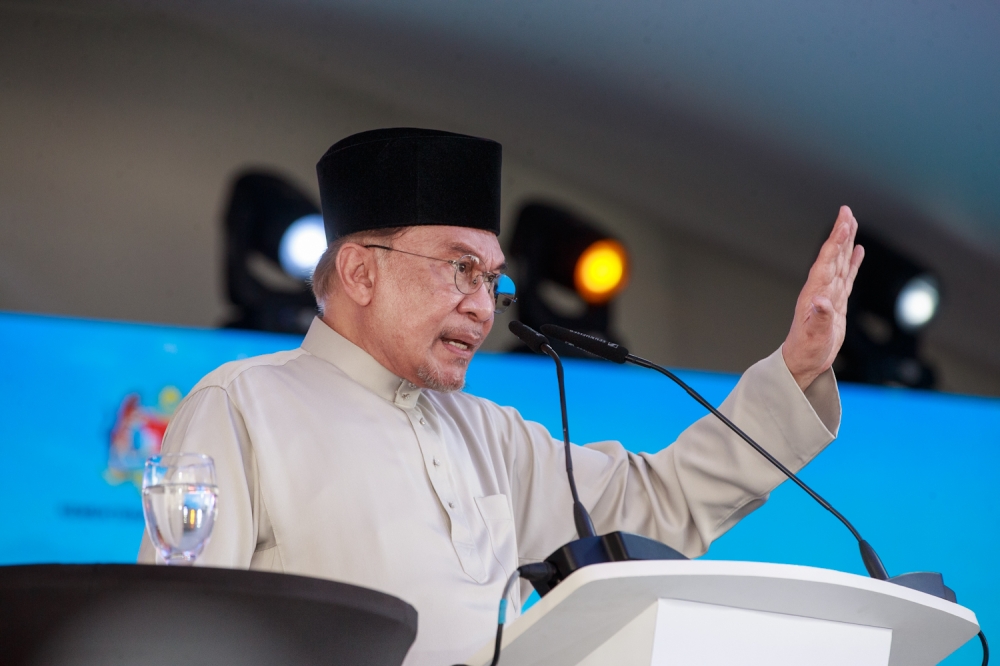
Prime Minister Datuk Seri Anwar Ibrahim has ordered an urgent examination of the civil service promotion system after discovering that significant numbers of government officers have languished in their current positions for up to eight years without advancement prospects. The directive, issued to Chief Secretary to the Government T. Aiban, signals growing concern within the administration about mounting frustration among mid-level bureaucrats and the potential long-term damage to institutional effectiveness and staff retention across government agencies.
The promotion gridlock represents a systemic challenge that extends beyond individual disappointment, touching on questions of meritocracy, generational equity, and the capacity of Malaysia's public sector to retain talented personnel. When officers face such extended periods without career progression despite meeting performance criteria, the resulting demoralization can ripple through entire departments, affecting service delivery and creating bottlenecks that cascade across administrative levels. The Prime Minister's intervention suggests awareness that the problem has reached a threshold demanding high-level political attention rather than routine bureaucratic adjustment.
The eight-year waiting period cited in the directive reflects an extreme case, but the broader pattern of delayed promotions appears endemic across multiple civil service grades and sectors. This accumulation results from various structural factors, including vacancy shortages at higher grades, budget constraints that limit the creation of new positions, and administrative procedures that have become increasingly risk-averse and slow-moving. When promotional opportunities dry up, junior officers see senior colleagues occupying positions indefinitely, creating a demographic jam that prevents younger cohorts from advancing their careers at reasonably expected intervals.
For Malaysia's public service, this bottleneck carries particular significance in an era when government agencies compete with the private sector for skilled professionals. The civil service has traditionally attracted talented individuals through promises of job security, pension benefits, and predictable career progression. However, when advancement slows dramatically, these advantages diminish relative to opportunities in commerce, finance, and technology sectors where career movement can occur more rapidly. The risk of losing promising officers to brain drain becomes real, potentially weakening governance capacity precisely when modernization and complexity demand sophisticated administrative capability.
Anwar's emphasis on reviewing the system rather than simply removing restrictions reflects pragmatism about the constraints facing government. Simply promoting everyone simultaneously would create cascading vacancies throughout the system and potentially destabilize organizational structures. Instead, a comprehensive review must address root causes: whether the civil service truly needs more senior positions; how performance assessment systems might better differentiate candidates; whether lateral movement between departments might relieve pressure in congested grades; and whether enhanced non-monetary benefits might improve satisfaction among officers facing longer waits. Such analysis requires months of detailed work by the Chief Secretary's office and relevant agency heads.
The timing of this directive coincides with broader efforts by the current administration to rebuild public confidence in government institutions and improve administrative effectiveness. Civil servants represent the face of government to ordinary Malaysians, handling everything from tax assessment to education delivery to healthcare administration. When these individuals feel undervalued and blocked from advancement, their motivation inevitably suffers, potentially manifesting as reduced service quality, slower processing times, and diminished responsiveness to public needs. Conversely, a system that rewards performance and enables reasonable career progression creates incentives for excellence throughout the bureaucratic hierarchy.
Regional comparisons illustrate that Malaysia's promotion delays are not inevitable features of civil service management. Other Southeast Asian nations have implemented systems allowing more frequent advancement or alternative pathways for recognition and compensation. Singapore's civil service, while highly selective, maintains clearer promotion timelines and extensive professional development opportunities. Thailand and Vietnam have experimented with greater flexibility in career progression. These examples suggest that solutions exist within established governance frameworks, requiring not radical restructuring but thoughtful recalibration of policies and processes.
The Chief Secretary's review will likely examine whether current position classification systems adequately reflect actual workload and responsibility levels. In some cases, what appear as junior positions may have accumulated responsibilities that justify higher classification and salary without changing the official designation. Creating expanded opportunities for advancement through classification revision costs less than creating entirely new positions while still providing salary progression and increased status to talented mid-career officers. This approach has proven effective in other jurisdictions facing similar constraints.
Anwar's directive also implicitly endorses the principle that promotion decisions should rest primarily on merit, performance, and demonstrated capability rather than political connections or seniority alone. This message resonates with younger civil servants who have witnessed periodic frustration with patronage-based advancement that may reward loyalty over competence. Reinforcing meritocratic principles helps restore institutional credibility and signals that the government values professional standards, which carries broader implications for anti-corruption efforts and administrative integrity.
The resolution of this promotion crisis will likely unfold gradually rather than through immediate action. Competing priorities demand the Chief Secretary's attention, and creating sustainable solutions requires careful analysis rather than hasty decisions that might generate new problems. However, the Prime Minister's personal involvement indicates that this issue has elevated significance within government planning. Officers who have waited years for advancement now have explicit acknowledgment that their situation warrants urgent attention, providing some measure of validation even before concrete policy changes take effect.
For Malaysian society broadly, how effectively government addresses this challenge matters considerably. Public administration underpins everything from infrastructure development to social safety nets to economic regulation. When the civil service functions well, citizens experience efficient services and trustworthy governance. When institutional morale declines due to frustration about career prospects, service quality inevitably diminishes. The Prime Minister's intervention represents recognition that investing in civil service satisfaction and career development constitutes a genuine public interest, not merely an internal personnel matter.

