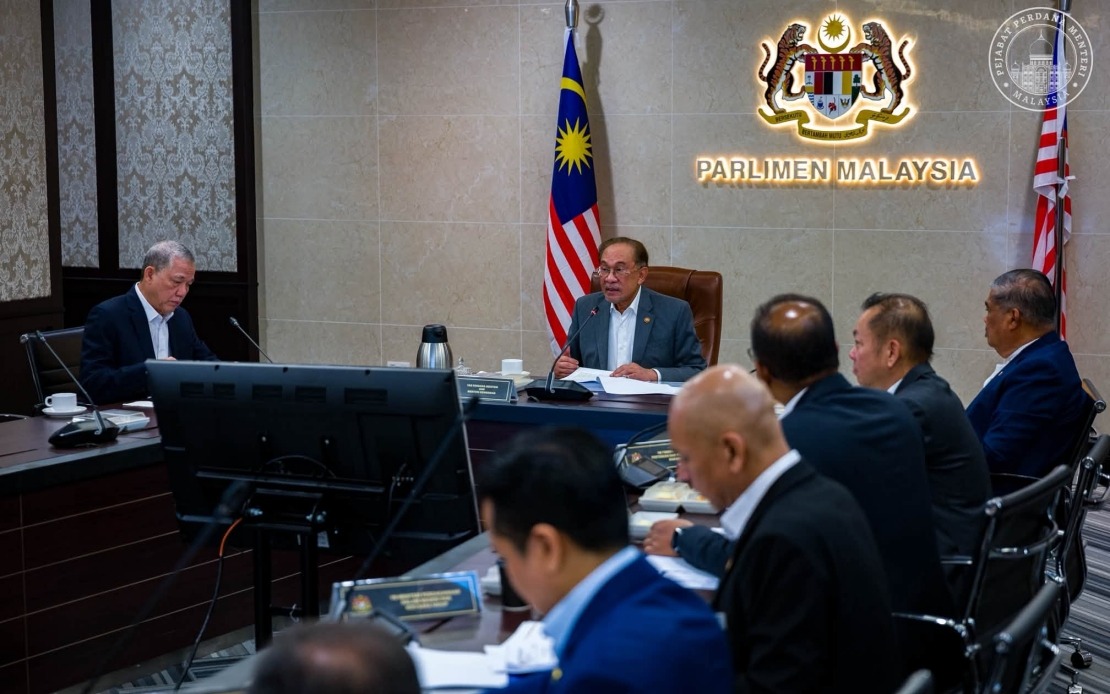
Prime Minister Datuk Seri Anwar Ibrahim has moved to establish comprehensive countermeasures against the looming Super El Niño phenomenon, directing the Ministry of Agriculture and Food Security to develop an emergency response framework before the weather system reaches Malaysian shores in November. The directive underscores growing governmental concern about potential disruptions to domestic agricultural output and the need to protect farming communities from economic shocks tied to climate volatility.
The agricultural sector faces mounting pressure as meteorological forecasts indicate severe drought conditions across Southeast Asia during the Super El Niño period. For Malaysia, where agriculture remains a cornerstone of rural livelihoods and a contributor to national food independence, such climatic events pose significant risks to paddy production, livestock rearing, and fishing operations. The government's proactive stance reflects lessons learned from previous El Niño episodes when insufficient preparation led to crop failures and income losses among farmers and fishermen.
During the first National Food Security Council Meeting held under his chairmanship, Anwar emphasised that mitigation strategies must balance immediate protective measures with long-term sustainability objectives. The council's discussions encompassed not only weather-related contingencies but also broader food supply resilience, suggesting the administration views the El Niño event as an opportunity to consolidate systemic improvements rather than merely react to crisis conditions.
The agriculture ministry has been tasked with expediting the finalisation of these measures through proper governmental channels while maintaining rigorous compliance with food safety and quality protocols. This dual imperative—speed and standards—reflects international best practices where emergency responses cannot compromise the health and marketability of agricultural products. Malaysia's food exports, particularly in the aquaculture and processed foods sectors, depend heavily on maintaining certifications that command premium prices in sophisticated markets.
Parallel to drought preparedness, the council also addressed fisheries cooperation frameworks with Thailand, indicating that food security strategies now incorporate cross-border coordination mechanisms. As neighbouring countries face similar climatic pressures, bilateral and regional cooperation becomes essential for managing competition for water resources, ensuring sustainable fishing practices, and maintaining supply chain stability across Southeast Asia. Thai-Malaysian fisheries integration could provide buffer mechanisms when domestic production faces constraints.
Engagement with farming and fishing communities forms a critical component of the government's approach. Anwar stressed the necessity of continuous dialogue with producers to ensure their operations remain compliant with prescribed standards while securing fair market access and livelihood protection. This stakeholder-inclusive methodology acknowledges that effective policy implementation requires buy-in from communities whose survival depends on agricultural incomes, particularly in rural areas where alternative employment opportunities remain limited.
The broader context of this directive involves strengthening Malaysia's agrifood sector competitiveness through technological adoption and innovation. Facing climate uncertainty, the government recognises that traditional farming methods alone cannot guarantee consistent productivity or resilience. Investment in drought-resistant crop varieties, precision irrigation systems, controlled-environment agriculture, and data-driven farming practices becomes increasingly imperative. Such modernisation efforts, while requiring substantial capital investment, promise to improve both short-term weather resilience and long-term productivity gains.
The El Niño phenomenon carries particular significance for Malaysia's tropical agricultural economy. Unlike temperate regions where El Niño brings increased rainfall, equatorial and Southeast Asian areas typically experience pronounced droughts that devastate rain-fed agriculture. Paddy fields dependent on monsoon precipitation face particular vulnerability, affecting rice production at a time when regional self-sufficiency remains a policy priority. Livestock and aquaculture operations also face challenges from water scarcity and elevated temperatures stressing animal populations.
Governmental planning for the November-arrival Super El Niño demonstrates recognition that climate change is fundamentally altering Malaysia's agricultural risk profile. Where historical precedent once provided reliable guidance for planting seasons and yield expectations, contemporary farming requires adaptive management strategies and contingency reserves. The council's deliberations suggest evolution toward integrated food security frameworks that encompass production resilience, market access, community welfare, and environmental sustainability simultaneously.
The economic implications extend beyond individual farm households to national food security. Import-dependent nations face volatile international commodity prices when global production contracts, a particular concern for Malaysia where dairy products, grains, and meat supplementation through imports constitute significant portions of national food supply. Bolstering domestic production capacity and building strategic reserves reduces vulnerability to external market shocks while supporting rural income stability.
Implementation of these measures will likely involve coordination across multiple government agencies including the Farmer Organisation Authority, the Malaysian Fisheries Development Authority, and the Agricultural Bank of Malaysia, each contributing specialised capabilities to comprehensive climate adaptation. Public-private partnerships with agribusiness firms and agricultural technology providers may accelerate deployment of innovative solutions previously unavailable to smallholder farmers.
The timing of this initiative reflects administrative agility in addressing predictable crises before they materialise into emergencies requiring expensive damage control. By November, preparations must be substantially complete, including distribution of drought-resistant seeds, installation of water-conservation infrastructure, and finalisation of income support mechanisms for affected communities. Procrastination risks repeating historical patterns where insufficient notice periods prevented effective implementation of protective measures.

