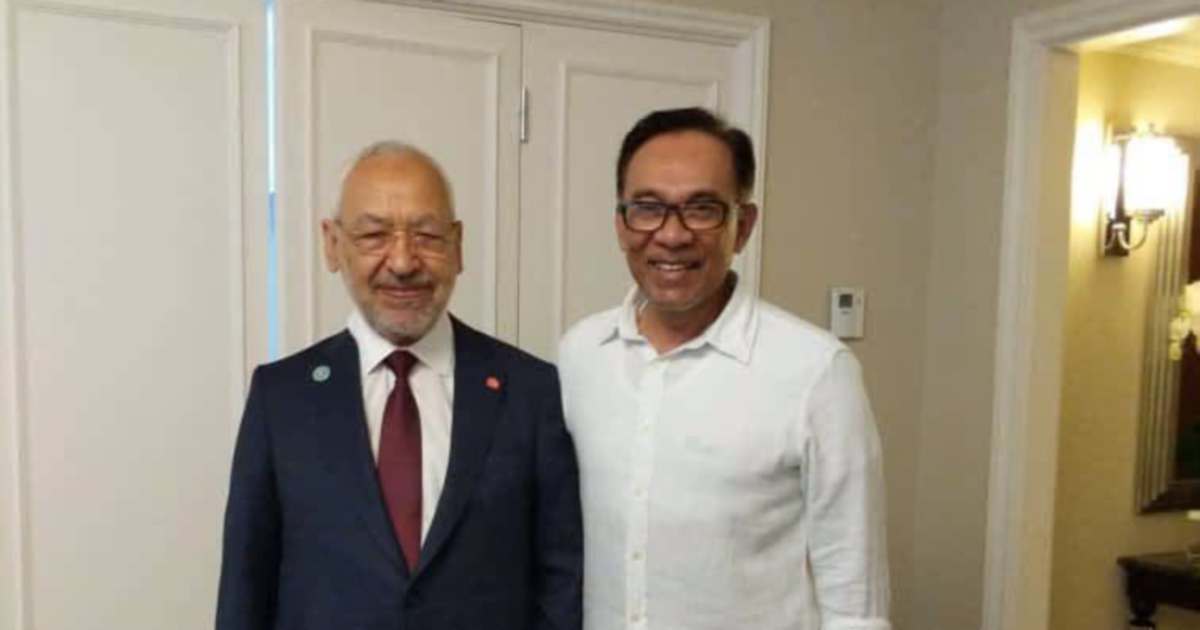
Prime Minister Datuk Seri Anwar Ibrahim has dispatched a formal letter to Tunisian President Kais Saied making a direct appeal for the release of political figure Sheikh Rached Ghannouchi, grounding his request in humanitarian considerations. The initiative reflects Malaysia's broader engagement with democratic and political developments across the wider Muslim world, particularly regarding the treatment of prominent Islamic and political personalities in North Africa and the Middle East.
Ghannouchi, a significant figure in Tunisia's political landscape and longtime leader of the Ennahda movement, has found himself at the centre of intensifying political tensions in the North African nation. His detention represents part of broader shifts in Tunisian governance that have generated concern among various international observers and governments with interests in regional stability. Anwar's intervention through direct diplomatic correspondence signals Malaysia's willingness to engage on matters affecting influential Muslim personalities facing legal or political difficulties abroad.
The Malaysian Prime Minister's humanitarian framing of the appeal carries particular weight given his own background as a political detainee during the 1990s under Malaysia's Internal Security Act. Anwar's personal experience with prolonged imprisonment and allegations of politically motivated prosecution lends credibility and resonance to his advocacy on behalf of political prisoners and detainees elsewhere. His invocation of humanitarian principles rather than purely political ones suggests a calculated diplomatic approach designed to gain traction with the Tunisian leadership.
Tunisia has undergone significant constitutional and political transformation in recent years, with President Kais Saied consolidating executive power and introducing constitutional amendments that fundamentally altered the balance between presidential and parliamentary authority. Within this context, opposition figures including Ghannouchi have faced legal complications and detention. The political environment in Tunis has become increasingly polarised, with competing visions for the nation's democratic future creating an unpredictable landscape for dissidents and opposition leaders.
Anwar's diplomatic outreach reflects Malaysia's historical role as an advocate for Muslim causes and democratic principles within regional forums. Malaysia, as a Southeast Asian nation with a significant Muslim-majority population and a history of engagement with Organisation of Islamic Cooperation affairs, often positions itself as an interlocutor between Asian and Middle Eastern political actors. The letter to President Saied exemplifies this tradition of regional diplomacy extending beyond immediate bilateral concerns.
The humanitarian angle adopted by the Prime Minister resonates with principles Malaysia emphasises within international human rights discussions, though the nation itself has faced criticism from international observers regarding detention policies and restrictions on political freedoms. Nevertheless, Malaysia's diplomatic advocacy on behalf of foreign political figures remains consistent with its broader foreign policy orientation toward solidarity with Muslim-majority nations and populations experiencing political upheaval.
Ghannouchi's situation has attracted attention from various international bodies concerned with political freedoms and the rule of law in Tunisia. The Ennahda movement he led represented Tunisia's Islamist political contingent and played a significant role in post-Arab Spring governance before experiencing shifting fortunes under subsequent political developments. His current predicament encapsulates broader questions about political pluralism and the treatment of opposition figures in transitional democracies.
Anwar's intervention also carries implications for Malaysia's standing within Islamic diplomatic circles and multilateral organisations where the nation seeks to exercise influence. By advocating for Ghannouchi's release, the Prime Minister positions Malaysia as a defender of political pluralism and individual rights, values that resonate across global forums Malaysia participates in. This stance simultaneously strengthens Malaysia's moral authority on international platforms while potentially complicating bilateral relations with Tunisia if President Saied interprets the appeal as unwelcome external pressure.
The timing and nature of the appeal suggest Malaysia's diplomatic service has calculated that a respectful, humanitarian-framed intervention might succeed where more direct political criticism could prove counterproductive. The letter format indicates awareness of diplomatic protocols and deference to Tunisian sovereignty, even while advancing a clear position on the Ghannouchi question. This approach reflects sophisticated understanding of how smaller and medium-sized powers navigate complex international issues where broader powers maintain limited direct leverage.
Developing stronger advocacy networks among Muslim-majority nations regarding political freedoms serves Malaysia's strategic interests in maintaining relevance within Islamic diplomatic structures. The Anwar administration has positioned itself as defender of democratic values and justice since assuming office, making interventions on behalf of political detainees consistent with this larger narrative. Whether Tunisia will respond positively to Malaysia's humanitarian appeal remains uncertain, but the diplomatic initiative demonstrates Anwar's willingness to deploy Malaysia's diplomatic capital on behalf of causes aligned with his government's stated principles and international positioning.

