%22%2F%3E%3C%2Fpattern%3E%3C%2Fdefs%3E%3Crect%20width%3D%22100%25%22%20height%3D%22100%25%22%20fill%3D%22url(%23ph3comvg)%22%2F%3E%3Crect%20width%3D%22100%25%22%20height%3D%22100%25%22%20fill%3D%22url(%23ph3comvp)%22%2F%3E%3Ctext%20x%3D%2250%25%22%20y%3D%2250%25%22%20text-anchor%3D%22middle%22%20dominant-baseline%3D%22central%22%20fill%3D%22rgba(255%2C255%2C255%2C0.95)%22%20font-family%3D%22Georgia%2C%20'Times%20New%20Roman'%2C%20serif%22%20font-weight%3D%22700%22%20font-size%3D%22272%22%20letter-spacing%3D%22-0.02em%22%3EAnwar%3C%2Ftext%3E%3C%2Fsvg%3E)
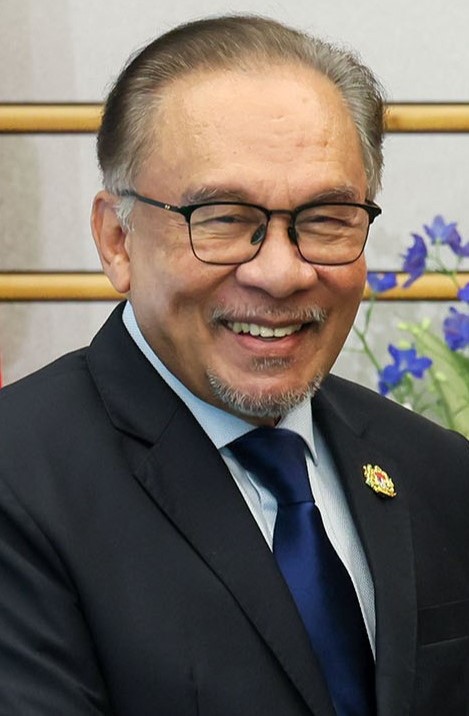
Prime Minister Anwar Ibrahim took centre stage on the evening of 22 June 2026 at Padang Bukit Gambir Extreme Park to unveil Pakatan Harapan's complete slate of candidates for the 16th Johor State Election. The event, styled as a "Night of Hope," represented a pivotal moment for the ruling coalition as it seeks to consolidate its grip on one of Malaysia's most strategically important states. With all state seats presented to supporters and party faithful, the gathering served as both a formal launch and a statement of intent about PH's vision for Johor's political direction in the coming electoral cycle.
The candidate announcement carried symbolic weight beyond the routine mechanics of electoral preparation. By personally leading the event, Anwar signalled the federal government's deep investment in Johor's political landscape and underscored the Prime Minister's commitment to PH's continued dominance at state level. Johor has historically been a bellwether for Malaysian politics, and control of the state remains crucial for any coalition's national standing. The choice of venue—an outdoor recreational space—suggested an attempt to project accessibility and connection with ordinary residents rather than relying on the traditional closed-door formats of previous campaign launches.
Central to Anwar's messaging was a reframing of political purpose itself. He articulated that governance should be fundamentally oriented toward tangible improvements in citizens' lives, extending beyond symbolic gestures to encompass concrete outcomes. The Prime Minister outlined what PH considers the essential pillars of responsible stewardship: strengthening community bonds, unlocking economic opportunities particularly for younger demographics, enabling small and medium enterprises to thrive, and steadily lifting living standards across all Johor households. This framing positions PH as focused on delivery rather than ideology, a strategic pivot that reflects broader voter expectations for results-oriented government.
The "Malaysia Madani" vision—the government's overarching development framework—provided the intellectual scaffolding for the evening's messaging. This concept, emphasising dignity, sustainability, and prosperity through reform, has become the administration's primary lens for justifying policy decisions and articulating long-term national direction. By anchoring the Johor campaign within this framework, PH sought to connect state-level electoral competition to the broader federal transformation narrative, making the state election part of a larger story about national renewal rather than merely local competition for seats and resources.
The four thematic pillars explicitly emphasised at the event—unity, integrity, compassion, and progress—represented a carefully calibrated response to contemporary Malaysian political discourse. Unity resonates against the backdrop of rising polarisation and communal tensions; integrity addresses persistent public concerns about corruption and official conduct; compassion counters perceptions of elitist governance; and progress appeals to aspirational voters seeking visible improvement in their circumstances. Together, these values construct a political identity that attempts to appeal across Malaysia's diverse demographic and ideological spectrum.
For Johor specifically, Pakatan Harapan's candidate selection carries profound implications. The state has experienced significant demographic changes in recent years, with rapid urbanisation in areas like Johor Bahru creating new voting blocs with distinct priorities. Simultaneously, rural and semi-urban constituencies maintain different economic concerns and social expectations. The composition of PH's full slate would necessarily reflect internal negotiations among party components—DAP, PKR, Amanah, and supporting parties—each seeking to maximize representation while maintaining coalition cohesion. These behind-the-scenes calculations often prove as consequential as the public campaign messaging.
Anwar's personal involvement in the candidate launch carried additional tactical significance. As Prime Minister, his presence lent federal resources, national media attention, and the machinery of government to what is formally a state election. This blurring of boundaries between federal and state campaigns reflects the reality that Malaysian electoral politics increasingly operates as an integrated system where national and local contests influence each other. Opposition parties would likely characterise this as inappropriate use of federal incumbency advantage; PH would frame it as necessary leadership involvement in a crucial electoral contest.
The timing of the event—scheduled for 8:00 PM—suggests an evening rally format designed to accommodate working voters and create a festival-like atmosphere around candidate presentation. Such logistical choices, though seemingly minor, reflect sophisticated campaign planning aimed at maximising attendance and media impact. The Padang Bukit Gambir location's recreational character further reinforced the accessibility narrative, distinguishing this launch from the conference-hall formats of earlier political rallies.
Looking ahead, the full candidate slate announced that evening would face scrutiny from multiple quarters. Opposition parties would scrutinize PH's selections for perceived weaknesses or controversial figures; grassroots supporters would assess whether their preferred candidates received nominations; and analysts would evaluate whether the slate reflects effective demographic representation and competitive viability across Johor's diverse constituencies. The composition of the candidate list often proves more determinative of electoral outcomes than campaign messaging, as it signals who the coalition genuinely intends to empower and which constituencies it prioritises.
For Malaysian and Southeast Asian observers, the Johor campaign carries broader implications. As the region navigates democratic renewal and rising voter expectations for accountability, the mechanisms through which major coalitions renew their mandates offer instructive cases. Anwar's invocation of principled leadership, integrity, and inclusive governance articulates values increasingly demanded by voters across developing democracies, even as questions persist about implementation and follow-through. The gap between campaign rhetoric and governance reality remains the crucial test for any ruling coalition seeking electoral renewal.
The "Night of Hope" framing itself merits consideration. Hope as a political commodity functions powerfully in contexts where citizens have experienced governance disappointment or uncertainty about the future. By consciously adopting aspirational language, PH positioned itself as the custodian of positive possibility, contrasting with what it implicitly characterizes as opposition pessimism or nostalgia for past arrangements. Whether this hopeful messaging translates into actual voter mobilization and ultimately electoral success depends on whether the complete candidate slate and subsequent campaign execution substantiate the lofty principles articulated at the launch.
As Johor's 16th state election unfolds, this candidate announcement event will likely be remembered as an important inflection point—the moment when Pakatan Harapan publicly committed to its vision for the state's future and staked its claim to representing Johor's interests through principled, inclusive governance. The real measure of the Night of Hope, however, will emerge not from the soaring rhetoric of the launch event but from how effectively these candidates engage with constituents and whether the coalition's stewardship of Johor delivers on the tangible improvements promised.