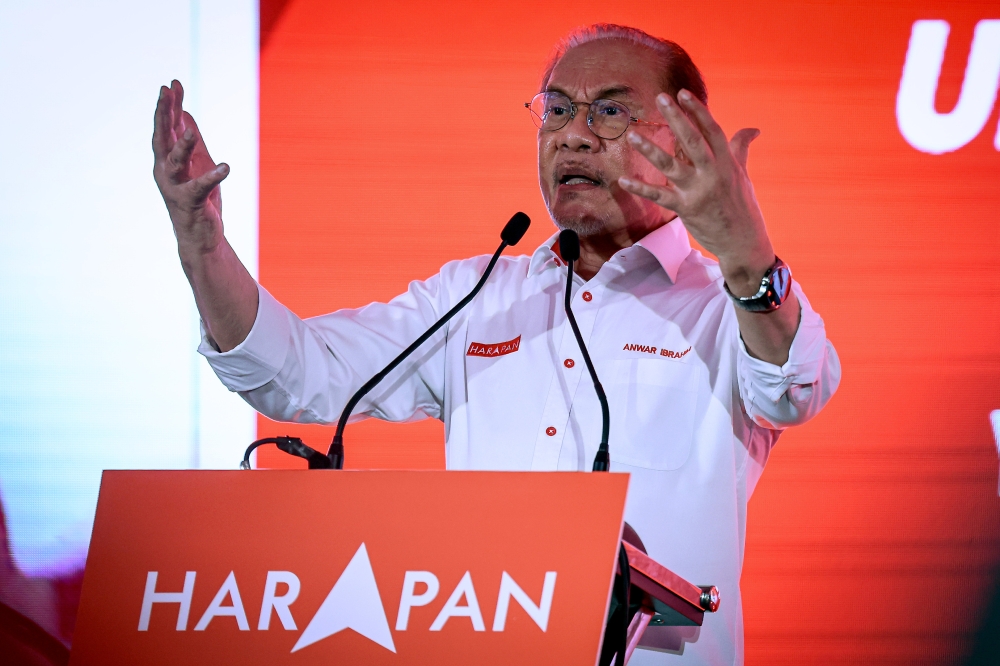
Prime Minister Datuk Seri Anwar Ibrahim is bringing Pakatan Harapan's campaign message directly to Negeri Sembilan, signalling the coalition's intensified push to maintain electoral viability across Malaysia's key states. The campaign debut in the state marks a critical juncture for the ruling coalition, which faces the ongoing challenge of sustaining voter confidence while managing coalition dynamics and governing pressures.
Anwar's choice to campaign in Negeri Sembilan reflects the strategic importance of the state in Malaysia's political landscape. The state, which has historically swung between coalitions, represents the kind of swing-state territory where elections are frequently decided. Negeri Sembilan's diverse demographic mix—combining urban constituencies with substantial rural and semi-urban areas—makes it an essential testing ground for Pakatan's broader electoral messaging and ground organisation.
The timing of Anwar's campaign foray carries significance for how Pakatan positions itself in the political cycle. By appearing personally on the campaign trail, the Prime Minister elevates the visibility of local candidates and reinforces the national coalition's commitment to regional representation. This approach also allows Anwar to connect directly with constituents, moving beyond statements through parliament and media appearances to engage voters on their own turf.
Pakatan Harapan has faced mounting pressures since taking office, including managing a complex coalition of different parties with divergent policy priorities and regional interests. The need to demonstrate electoral competence and voter appeal becomes increasingly urgent as political competitors seek to portray the government as weakening or losing direction. Campaigns like this serve to counter such narratives by showing active, visible leadership engagement with the electorate.
For Malaysian voters considering which coalition deserves their support, the campaign provides opportunities to assess Anwar's policy positions and vision for national development. The Prime Minister typically uses such appearances to outline government achievements, articulate future plans, and address local concerns—whether related to infrastructure, economic development, education, or healthcare. Such direct dialogue helps voters make informed electoral choices beyond what they absorb through news media or social platforms.
Negeri Sembilan's electorate has demonstrated independence in recent electoral cycles, sometimes punishing incumbent governments and sometimes rewarding them based on local performance and national sentiment. The state's voters are known for sophisticated political analysis and willingness to split their votes between different coalitions at different electoral levels. This requires candidates and parties to campaign intensively rather than assume any automatic support.
The campaign effort also reflects internal coalition management. By mobilising behind Pakatan candidates in Negeri Sembilan, Anwar seeks to demonstrate that the coalition remains functional and focused. This matters for the constituent parties within Pakatan, their members, and their supporters, who need reassurance that the coalition framework remains viable and that electoral efforts are being mounted seriously.
From a regional perspective, Malaysia's political stability depends significantly on how smoothly electoral transitions occur and how competing coalitions maintain democratic norms while contesting for power. Campaigns that engage voters substantively and encourage participation strengthen democratic institutions, even when they involve robust criticism of opponents.
Anwar's Negeri Sembilan campaign will likely focus on areas where Pakatan holds or contests seats, with messaging tailored to local concerns while reinforcing national coalition narratives. Campaign messaging typically emphasises governance achievements, economic management credentials, and policy differentiation from opposition alternatives. Local issues—whether specific infrastructure projects, employment opportunities, or service delivery—become connected to broader national governance arguments.
The campaign's success will be measured partly through immediate metrics such as crowd attendance and media coverage, but more importantly through how effectively it mobilises Pakatan's volunteer networks and translates voter engagement into actual electoral support. The ground organisation that campaigns activate often proves more decisive than high-profile appearances alone.
For Southeast Asian observers watching Malaysia's political evolution, such campaigns illustrate how democratic systems continue functioning despite the significant challenges governments face. The capacity of prime ministers to campaign actively while governing, and the voters' willingness to engage with multiple competing messages, demonstrates institutional resilience even when political circumstances appear contentious or fragmented.
As election timing remains uncertain, with various states potentially holding polls at different moments, Pakatan's early campaign activation in Negeri Sembilan may establish a pattern for subsequent efforts across other regions. The coalition's campaign strategy, messaging effectiveness, and ability to energise its base during this phase will influence outcomes whenever actual voting occurs.
Ultimately, Anwar's Negeri Sembilan campaign represents more than a routine political appearance. It encapsulates broader questions about Malaysia's electoral trajectory, Pakatan Harapan's political sustainability, and whether the coalition can convincingly demonstrate that it deserves continued voter confidence in an increasingly competitive political environment.

