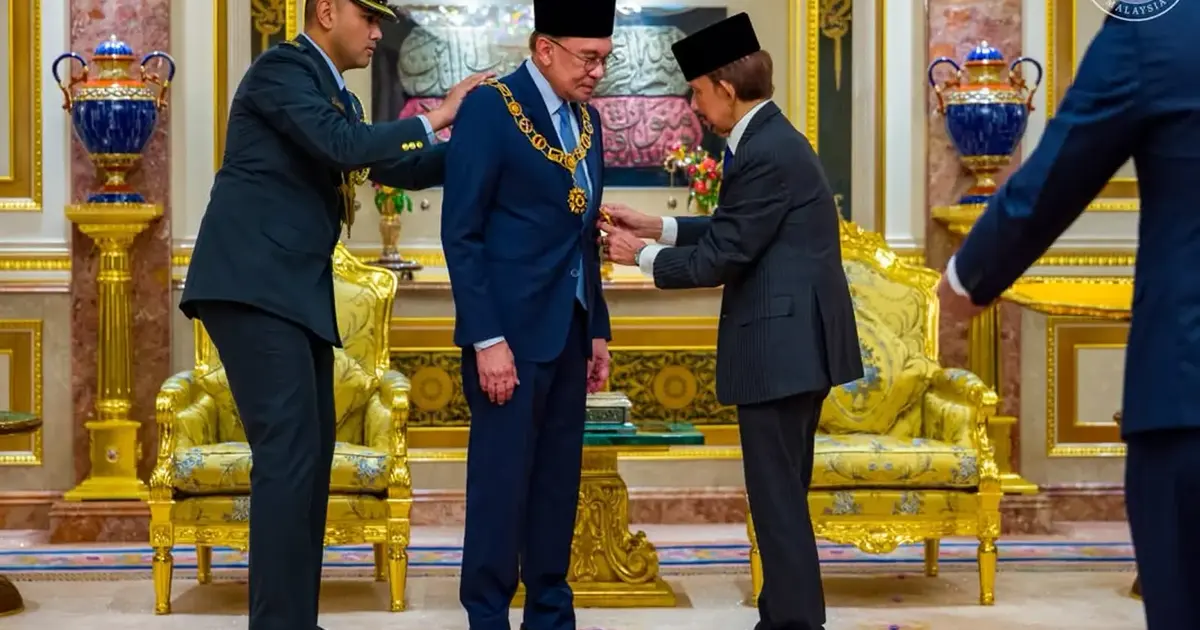
Prime Minister Anwar Ibrahim has been bestowed one of Brunei's most distinguished honours by Sultan Hassanal Bolkiah, underscoring the depth of diplomatic engagement between Malaysia and its smaller neighbour across the South China Sea. The award of the Darjah Kerabat Laila Utama Yang Amat Dihormati (D.K.) represents formal recognition of Anwar's contributions to strengthening bilateral relations and regional stability in Southeast Asia.
The bestowal of such a high-level honour carries significant symbolic weight in the context of ASEAN diplomacy. Royal decorations from one monarch to another nation's leader typically mark moments of particular friendship or shared achievement on the diplomatic stage. For Malaysia and Brunei, this gesture reflects their interconnected history, shared Islamic heritage, and overlapping economic interests in the region. The honour recognises not merely personal standing but the institutional commitment both countries have toward constructive engagement.
Brunei, despite its small geographic footprint, maintains considerable influence in Southeast Asian affairs as the current chair of ASEAN. Sultan Hassanal Bolkiah's decision to confer this honour on the Malaysian Prime Minister occurs within the framework of Malaysia's enhanced role in regional strategic discussions and its leadership on various multilateral platforms. The timing and nature of such honours typically align with specific moments of diplomatic progress or mutual respect between governments.
Anwar Ibrahim's premiership has been marked by a reassertion of Malaysia's diplomatic presence across ASEAN and beyond. His tenure has witnessed renewed emphasis on regional cooperation, particularly in addressing transnational challenges such as maritime security, trade disruption, and climate change. Brunei's acknowledgement through this honour suggests endorsement of Malaysia's diplomatic direction and commitment to regional frameworks that benefit all member states.
The Darjah Kerabat Laila Utama Yang Amat Dihormati ranks among Brunei's highest state honours. Such decorations are rarely awarded to foreign dignitaries and typically follow careful diplomatic consideration by the palace. Recipients generally include heads of state, senior government officials, or individuals who have demonstrated exceptional service to their own nations and contribution to international relations. The fact that Anwar has been selected places him in a distinguished category of foreign leaders recognized by the sultanate.
This honour arrives during a period when Malaysia-Brunei cooperation spans multiple domains beyond traditional diplomacy. Trade relations, energy partnerships, and security coordination form the backbone of bilateral engagement. Both nations are also fellow members of the ASEAN Regional Forum, the East Asia Summit, and various other multilateral organisations. The royal recognition serves to reinforce these institutional ties at the highest levels of government.
From a broader Southeast Asian perspective, the award demonstrates how even smaller nations like Brunei continue to play meaningful roles in the region's diplomatic architecture. Despite its size and population, Brunei's role in ASEAN provides it with platforms to recognise and honour leadership across the region. For Malaysia, receiving such recognition from neighbouring capitals validates its approach to regional engagement and cooperative diplomacy during a period of considerable geopolitical complexity.
The bestowal of honours between leaders also reflects the personal rapport that often characterises successful bilateral relationships. Beyond formal government structures and institutional arrangements, the individual relationships between top officials frequently shape the character and effectiveness of diplomatic engagement. Anwar's receipt of this award suggests a foundation of mutual respect and understanding between him and Sultan Hassanal Bolkiah that facilitates smoother cooperation on matters of joint concern.
The broader implications of this honour extend to Malaysia's positioning within ASEAN as a whole. The country's leadership on various regional initiatives—from economic cooperation to security matters—has required sustained diplomatic effort and relationship-building. Recognition from Brunei's sultanate serves as external validation of Malaysia's contribution to regional stability and prosperity, which carries weight in an environment where soft power and institutional prestige matter significantly in determining influence.
Looking forward, this honour may be expected to further facilitate high-level engagement between Malaysian and Bruneian officials on matters requiring attention. Such gestures typically precede or accompany substantive discussions on bilateral issues, investment proposals, or regional matters requiring coordinated responses. The formal recognition established through this decoration creates an additional diplomatic channel for dialogue at the most senior levels of government.
For Malaysian observers, the award represents tangible evidence of the country's acceptance and standing within Southeast Asian diplomatic circles at a time when questions about regional influence and credibility remain pertinent. The honour affirms that despite various domestic challenges, Malaysia continues to command respect from its peers and maintains capacity to contribute meaningfully to ASEAN's collective interests and regional security arrangements.

