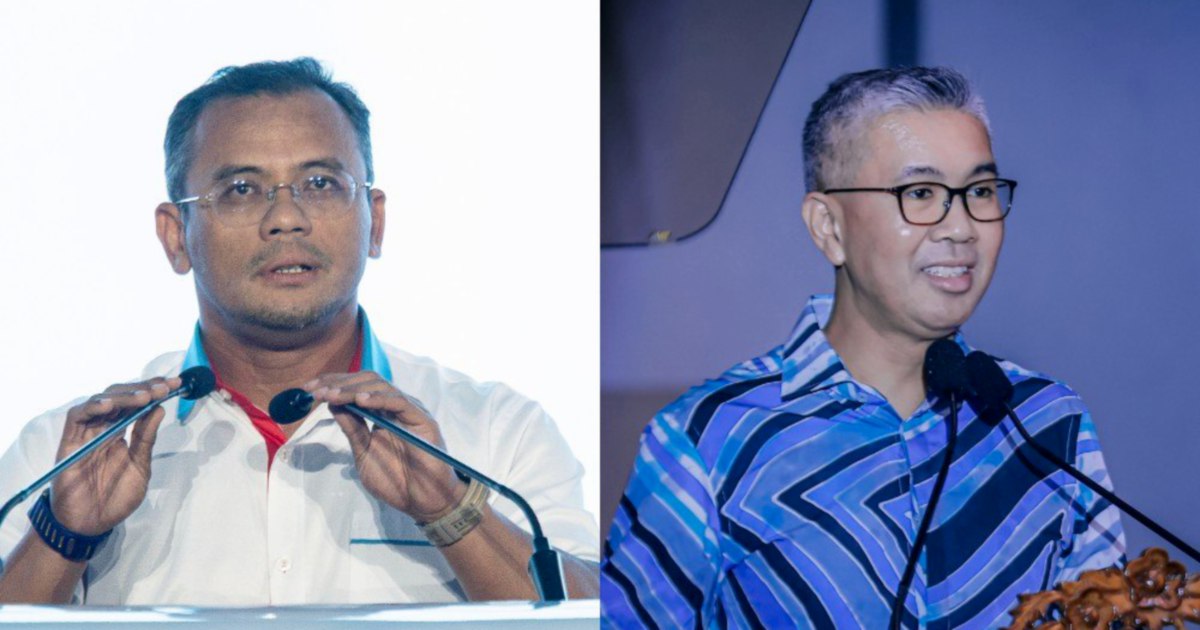
PKR President Datuk Seri Anwar Ibrahim has reshuffled senior party positions in a move that signals the coalition's preparations for electoral contests ahead. In Melaka today, Anwar granted full executive authority to Vice-President Datuk Seri Saifuddin Nasution Ismail to undertake the responsibilities of deputy president, streamlining the party's administrative hierarchy as it navigates an increasingly complex political landscape.
The appointment reflects a strategic consolidation of power within Malaysia's largest governing coalition party. Saifuddin Nasution, who has served as Vice-President, now assumes a more prominent role in managing day-to-day party affairs and internal coordination. This elevation underscores Anwar's confidence in the longtime PKR loyalist to handle sensitive party matters while maintaining cohesion among the diverse membership base that spans urban and rural constituencies.
More significantly, the PKR President announced that Amirudin will serve as the party's election director, a crucial position that carries substantial weight in orchestrating campaign strategies, candidate selection, and grassroots mobilisation. This appointment positions Amirudin at the epicentre of PKR's electoral machinery during a period when the ruling coalition faces pressure to consolidate voter support across multiple fronts. The election director role traditionally involves direct coordination with state chapters, managing candidate vetting processes, and ensuring coherent messaging across campaign platforms.
In addition to these internal party appointments, Anwar unveiled that Tengku Zafrul has been designated as a coordinator within the Prime Minister's Office, broadening the government's administrative reach. The appointment of Tengku Zafrul to the PMO signals an expansion of Anwar's immediate advisory circle and reflects efforts to strengthen institutional capacity within the executive office. His involvement in PMO coordination suggests a deepening integration of party machinery with governmental functions, enabling more seamless policy implementation and strategic planning at the highest levels of government.
These structural changes arrive at a pivotal moment for Malaysia's political direction. With various electoral cycles approaching, from state assembly elections to potential federal polls, PKR requires robust organisational capabilities to maintain its position as the dominant force within the Pakatan Harapan coalition. The simultaneous repositioning of internal party authority and enhancement of executive office capacity indicates a comprehensive strategy to strengthen institutional effectiveness across both partisan and governmental domains.
For Malaysian political observers, these appointments carry implications beyond immediate party mechanics. They suggest Anwar's continued consolidation of authority within PKR while carefully balancing power among senior leaders. The decision to elevate Saifuddin Nasution while entrusting Amirudin with electoral responsibilities indicates a calculated distribution of influence designed to prevent concentration of power among any single faction, a perennial concern within PKR's historically diverse and sometimes fractious membership.
The role of election director assumes heightened importance given contemporary Malaysian electoral dynamics. Recent state polls have demonstrated the fluidity of voter preferences, the persistence of local issues in determining outcomes, and the necessity of sophisticated ground-level organisation. Amirudin's appointment thus carries expectations that he will modernise PKR's campaign infrastructure, enhance data analytics capabilities for voter targeting, and ensure coordination between federal party leadership and state-level operations.
Regional implications merit consideration as well. Within the Pakatan Harapan framework, PKR's organisational strength directly affects coalition cohesion and electoral competitiveness. The strategic appointments announced today ripple across coalition partner calculations, as DAP, Amanah, and other allied parties calibrate their own organisational responses. Southeast Asia's longest-serving electoral bloc cannot afford internal complacency, particularly as opposition coalitions sharpen their competitive edge and alternative power configurations attract disaffected voters.
Tengku Zafrul's PMO appointment represents another strategic dimension. Enhanced coordination capacity within the Prime Minister's Office reflects acknowledgment that effective governance requires seamless integration between party political operations and state machinery. This arrangement enables faster policy dissemination, improved inter-ministerial coordination, and strengthened implementation of priority initiatives across government agencies. It also signals Anwar's intention to tighten executive control while ensuring political considerations inform administrative decisions.
The appointments underscore PKR's recognition that sustained political dominance demands continuous institutional renewal. Rather than maintaining static hierarchies, Anwar has demonstrated willingness to redeploy senior leaders into positions where their particular strengths generate maximum strategic value. Saifuddin Nasution's elevation acknowledges his administrative prowess; Amirudin's electoral assignment leverages his campaigning acumen; Tengku Zafrul's PMO coordination harnesses his government management experience.
Moving forward, these restructuring decisions will be evaluated by their operational consequences. PKR members and coalition partners will closely monitor whether the new arrangement produces tangible improvements in electoral strategy execution, candidate quality, and campaign effectiveness. Success will require seamless coordination between the party machinery under Amirudin's direction and the governmental apparatus enhanced through Tengku Zafrul's PMO role, demonstrating that party and state can function as complementary rather than competing institutions.

