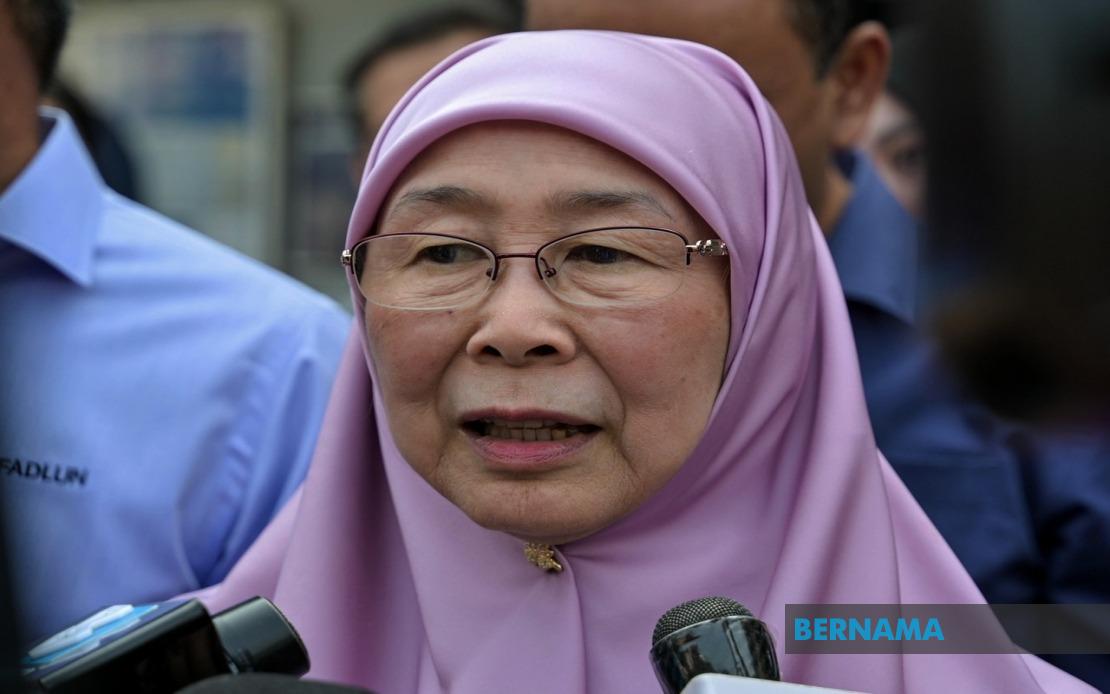
Prime Minister Datuk Seri Anwar Ibrahim was expected to be released from hospital on August 12 following treatment for a para-umbilical hernia, his wife Datuk Seri Dr Wan Azizah Wan Ismail announced. The disclosure came as she attended the Semarak Merdeka programme at the Bandar Tun Razak branch of Kuala Lumpur City Hall, part of the 2026 National Month celebrations.
Anwar underwent an elective laparoscopic surgical procedure on Monday to address the hernia condition. The minimally invasive technique, which uses small incisions and a camera to guide the operation, typically allows for faster recovery compared to traditional open surgery. Such procedures are routinely performed and carry relatively low complication risks when conducted by experienced surgical teams.
Dr Wan Azizah conveyed her husband's gratitude to the public and the many individuals who had offered prayers for his health and speedy recovery. The Prime Minister, referred to colloquially as PMX in Malaysian political circles, sent his regards through his wife to well-wishers. Such expressions of appreciation are customary in Malaysia's political culture, reflecting both the personal nature of such occasions and the significant public interest that surrounds the health and wellbeing of the nation's top leadership.
The timing of Anwar's hospitalisation underscores the challenges that senior government officials face in managing their health alongside demanding administrative responsibilities. As Prime Minister, Anwar carries substantial executive duties, including chairing cabinet meetings, overseeing policy implementation, and maintaining international relations. The decision to proceed with elective surgery during his tenure demonstrates confidence in both the medical team and the continuity of government operations during his temporary absence.
Parliamentary and institutional frameworks in Malaysia have established protocols for instances when the Prime Minister is unavailable due to health reasons, allowing for the continued functioning of essential government services. Deputy Prime Minister Datuk Seri Ahmad Zahid Hamidi would assume certain responsibilities during such periods, ensuring that critical matters requiring executive attention are addressed without significant disruption to the machinery of state.
The public disclosure of Anwar's medical condition reflects Malaysia's approach to transparency regarding the health of senior political figures. Unlike some nations where medical details remain strictly private, Malaysian political leadership has generally maintained a degree of openness about health matters affecting the Prime Minister, recognising that the public has legitimate interests in understanding the availability and capacity of its chief executive.
Paranumbelical hernias, the specific condition Anwar required treatment for, are relatively common and typically develop when tissue protrudes through a weak point in the abdominal muscles near the belly button. While such hernias may remain asymptomatic for extended periods, surgical intervention is often recommended to prevent complications such as strangulation or obstruction. The laparoscopic approach, which requires only small incisions, has become the preferred method in modern surgical practice, offering patients reduced pain, minimal scarring, and shortened recovery periods compared to open surgery techniques.
The recovery trajectory following such a procedure is generally favourable for patients in otherwise good health. Most individuals undergoing laparoscopic hernia repair can resume light activities within several weeks, though strenuous exercise and heavy lifting typically require longer recovery periods. For a Prime Minister with demanding official duties, a gradual return to full responsibilities would likely be recommended by medical advisors.
The news of Anwar's forthcoming discharge comes at a significant moment in Malaysia's political calendar, as the nation prepares for the 2026 National Month celebrations. His wife's attendance at the Semarak Merdeka programme, despite her husband's hospitalisation, demonstrated the government's commitment to proceeding with planned official events and maintaining the continuity of public engagement with citizens.
From a broader Southeast Asian perspective, the routine handling of Anwar's medical situation reflects the maturity of Malaysia's democratic institutions and the professional standards of its healthcare system. The Prime Minister's willingness to undergo necessary medical procedures and the transparent communication regarding his condition and expected recovery contribute to public confidence in both the stability of government and the quality of medical facilities available within the country.
The support expressed by members of the public and political colleagues through prayers and well-wishes highlights the personal dimension of political leadership in Malaysian society. Regardless of political affiliation or policy disagreements, there is generally a unified sentiment around the wellbeing of the nation's highest office holder, reflecting a broader understanding that the Prime Minister's health directly impacts the country's political stability and international standing.
As Anwar prepares to return to his full range of responsibilities, the experience serves as a reminder of the physical demands placed upon Malaysia's political leadership. The Prime Minister's ability to take necessary medical action while maintaining confidence in institutional governance demonstrates the strength of Malaysia's constitutional arrangements and the professionalism of its civil service in managing transitions of executive capacity, however temporary or planned.

