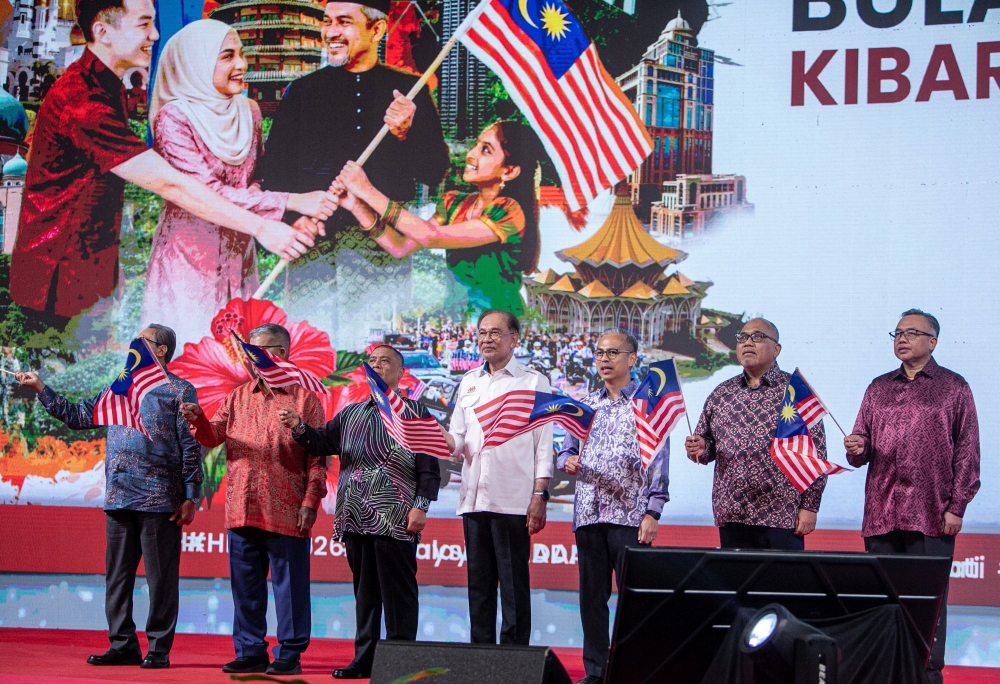
Prime Minister Datuk Seri Anwar Ibrahim has issued a pointed reminder to Malaysia's youth about the significance of remembering the nation's journey to independence, stressing that the freedoms enjoyed today rest on foundations laid by previous generations who endured considerable hardship and struggle. Speaking in Ipoh on July 19, Anwar conveyed a message that transcends mere historical commemoration, reflecting broader concerns among Malaysian leadership about sustaining national unity and civic consciousness in an era of rapid social change.
The Prime Minister's remarks underscore a persistent theme in Malaysian political discourse: the need for younger Malaysians to maintain connection with the country's formative historical moments. This concern emerges partly from recognition that citizens born after 1957 have no direct memory of colonial rule or the independence movement itself, creating a generational gap in understanding the concrete circumstances that shaped national identity. Anwar's intervention suggests the government views this knowledge gap as potentially problematic for long-term social cohesion and political stability.
Historical consciousness in Malaysia carries particular weight because the independence struggle involved diverse communities—Malays, Chinese, Indians, and others—working toward a common objective. The Federal Constitution and the various agreements that underpinned Malaysia's birth represented compromises and mutual understandings among these groups. For contemporary policymakers, ensuring that younger citizens appreciate this inclusive heritage becomes essential to maintaining inter-communal harmony in a multi-ethnic society that continues navigating questions of representation, rights, and shared national purpose.
Anwar's message also operates within a specific political context. As Prime Minister leading a coalition government that emerged from significant political realignment and reform, he faces the task of building consensus across competing interests while projecting a vision of national renewal grounded in shared values. Invoking the independence struggle serves as a powerful rhetorical device that appeals to common pride and shared sacrifice, potentially transcending partisan divides that have fractured Malaysian politics in recent years. It anchors contemporary governance within a continuity narrative that extends back to founding principles.
The emphasis on remembrance takes on added significance given Malaysia's evolving relationship with its colonial past and post-colonial trajectory. Unlike some Southeast Asian nations that experienced violent independence wars, Malaysia's transition to sovereignty, while politically charged, occurred through negotiation rather than armed conflict. This distinction shapes how the independence narrative functions domestically—it emphasises dialogue, institutional development, and consensus-building as quintessentially Malaysian approaches to problem-solving, qualities Anwar appears keen to reinforce.
For Malaysian youth specifically, the generation now ranging from teenagers to those in their mid-thirties, engagement with independence history often occurs through formal education, commemorative events, and family narratives rather than personal experience. Yet this generation faces distinct pressures: economic uncertainties, digital disruption, climate challenges, and questions about their place within regional and global systems. Anwar's call to remember independence struggle implicitly connects these contemporary challenges to historical precedent—suggesting that the resilience and determination that secured freedom from colonial rule remain relevant to addressing modern obstacles.
The timing of the Ipoh statement carries locational significance as well. Perak has historically occupied a prominent position in Malaysian political development, serving as a critical state during the independence negotiations and later constitutional arrangements. Delivering this message in Ipoh rather than the capital reinforces attention to regional and local contexts, acknowledging that independence and nation-building processes engaged communities throughout the peninsula, not merely central political elites.
Anwar's framing also addresses an implicit concern about potential alienation of youth from civic institutions and national projects. When younger Malaysians take their freedoms as automatic rather than earned, there exists risk that they may devalue institutions, constitutional arrangements, and democratic processes that predecessors fought to establish. The Prime Minister's exhortation serves as a corrective, attempting to instil appreciation for systems and structures that, while imperfect, represent genuine achievements worthy of defence and improvement rather than dismissal.
The broader pedagogical challenge underlying these remarks involves making historical memory accessible and meaningful to contemporary audiences. Simply repeating narratives of past struggle risks appearing disconnected from present realities. More effective approaches recognise that younger Malaysians will engage with independence history when they perceive its relevance to current aspirations and problems. Anwar's message, therefore, requires complementary initiatives—curriculum reform, public discussion forums, digital engagement strategies—that translate historical lessons into frameworks applicable to contemporary national challenges.
Moving forward, the success of such appeals to historical memory depends partly on whether political leadership can demonstrate that principles underlying the independence struggle—inclusivity, institutional integrity, respect for constitutional arrangements—continue guiding governance today. When such principles appear compromised by contemporary political behaviour, exhortations to remember struggle risk appearing hypocritical, potentially intensifying youth cynicism. Conversely, when leadership visibly embodies and practises these principles, historical memory becomes a living resource rather than a dusty archive.
For Malaysia and the broader Southeast Asian region, maintaining intergenerational transmission of historical consciousness remains relevant to political stability and social cohesion. As economies develop, societies diversify, and new challenges emerge, the anchoring function of shared national narratives becomes increasingly important. Anwar's remarks reflect this understanding, positioning historical remembrance not as nostalgia but as essential intellectual and moral work required to sustain national projects across generations and circumstances.

