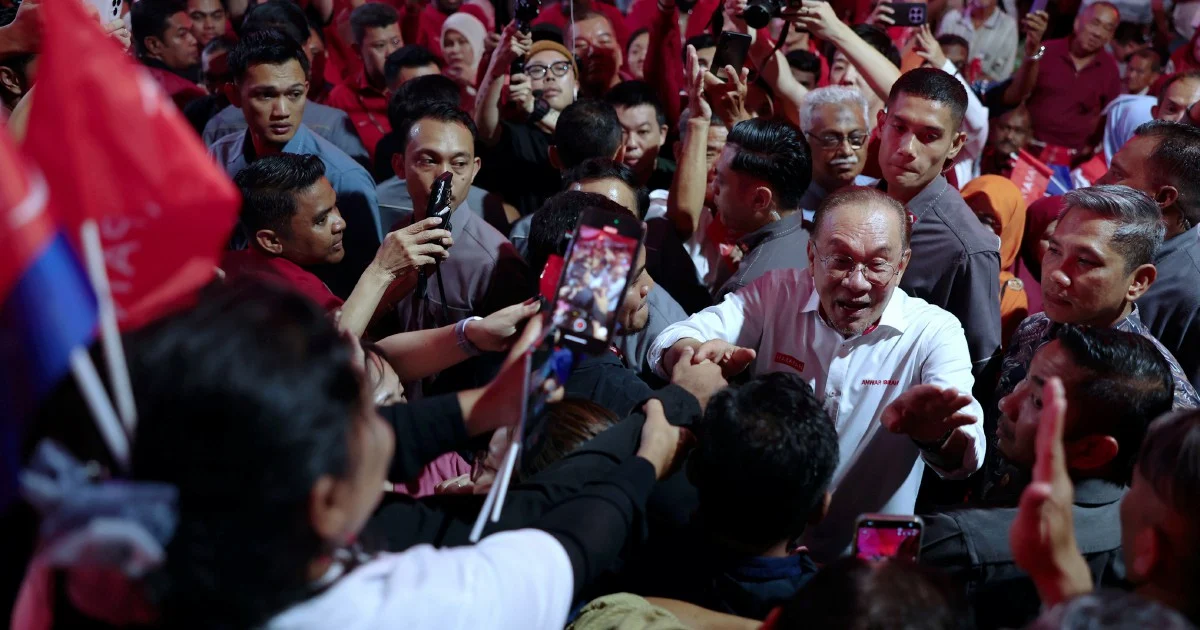
Pakatan Harapan has formally unveiled its comprehensive candidate lineup for the Johor state election, with coalition chairman Datuk Seri Anwar Ibrahim presenting all 56 contenders at a political gathering in Tangkak. The announcement represents a critical moment in the opposition coalition's electoral strategy for one of Malaysia's most politically significant states, as the July 11 poll approaches.
The timing of PH's candidate declaration comes as the coalition seeks to consolidate support across Johor's diverse voter base and challenge the incumbent Barisan Nasional administration that has long dominated the state's political landscape. Johor, as Malaysia's second-most populous state and a traditional stronghold of federal government politics, holds outsized importance in any national political realignment. A strong PH performance could reshape the narrative around the coalition's viability as a governing alternative ahead of the next general election.
Anwar Ibrahim's direct involvement in presenting the slate underscores the personal significance PH attaches to this contest. As Prime Minister and coalition chair, his participation lends authority to the party selections and signals central coordination in campaign efforts across the state's parliamentary and state assembly constituencies. The comprehensive nature of fielding 56 candidates indicates PH's intention to mount a competitive challenge in virtually all contested seats, rather than adopting a strategic concession strategy in certain areas.
The composition of PH's candidate roster will likely reflect the coalition's ongoing internal negotiations among its constituent parties—Amanah, DAP, PKR, and Warisan at the federal level. Johor politics, however, presents unique complexities given the state's historical alignment with Umno and the entrenched networks of established political machinery. The distribution of candidacies between these parties and the demographic, geographic, and professional profile of nominees will reveal much about PH's electoral calculations and resource allocation priorities within the state.
For Malaysian political observers and voters in Johor, the slate serves as a window into which party figures command confidence within PH structures and who the coalition believes can appeal to different voter demographics. Incumbency advantages favour the ruling coalition in many constituencies, yet PH has demonstrated growing competitiveness in urban and semi-urban areas, particularly among younger and educated voters concerned with governance issues, institutional independence, and accountability. The candidate selections across these zones will be instructive regarding PH's assessment of its own growth trajectory.
The Johor election carries relevance beyond state-level politics in ways that deserve attention from Southeast Asian observers monitoring Malaysian political developments. As the region's largest economy navigates its own governance transitions and electoral cycles, the performance of opposition coalitions and ruling coalitions provides comparative lessons about political competition, coalition management, and the durability of established power structures when challenged by reform-oriented alliances. Malaysia's two-coalition system remains relatively rare in Southeast Asia, making these contests significant case studies.
Regionally, the Johor result will also resonate with other ASEAN nations' political actors observing how Malaysia manages electoral competition and peaceful power transitions. Should PH achieve unexpected gains, it would reinforce emerging narratives about generational political change and the receptivity of Southeast Asian electorates to reform agendas. Conversely, strong Barisan Nasional performance would suggest the persistence of traditional voter attachments and the challenges opposition movements face in consolidating alternative power bases even in competitive democracies.
The announcement of candidates also marks the beginning of what will be an intensive campaign period for all political entities involved. Johor's 56 state assembly constituencies span urban centres like Johor Bahru with its cosmopolitan, Chinese-majority populations, through Malay-majority towns, to agricultural and developing hinterland areas with distinct economic interests and policy priorities. Candidates will need to articulate platforms addressing these varied constituencies while maintaining consistency with broader party and coalition messaging on national issues.
For PH, the Johor campaign will test whether the coalition has successfully established durable grassroots organisations capable of competing with Barisan's decades-long institutional entrenchment. Campaign infrastructure, volunteer networks, financial resources, and media presence all become critical competitive factors. The July 11 election will provide empirical data on whether PH's federal-level stability and the experience gained from governing Selangor, Penang, and other states has translated into enhanced organisational capacity across all regions.
The unveiled slate also potentially signals PH's confidence in its ability to contest competitively despite any internal coalition tensions or leadership uncertainties that might prevail at federal level. By committing 56 candidates across the state, PH has essentially committed financial and human resources to a comprehensive campaign rather than pursuing incremental seat-by-seat pickups. This suggests the coalition believes it has sufficient organisational depth and financial support to mount a statewide effort.
Johor voters themselves will ultimately determine the election outcome, but the candidate announcement represents the formal opening of direct competition for their support. The next weeks will reveal whether the individuals selected by PH have sufficient local credibility, policy platforms, and persuasive capacity to convince voters to shift their traditional political alignments. The result will provide one of Southeast Asia's most closely watched indicators of contemporary Malaysian political dynamics and democratic competition.