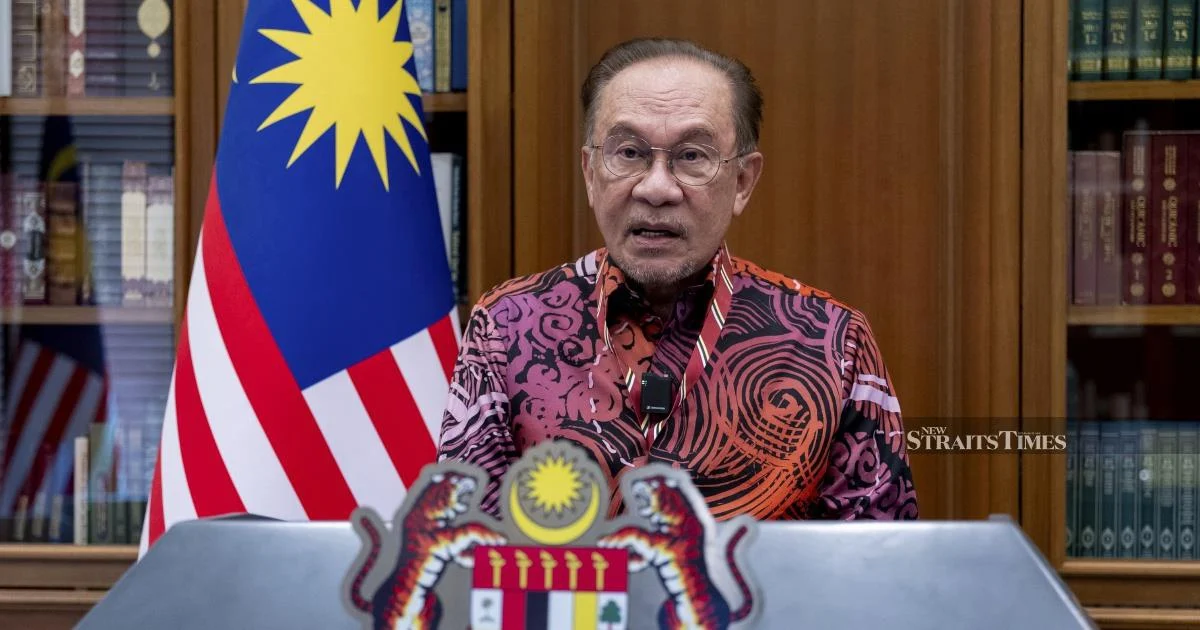
Prime Minister Datuk Seri Anwar Ibrahim has publicly acknowledged a significant political milestone in China, extending formal congratulations to the Chinese government as the nation's ruling party marked its 105th founding anniversary. The gesture underscores Malaysia's commitment to maintaining robust bilateral relations with one of the region's most influential powers and a key strategic partner in Southeast Asia's geopolitical landscape.
The timing of such diplomatic acknowledgments holds particular significance within the context of Malaysia's broader foreign policy framework. As a nation deeply integrated into regional and global trade networks, Malaysia has consistently sought to balance its international relationships while prioritising economic cooperation and mutual respect among its partners. China's economic prominence and its substantial investments across Malaysia's infrastructure, technology, and manufacturing sectors make the relationship a cornerstone of national development priorities.
Anwar's congratulatory message reflects customary diplomatic protocol observed between neighbouring nations with established ties. Such gestures, while formal in nature, carry weight in international relations by signalling political goodwill and a willingness to engage constructively. For Malaysia, which depends significantly on Chinese capital flows and market access for its exports, maintaining cordial relations with Beijing remains strategically important for sustaining economic growth and attracting further investment.
The ruling party in China has governed the country for over a century, overseeing its transformation from a post-revolutionary state into a global economic powerhouse. The institution's historical trajectory encompasses periods of substantial internal evolution and has shaped not only Chinese domestic policy but also its engagement strategies with neighbouring nations. Understanding this context helps explain why countries like Malaysia regard anniversaries of the Chinese government as moments worthy of formal recognition.
Malaysia's approach to its relationship with China has evolved considerably over recent decades. The establishment of comprehensive partnership frameworks and high-level dialogue mechanisms has institutionalised cooperation across multiple sectors including trade, investment, education, and cultural exchange. These foundations enable Malaysia to benefit from Chinese economic dynamism while pursuing its own development agenda independently.
The anniversary acknowledgment also occurs against a backdrop of Malaysia's multicultural character and its historical position as a bridge between different civilisations and ideological systems. The nation's ability to maintain friendly relations with diverse international partners, spanning different political systems and economic models, reflects its diplomatic maturity and pragmatic approach to foreign policy. This flexibility has allowed Malaysia to avoid unnecessary entanglements while maximising opportunities for cooperation.
Economically, the relationship between Malaysia and China extends well beyond symbolic gestures. Chinese companies have invested heavily in Malaysian infrastructure projects, manufacturing facilities, and real estate development. These investments have generated employment opportunities and contributed to technology transfer, though they have also occasionally sparked public discourse regarding sovereignty and economic dependency. The prime minister's diplomatic engagement with China must be viewed within this complex matrix of mutual interests, benefits, and considerations.
Regional stability also features prominently in Malaysia's calculus regarding its China relationship. As a nation positioned within Southeast Asia's strategic sphere, Malaysia has vested interests in maintaining peaceful coexistence among major powers and preventing regional disputes from escalating into broader conflicts. Positive bilateral engagement with China contributes to this objective, even as Malaysia simultaneously maintains important relationships with other regional and global powers.
Looking forward, Malaysia's interaction with China will likely continue balancing economic pragmatism with careful political management. The prime minister's congratulatory remarks exemplify this approach—acknowledging important milestones in China's political calendar while Malaysia pursues its own national interests and maintains its independent foreign policy stance. Such measured engagement enables Malaysia to benefit from opportunities that strong bilateral relations with China offer, while preserving its agency in international affairs.
The broader significance of Malaysia's diplomatic posture towards China extends beyond immediate bilateral concerns. As other Southeast Asian nations navigate similar relationships with Beijing, Malaysia's experience offers instructive lessons regarding how smaller nations can engage constructively with larger powers without compromising their autonomy or allowing external relationships to overwhelm domestic policy priorities. This balancing act remains central to Malaysia's continued success in global affairs.

