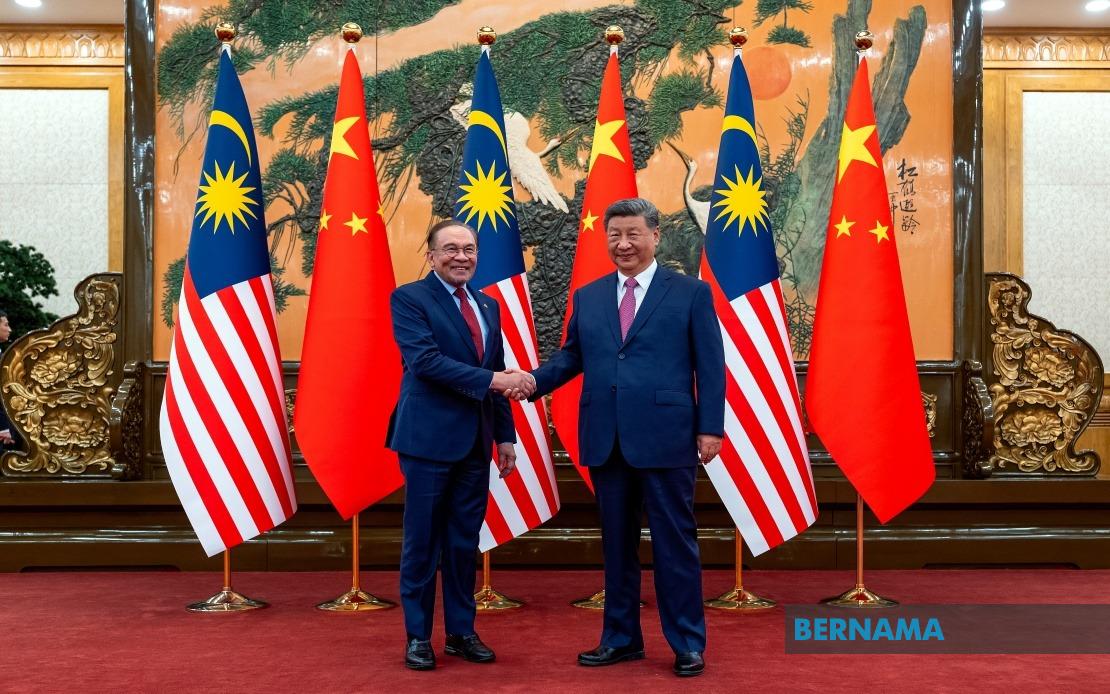
Prime Minister Datuk Seri Anwar Ibrahim has extended formal felicitations to the Chinese government commemorating the 105th anniversary of the Communist Party of China, underscoring the significance of Malaysia's diplomatic relationship with its giant northern neighbour. Through a letter addressed to Chinese President Xi Jinping, Anwar conveyed the warm wishes of both the Malaysian government and its people, a gesture reflecting the warmth and continuity of bilateral relations that have evolved substantially over the past five decades.
In marking this milestone for China's ruling party, Anwar took the opportunity to acknowledge the profound historical journey that has characterised the organisation's development and its instrumental role in shaping modern China. The Prime Minister's message highlighted his appreciation for how the Communist Party has leveraged the nation's deep civilisational heritage, rich historical narrative, and time-honoured values to guide the country's transformation into a major global power. This recognition implicitly signals Malaysia's respect for China's unique path to development, a perspective particularly relevant in Southeast Asia where divergent political systems coexist and compete for regional influence.
Among the most significant points raised in Anwar's correspondence was Malaysia's historic decision on May 31, 1974, when it became the first non-communist state in Southeast Asia to formally establish diplomatic relations with the People's Republic of China. This decision, made during a period of Cold War tensions when many nations remained locked in ideological confrontation, demonstrated considerable diplomatic courage and strategic foresight by Malaysian leaders at that time. The recognition occurred just two years after the People's Republic's own dramatic shift in international standing through its admission to the United Nations, and it positioned Malaysia as a pragmatic actor willing to pursue national interests beyond the constraints of Cold War ideology.
That foundational diplomatic move has indeed proven to be a cornerstone upon which Malaysia and China have constructed an increasingly robust partnership spanning more than fifty years. The relationship has weathered international shifts, regional realignments, and the rise and fall of various global powers, demonstrating a resilience rooted in mutual respect and pragmatic cooperation. For Malaysian policymakers, that original 1974 decision represents not merely a historical artifact but an ongoing validation of the principle that national interests are best served through engagement with major powers regardless of their internal political systems.
Anwar's letter also contained an emphatic restatement of Malaysia's unwavering commitment to broadening and deepening strategic cooperation with China across multiple domains. The Prime Minister articulated this commitment as resting upon three foundational pillars: mutual respect for national sovereignty and domestic systems, a foundation of trust built through decades of diplomatic engagement, and the pursuit of shared tangible benefits that accrue to both nations and their peoples. This framework reflects the mature nature of bilateral relations between countries with fundamentally different political structures yet complementary economic interests and regional responsibilities.
The timing of this diplomatic gesture merits consideration within the broader context of contemporary Malaysian politics and Southeast Asian geopolitics. Malaysia, as a key member of the Association of Southeast Asian Nations and a crucial player in regional supply chains, must carefully calibrate its relationships with major powers. China's increasing centrality to regional economics, security architecture, and development initiatives means that Malaysia's strategic partnership with Beijing remains vital to national prosperity. By publicly reaffirming this relationship through formal congratulations and strategic messaging, Anwar signals continuity in Malaysia's approach to great power relations despite domestic political transitions and regional uncertainties.
The emphasis placed on regional peace, stability, and prosperity in Anwar's message also carries implicit weight. Malaysia and other Southeast Asian nations have watched with concern as tensions have occasionally flared in the South China Sea and as major powers jostle for influence across the region. By coupling bilateral cooperation with language emphasising collective regional welfare, Anwar subtly reinforces Malaysia's preference for a rules-based regional order that does not pit Southeast Asian nations against one another or force them into zero-sum competitions between major powers. This diplomatic approach aligns with ASEAN's traditional preference for pragmatic engagement rather than confrontational alignment.
The letter to Xi Jinping also reflects the practical realities of Malaysian economic interdependence with China. Chinese investment flows into Malaysia across infrastructure, manufacturing, and technology sectors remain substantial. Malaysian exports, particularly of palm oil, liquefied natural gas, and various raw materials, depend significantly on Chinese demand. Educational exchanges, tourism flows, and people-to-people connections have deepened substantially since 1974. Anwar's gesture acknowledges these multifaceted ties and signals that Malaysia intends to nurture rather than diminish them.
Furthermore, the public nature of this congratulatory message, conveyed through social media platforms with broad reach, serves a domestic political function as well. It demonstrates to Malaysian constituencies that the government maintains stable, predictable relations with key economic partners. In an era of rapid geopolitical change and occasional tensions between major powers, such reassurance proves valuable for investor confidence and public confidence in government stewardship of foreign policy. The message essentially communicates that Malaysia's pragmatic approach to international relations remains unchanged regardless of who occupies the Prime Minister's office.
Looking ahead, Malaysia's relationship with China will likely continue to evolve as both nations navigate challenges ranging from economic competition to security concerns and climate change. The framework of respect, trust, and mutual benefit that Anwar articulated provides sufficient flexibility to accommodate changing circumstances while maintaining the fundamental stability that serves both nations' long-term interests. For Malaysian observers and regional analysts, Anwar's letter represents a continuation of the steady diplomatic course that has characterised Malaysian foreign policy since that pivotal 1974 recognition decision.

