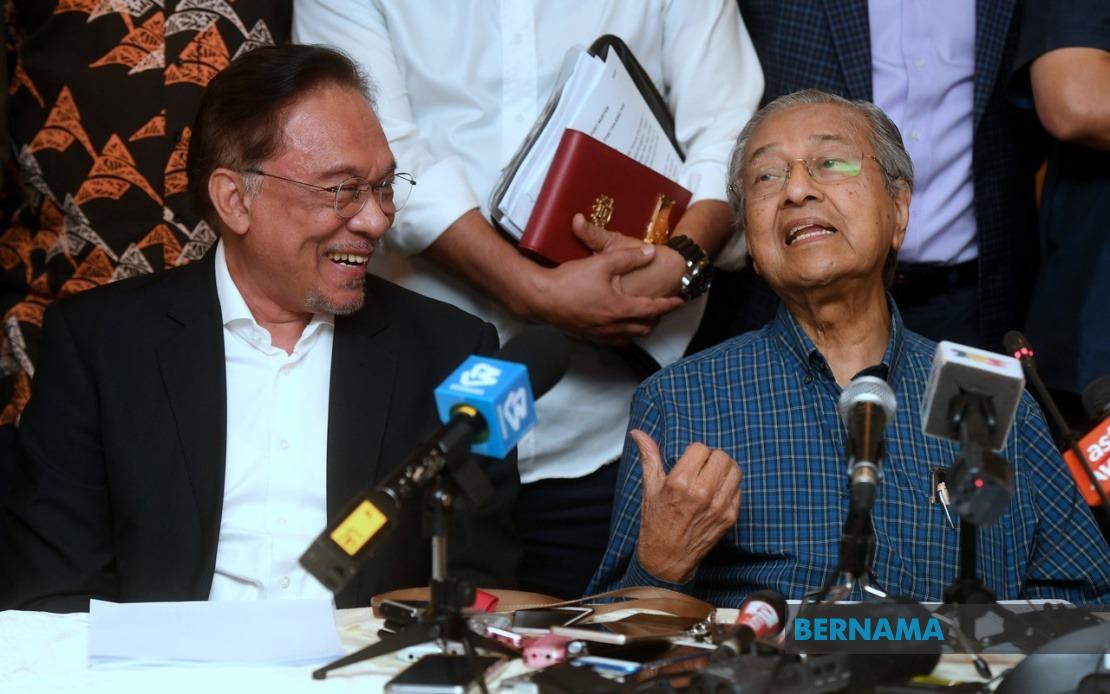
Prime Minister Datuk Seri Anwar Ibrahim has extended warm birthday greetings to former Premier Tun Dr Mahathir Mohamad as the elder statesman celebrates his 101st birthday on July 10. Through a Facebook post, Anwar conveyed his wishes that the nonagenarian continue to enjoy good health and divine blessings, offering a gesture of respect across Malaysia's political divide that has often been marked by tension and disagreement.
Tun Dr Mahathir, born on July 10, 1925 in Alor Setar, Kedah, stands as one of Asia's most enduring political figures. His longevity in public service and continued presence in the nation's discourse underscore the complexity of Malaysian politics, where elder statesmen retain significant influence even after stepping away from executive office. At 101, he remains mentally sharp and occasionally ventures public commentary on matters affecting the country, maintaining a presence that younger political figures cannot easily dismiss.
The former premier's two separate stints in office represent distinct eras in Malaysia's development. His first tenure, spanning 22 years from 1981 to 2003, fundamentally reshaped the nation's economic trajectory, infrastructure, and regional standing. During this extended period, he championed industrialisation, spearheaded major projects like the Petronas Twin Towers, and pursued Malaysia's Look East policy, establishing the country as a development model that regional peers sought to emulate.
His return to the prime ministership in 2018, at the age of 92, marked an unprecedented moment in modern governance. Tun Dr Mahathir became the world's oldest sitting prime minister, a distinction that attracted international attention and sparked debate about age, experience, and capacity for leadership. That appointment came during a pivotal moment when Malaysia sought political renewal following electoral defeat of the then-ruling coalition, demonstrating that voters and fellow politicians still valued his experience and perceived ability to steer the nation through turbulent waters.
The 2018-2020 administration under his leadership pursued significant reforms, including combating corruption and renegotiating major infrastructure agreements. His government initiated steps to dismantle elements of the previous political structure, reflecting public demand for accountability. However, this period also proved fraught with coalition management challenges, ultimately leading to his resignation in February 2020 when internal political disagreements erupted over succession planning and policy direction.
Anwar's public acknowledgment of Tun Dr Mahathir's milestone birthday carries subtle political significance. The two men have shared a complicated relationship spanning decades, marked by periods of alliance and profound antagonism. Their trajectory from adversaries to occasional collaborators, then back to competing visions for Malaysia's future, encapsulates much of the country's recent political volatility. That Anwar chose to mark this occasion publicly suggests a desire to maintain civility and acknowledge the elder statesman's historical contributions, regardless of current political disagreements.
The greeting also reflects Malaysian political culture's respect for age, experience, and contribution to nation-building. Despite the fierce competition that characterises Malaysian politics, there exists an underlying recognition that figures who have served lengthy careers deserve acknowledgment and honour. This balance between competitive politics and respect for elders remains a distinctive feature of the Malaysian system, distinguishing it from more confrontational political environments elsewhere in the region.
Tun Dr Mahathir's continued presence at 101 also prompts reflection on succession and generational change in Malaysian leadership. While he officially stepped back from the premiership in 2020, his opinions and interventions still carry weight, sometimes creating friction within coalition politics. His longevity raises questions about institutional development and whether political systems benefit when founding or transformative figures remain visible and occasionally influential beyond their formal tenure.
From a Southeast Asian perspective, Tun Dr Mahathir's journey represents a particular model of developmental leadership that several regional governments have studied and emulated. His emphasis on rapid industrialisation, regional integration through ASEAN engagement, and positioning Malaysia as a bridge between different international constituencies influenced policy thinking across Southeast Asia. His 101st birthday thus marks not just a personal milestone but reflects on the legacy that shaped a generation of regional policymakers.
The simple act of extending birthday wishes, performed publicly and without apparent grudge, demonstrates Malaysia's capacity for political maturity despite its well-documented divisions. Anwar's gesture acknowledges that political differences need not preclude basic civility and recognition of historical achievement. As Malaysia navigates contemporary challenges including economic pressures, regional geopolitical shifts, and internal coalition management, the nation can draw perspective from those who have navigated similar complexities across decades of service.
Tun Dr Mahathir's transition from active statesman to elder figure provides younger Malaysian leaders with a model for graceful evolution of political roles. Whether from the government benches or opposition, his 101 years encompass transformative periods in Malaysian history, from post-colonial consolidation through rapid development to navigating contemporary global interconnections. His birthday celebration serves as a reminder of Malaysia's continuous political evolution and the enduring influence of those who shaped its trajectory across multiple generations.

