%22%2F%3E%3C%2Fpattern%3E%3C%2Fdefs%3E%3Crect%20width%3D%22100%25%22%20height%3D%22100%25%22%20fill%3D%22url(%23ph1p931g)%22%2F%3E%3Crect%20width%3D%22100%25%22%20height%3D%22100%25%22%20fill%3D%22url(%23ph1p931p)%22%2F%3E%3Ctext%20x%3D%2250%25%22%20y%3D%2250%25%22%20text-anchor%3D%22middle%22%20dominant-baseline%3D%22central%22%20fill%3D%22rgba(255%2C255%2C255%2C0.95)%22%20font-family%3D%22Georgia%2C%20'Times%20New%20Roman'%2C%20serif%22%20font-weight%3D%22700%22%20font-size%3D%22272%22%20letter-spacing%3D%22-0.02em%22%3EAnwar%3C%2Ftext%3E%3C%2Fsvg%3E)
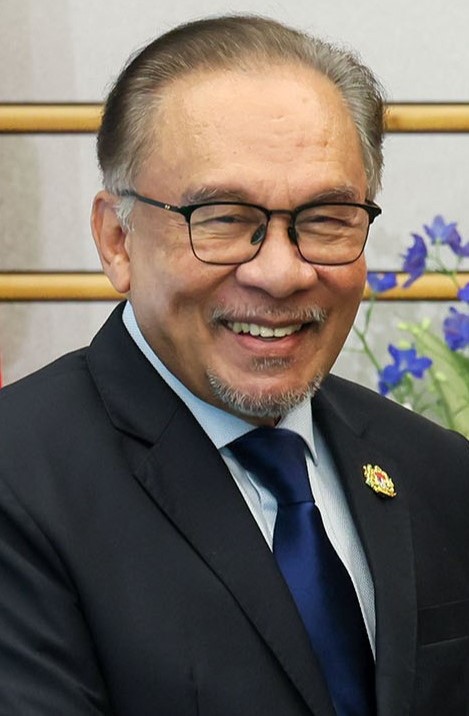
Prime Minister Datuk Seri Anwar Ibrahim is returning to Johor today for his second campaign stop in as many days, underscoring the federal government's determination to maintain momentum in the resource-rich state where electoral fortunes remain fiercely contested. The rapid succession of visits reflects the high stakes surrounding Johor's political landscape, where control of the state government carries significant implications for both the ruling coalition's national mandate and the opposition's ability to build alternative power bases in Malaysia's second-largest state by population.
Anwar's intensified presence in Johor signals confidence in his administration's electoral machinery while simultaneously acknowledging the competitive environment surrounding the upcoming state election. The frequent ground visits are designed to reinforce direct engagement with voters, move beyond administrative and parliamentary duties, and demonstrate federal government commitment to addressing local concerns. Such high-profile campaign activity by sitting prime ministers traditionally influences voter perception by framing elections as national rather than merely state-level contests, thereby leveraging the greater resources and visibility of the federal executive.
Johor holds particular strategic importance within Malaysia's political architecture. As the nation's industrial and port hub, the state's governance directly impacts economic performance, infrastructure development, and federal-state relations. Control of Johor influences resource allocation, development project prioritisation, and the alignment of state-level policies with national economic objectives. The rapid campaign escalation reflects recognition that Johor's political outcome will reverberate across regional politics and potentially reshape the balance of power in Parliament during the remainder of the current government's term.
The pattern of multiple visits within short timeframes represents a departure from traditional Malaysian campaign approaches, where prime ministers typically maintain distance from active electioneering until formal nomination periods begin. Anwar's approach suggests an adaptive strategy responsive to contemporary political competition, where sustained media presence and continuous voter contact have become essential campaign components. The scheduling also indicates that federal political machinery is already mobilising across constituencies, conducting ground-level organisation work that precedes formal election announcements.
Competing political coalitions have similarly ramped up their Johor campaigns, recognising the state as a potential bellwether for broader national political trends. The opposition's positioning in Johor will test its narrative against the federal government's record on economic management, infrastructure delivery, and political stability. Meanwhile, the ruling coalition's coalition partners face internal coordination challenges regarding seat allocation and campaign messaging, issues that Anwar's visible leadership aims to consolidate.
The campaign intensification occurs amid evolving voter demographics and shifting electoral preferences across Malaysian states. Younger voters, urban populations, and suburban constituencies demonstrate less predictable voting patterns compared to previous electoral cycles, requiring campaigns to employ diverse engagement strategies and address granular local concerns rather than relying solely on traditional party machinery. Anwar's direct engagement approach attempts to bridge this gap by personalising the federal government's message and responding to constituency-specific grievances.
Johor's economic challenges, including infrastructure maintenance demands, job creation, and industrial diversification pressures, feature prominently in campaign rhetoric from all quarters. The state's port facilities, manufacturing sector, and agricultural industries require ongoing investment and policy attention, making economic performance a crucial electoral battleground. Anwar's visits emphasise federal government projects and investment commitments within the state, positioning development outcomes as evidence of effective governance.
The rapid campaign acceleration also reflects time pressure inherent in electoral scheduling. While formal election dates remain subject to constitutional procedures and political timing calculations, preliminary campaign activities must commence months in advance to build voter awareness and organisational readiness. Anwar's double visit within days maximises campaign efficiency by consolidating multiple engagement opportunities, reducing travel costs, and creating sustained media coverage across the campaign period.
Federal-state relations under the current administration have emphasised partnership frameworks that blur traditional governance boundaries, with prime ministerial involvement in state-level affairs becoming increasingly normalised. This approach contrasts with previous administrations' more formal federal-state separation, reflecting contemporary Malaysian political culture where federal leaders openly campaign for state elections and leverage executive resources for partisan advantage. Such integration of federal and state political machinery continues reshaping Malaysia's institutional relationships.
The campaign context also encompasses broader Southeast Asian political trends, where prime ministerial visibility and direct voter engagement have become standard practice across regional democracies. Malaysian political actors increasingly observe and adapt international campaign techniques, incorporating digital media strategies, grassroots organising methods, and rapid response communications alongside traditional approaches. Anwar's campaign style reflects these regional influences while maintaining distinctly Malaysian institutional parameters.
Moving forward, the sustainability of Anwar's campaign intensity will depend on balancing federal administrative responsibilities with campaign scheduling demands. Frequent absences from federal capital could generate criticism regarding governance attention, though contemporary Malaysian political culture largely accepts prime ministerial campaign activity as legitimate government function. The campaign's trajectory will likely establish patterns for future state elections throughout the current electoral cycle, potentially normalising heightened federal government involvement in subnational contests.