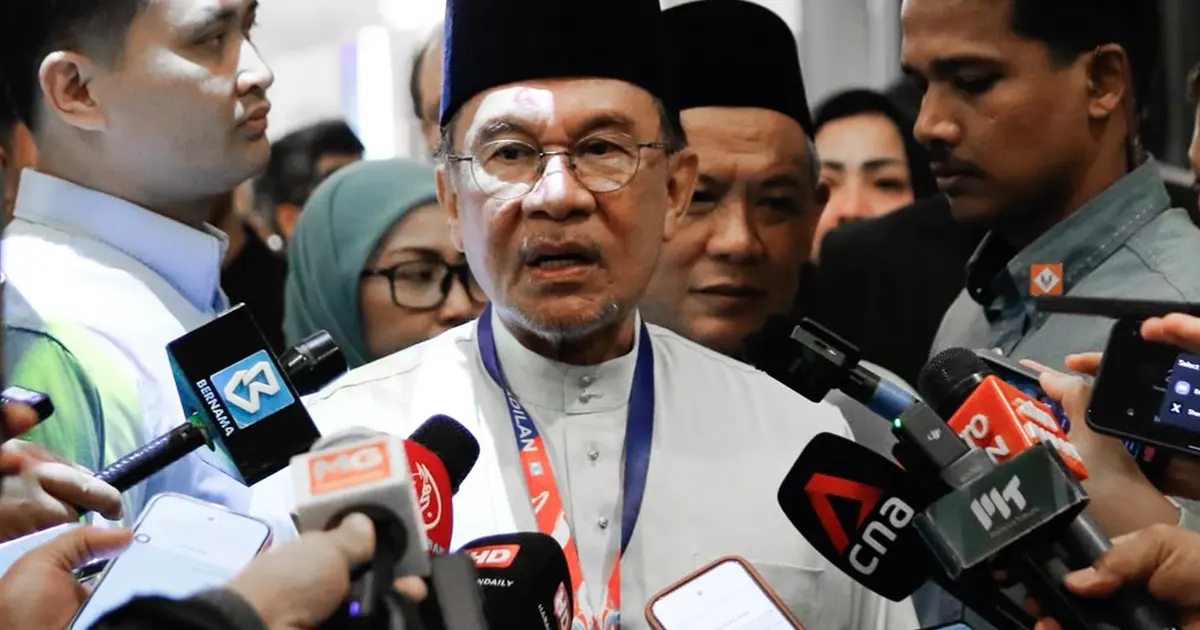
Prime Minister Anwar Ibrahim has moved to clarify his relationship with Deputy Prime Minister Zahid Hamidi, rejecting insinuations that unresolved trust issues exist between the two senior figures. The denial comes in response to commentary from Khairy Jamaluddin, the former Umno Youth chief, who raised concerns through a podcast discussion. Anwar's intervention signals an attempt to contain political tensions within the governing coalition and prevent the airing of internal disagreements from overshadowing the administration's agenda.
The prime minister characterised the matter as one of differing perspectives rather than a fundamental breakdown in confidence. By attributing Khairy's remarks to the former youth leader's personal interpretation of events, Anwar positioned himself above the controversy while implicitly questioning whether the concerns reflect broader sentiment within Umno or represent Khairy's isolated viewpoint. This distinction carries significance within Malaysia's political culture, where framing determines how statements are interpreted by party loyalists and the wider public.
Khairy's podcast comments appear to have touched on longstanding tensions within the Umno-led coalition government. As a former prominent figure within Umno's youth wing, Khairy maintains influence over party perceptions, particularly among younger members. His willingness to air concerns publicly, even through the relatively informal medium of a podcast, suggests a degree of frustration with current coalition dynamics that extends beyond simple disagreement on policy matters.
The relationship between Anwar and Zahid has historically been complicated by Malaysia's fractious political environment. Before the formation of the current coalition government, both men were rivals in competing alliances. Zahid's appointment to the deputy prime minister's position represented a significant political reconciliation, bringing the numerically powerful Umno into formal partnership with Anwar's Pakatan Harapan grouping. Such arrangements require careful management, as they involve leaders whose parties have previously stood in direct opposition.
Anwar's prompt public response to Khairy's remarks demonstrates the sensitivity surrounding his working relationship with Zahid. In Malaysian politics, where factional interests often override individual relationships, permitting doubt about coalition unity can quickly spiral into broader questioning of government stability. By immediately clarifying his position, Anwar sought to prevent Khairy's comments from becoming ammunition for internal critics or external opponents questioning the viability of the current administration.
The podcast format through which Khairy's original comments emerged adds an interesting dimension to Malaysian political communication. Traditional media appearances by politicians face greater editorial oversight and occur within formal settings. Podcasts, conversely, offer a more relaxed environment where speakers may articulate views they might otherwise moderate in conventional interviews. This shift in communication channels reflects broader changes in how Malaysian politicians engage with audiences, though it simultaneously creates new risks of comments reaching unintended audiences or being interpreted differently than intended.
For Malaysian observers watching coalition dynamics, Anwar's statement carries implications for how the government plans to manage its internal contradictions going forward. The coalition government comprises parties with fundamentally different political origins and historical animosities. Maintaining such arrangements requires constant attention to preventing isolated grievances from metastasising into coalition-threatening disputes. Anwar's intervention, by framing Khairy's remarks as personal rather than systemic, attempts to set a precedent that internal disagreements need not reflect official coalition positions.
Zahid's own response to the unfolding situation remains of interest. As deputy prime minister, his silence or public statements will shape how the incident is ultimately interpreted within Umno and across the coalition. The deputy prime minister occupies a delicate position, requiring acceptance from his own party base while also maintaining functional working relationships with coalition partners. Any suggestion that coalition leadership doubts his suitability for office could undermine his standing within Umno's complex internal structures.
Broader Southeast Asian political contexts offer perspective on Malaysia's coalition governance challenges. Across the region, multi-party governments have struggled with similar tensions between maintaining formal unity and accommodating internal dissent. Thailand, Indonesia, and the Philippines have all experienced coalition governments fractured by disputes less serious than those potentially implied by Khairy's remarks. Malaysia's coalition, despite its fragility, has so far avoided the complete breakdown that characterises failed multiparty arrangements elsewhere in the region.
Looking forward, the incident illustrates ongoing vulnerabilities in Malaysia's current political arrangement. While Anwar's statement may temporarily contain the immediate controversy, fundamental questions about coalition stability remain. The inclusion of former rivals in the same government creates inherent tensions that require constant management. Future policy disagreements or leadership transitions could easily rekindle concerns about whether ministers and party leaders genuinely trust one another or merely maintain facades of unity for practical political advantage.
The episode also reflects Malaysia's evolving media landscape and how political communication increasingly occurs across multiple platforms simultaneously. Podcast comments by a former party leader can quickly ripple through party networks, social media discussions, and traditional news outlets, magnifying their initial impact. Politicians attempting to manage such situations must now coordinate responses across numerous channels, a complexity that previous generations of Malaysian political leaders did not face.

