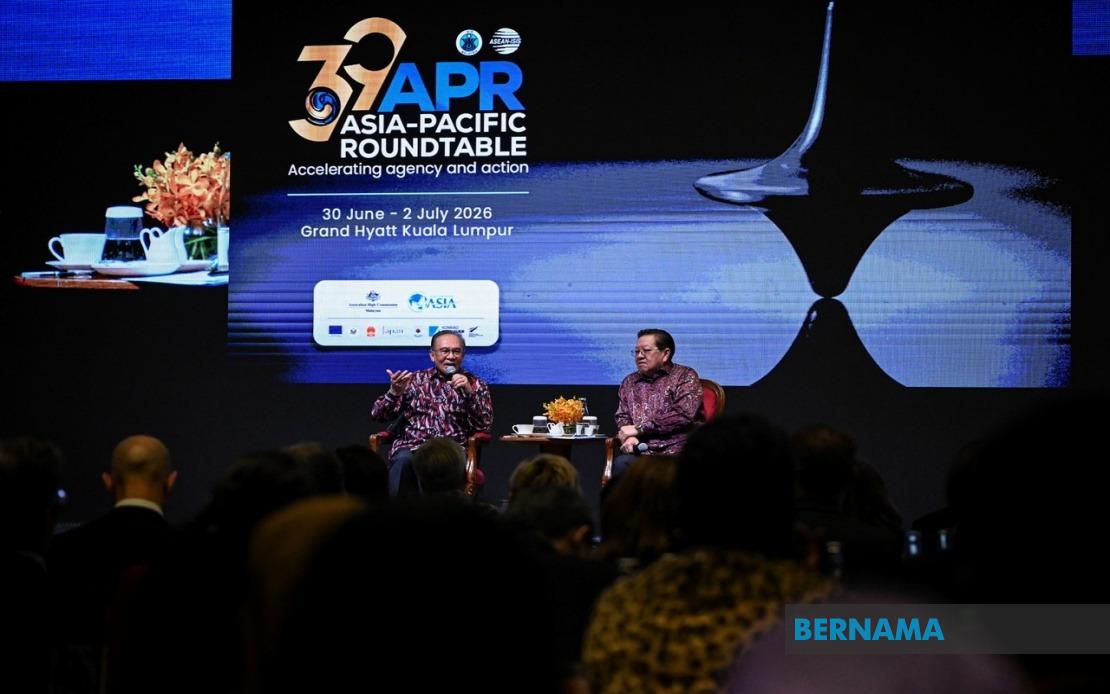
Prime Minister Datuk Seri Anwar Ibrahim has firmly rejected characterisations of the South China Sea as a flashpoint destined for confrontation, instead framing the disputed waters as a region where sustained diplomatic engagement can overcome longstanding territorial disagreements. Speaking at the 39th Asia-Pacific Roundtable in Kuala Lumpur on Thursday, Anwar expressed optimism about Malaysia's ability to manage maritime tensions through constructive channels, presenting a notably measured perspective at odds with more hawkish rhetoric that has circulated in policy circles across the region.
The Prime Minister's remarks represent a deliberate repositioning of Malaysian discourse on one of Asia's most sensitive geopolitical issues. Rather than amplifying anxieties about potential military confrontation, Anwar emphasised the value of what he characterised as meaningful exchanges with Beijing, suggesting that the substantive differences over maritime boundaries need not translate into broader strategic conflict. He highlighted his direct engagements with Chinese leadership, including conversations with President Xi Jinping and Premier Li Qiang, to underscore that bilateral relations have weathered territorial disputes without deteriorating into major tensions or unresolved grievances.
This diplomatic posture carries significant implications for Malaysia's regional standing and its role within ASEAN. By rejecting what he termed a "phobia" about South China Sea threats, Anwar is positioning Malaysia as a pragmatic actor willing to separate maritime disputes from comprehensive bilateral relationships. This approach reflects Malaysia's traditional hedging strategy, whereby the country maintains economic and diplomatic ties with major powers whilst advancing its territorial interests through multilateral frameworks rather than zero-sum confrontation. The articulation of this position by the Prime Minister himself signals consistency in messaging across the government.
Central to Anwar's argument is the emphasis on international legal frameworks, particularly the United Nations Convention on the Law of the Sea. He stressed that China's declared support for UNCLOS and its participation in ongoing negotiations for an ASEAN-China Code of Conduct demonstrate constructive engagement with established rules-based mechanisms. The Code of Conduct negotiations, which have proceeded fitfully over multiple years, represent the primary diplomatic vehicle for translating bilateral and multilateral interests into binding agreements that could manage tensions without resolving all underlying territorial claims. Anwar's framing suggests that progress on these negotiations, rather than unilateral assertions of control, should guide regional expectations.
The Malaysian leader's caution against exaggerated conflict narratives reflects a broader concern within diplomatic circles that alarmist rhetoric can become self-fulfilling. When policymakers and commentators repeatedly invoke scenarios of military escalation, they may inadvertently narrow the perceived range of acceptable outcomes, making compromise more difficult and confrontation appear inevitable. Anwar appears to be arguing for a deliberate effort to counter this dynamic by reaffirming commitment to dialogue even as underlying disputes persist. This framing also implicitly critiques external actors who may amplify conflict narratives for strategic purposes.
Anwar's remarks carry particular weight given Malaysia's specific vulnerabilities in the South China Sea. The country has overlapping maritime claims with several neighbours and major powers, including in the Spratlys region where Chinese activities have been particularly prominent. Yet rather than adopting a confrontational stance, Malaysia has sought to manage these disputes through a combination of bilateral engagement and multilateral frameworks. The Prime Minister's public reaffirmation of this approach provides both domestic political cover for continued diplomatic engagement and reassurance to international partners that Malaysia will not pivot toward military competition.
The emphasis on ASEAN solidarity and the role of direct communication among regional leaders represents another significant dimension of Anwar's position. He credited the bloc's decades-long success in maintaining peace to the habit of frank dialogue at the highest levels, suggesting that this institutional culture remains viable for managing contemporary challenges. This perspective assumes that shared interests in prosperity and stability outweigh the temptation to weaponise maritime disputes, and that maintaining the habit of engagement prevents the accumulation of grievances that could trigger escalation. However, this approach also relies on continued willingness from all parties to prioritise dialogue over unilateral assertion.
Anwar's reference to the Cambodia-Thailand border dispute illustrates his broader philosophy regarding intractable territorial questions. By characterising many regional border issues as historical legacies of colonial-era arrangements, he implicitly argues that these should not define contemporary relationships. His confidence that sustained dialogue and mutual trust can eventually produce peaceful settlements, even when immediate resolution remains elusive, reflects a philosophy of managed coexistence rather than zero-sum resolution. This stance acknowledges that some territorial questions may not yield to definitive answers but can be deprioritised through the development of deeper bilateral and regional ties.
The timing of Anwar's remarks at an elite Asia-Pacific forum underscores their intended audience. Policymakers, strategists and intellectuals gathered for the roundtable represent the networks through which ideas about regional strategy circulate and influence official positioning. By articulating Malaysia's commitment to dialogue and international law in this setting, Anwar is attempting to shape the intellectual architecture that undergirds regional security discussions, countering narratives of inevitable conflict with alternatives grounded in institutional engagement and mutual interest. The message carries implications for how regional powers calculate their strategic choices.
Looking forward, the practical implications of Anwar's position will depend on how they translate into specific policies and negotiating positions. The advancement of the Code of Conduct remains the immediate test case for whether commitment to dialogue can produce tangible agreements. Simultaneously, Malaysia's management of its own maritime claims, including through civilian activities and administrative assertions, will signal whether the rejection of conflict narratives extends to meaningful restraint. The balance between maintaining legitimate national interests and avoiding escalatory signalling will prove crucial in determining whether Anwar's optimistic framing can be sustained.
Regional observers will also monitor how Malaysia's approach influences broader ASEAN positioning on South China Sea issues. Some member states have adopted more confrontational stances, particularly in response to perceived changes in the status quo. Malaysia's emphasis on dialogue and international law could either reinforce consensus around diplomatic solutions or appear insufficiently assertive to those who view more forceful posturing as necessary. Anwar's ability to advance this agenda while maintaining ASEAN cohesion will shape the bloc's collective capacity to manage one of Asia's most consequential strategic challenges.
The Prime Minister's rejection of conflict inevitability ultimately represents a bet that rational interests and sustained engagement can overcome structural tensions in international relations. This perspective, rooted in Malaysia's historical experience and institutional preferences, provides a counterweight to more deterministic analyses of great power competition in Asia. Whether this optimism proves warranted will depend on developments across multiple spheres—from bilateral relations with major powers to the maturation of regional institutions and the evolution of the broader strategic environment. For now, Anwar has clearly positioned Malaysia as an advocate for dialogue, mutual respect and the continued viability of rules-based regional order.

