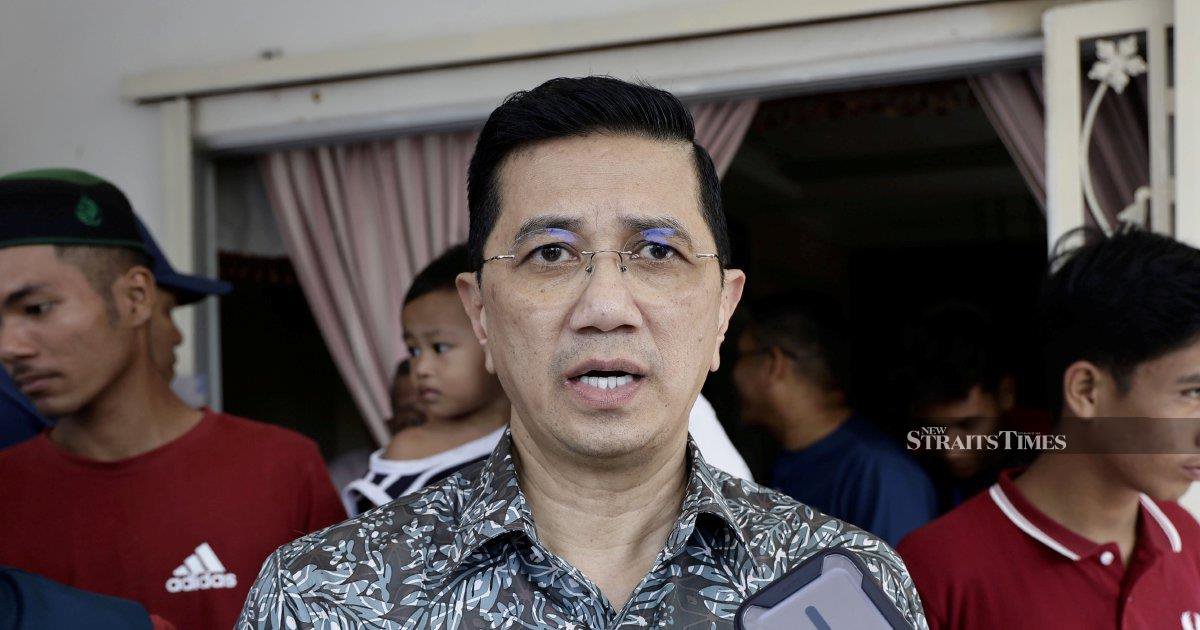
Prime Minister Datuk Seri Anwar Ibrahim has publicly questioned the firmness of former PKR deputy president Datuk Seri Mohamed Azmin Ali's stated position against rejoining the People's Justice Party, with the premier's comments reflecting persistent tensions within Malaysia's largest opposition coalition.
The exchange represents the latest chapter in a prolonged political distance between Anwar and Azmin, whose relationship has remained strained since the latter's departure from PKR in 2020. That exodus occurred amid internal party upheaval and rival factions vying for influence, ultimately reshaping the trajectory of both the party and Malaysian politics more broadly. Azmin's exit alongside several other lawmakers had coincided with broader realignments that affected government stability and coalition politics at federal and state levels.
By publicly dismissing Azmin's rejection of a PKR return, Anwar appears to be signalling that reconciliation pathways remain theoretically open despite public statements suggesting finality. This rhetorical positioning may serve multiple purposes: it allows the Prime Minister to maintain the appearance of party magnanimity while simultaneously questioning whether Azmin's stance reflects genuine principle or tactical calculation. The manoeuvre also subtly challenges Azmin to clarify whether his position is immutable or subject to negotiation under different circumstances.
Azmin's current political standing involves his membership within the Amanah party following his initial departure from PKR. This transition itself reflected a deliberate repositioning within Malaysia's broader political ecosystem, as factional alignments continued to shift throughout the tumultuous period spanning 2020 to 2024. His presence within Amanah has positioned him as part of the ruling coalition infrastructure, creating distinct interests potentially divergent from PKR's institutional concerns and policy priorities.
The simmering Anwar-Azmin dynamic extends beyond personal political rivalry to encompass deeper questions about party cohesion, leadership legitimacy, and the management of internal dissent within PKR. As Malaysia's historically largest opposition party transitions toward government participation and institutional power, questions about welcoming back departing members versus maintaining firm boundaries become strategically consequential. Different approaches carry distinct implications for party culture, organizational discipline, and the treatment of defectors or dissidents.
For Malaysian observers monitoring coalition stability, the public exchange illuminates tensions that periodically surface but rarely fully resolve. The ruling coalition comprising Pakatan Harapan alongside support from other parties depends substantially on careful management of competing interests, historical grievances, and personality-driven conflicts. Episodes such as Anwar's latest remarks remind stakeholders that ostensible unity masks underlying friction capable of destabilizing arrangements if triggered by electoral pressures or leadership contests.
Anwar's challenge regarding whether Azmin was ever genuinely invited to return carries implied messaging about the Prime Minister's negotiating position and confidence. By suggesting uncertainty about invitation status, Anwar creates space for reframing the entire debate around Azmin's receptiveness rather than party receptiveness. This rhetorical inversion potentially disadvantages Azmin by positioning him as either declining an opportunity he preferred not to acknowledge or facing questions about why overtures would even occur between entities supposedly distant from one another.
The broader implications for Southeast Asian political observers merit consideration as Malaysia continues navigating coalition governance and management of ambitious multi-party arrangements. Other regional democracies grapple with analogous challenges regarding former party members, succession disputes, and the balance between institutional cohesion and individual political mobility. Malaysia's handling of such tensions offers both cautionary lessons and pragmatic examples for neighbours wrestling with similar dynamics.
Regionally, Malaysia's coalition architecture has attracted attention from other democracies experimenting with similar models to fragment large partisan majorities or accommodate diverse interests. The Anwar-Azmin situation exemplifies how personal grievances and leadership questions can threaten the stability of such arrangements regardless of formal agreements or electoral mathematics. Successful coalition management requires not merely technical parliamentary calculations but sustained attention to interpersonal dynamics and expectations regarding inclusion or exclusion of prominent figures.
Looking forward, whether reconciliation between Anwar and Azmin occurs remains contingent on multiple variables including electoral outcomes, factional realignments within their respective parties, and potential shifts in the broader coalition composition. Public statements from either figure should be read as positioning statements within ongoing negotiations rather than definitive declarations of unchanging preference. Malaysian political history demonstrates repeatedly that avowed impossibilities frequently become operational realities when circumstances shift or mutual interests realign.
The episode also underscores persistent questions about PKR's institutional identity and strategic direction under Anwar's leadership. Whether the party prioritizes growth through welcoming returning members or stability through maintaining clear boundaries between loyalists and departures will substantially shape its competitive positioning during upcoming electoral cycles and coalition negotiations. Azmin's case becomes emblematic of choices PKR leadership must continuously make regarding party management and internal culture.

