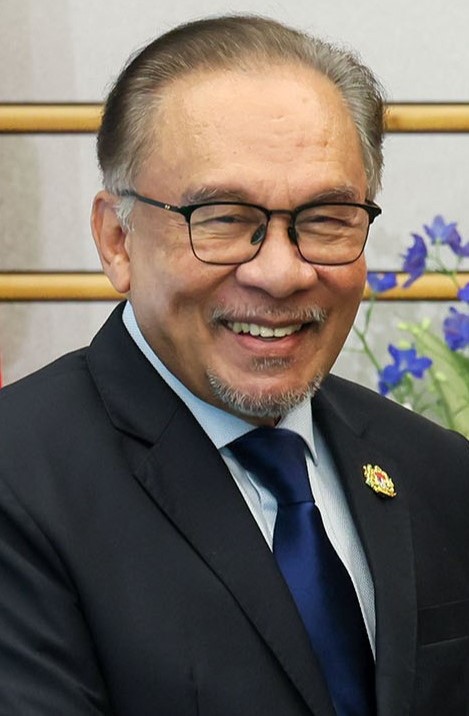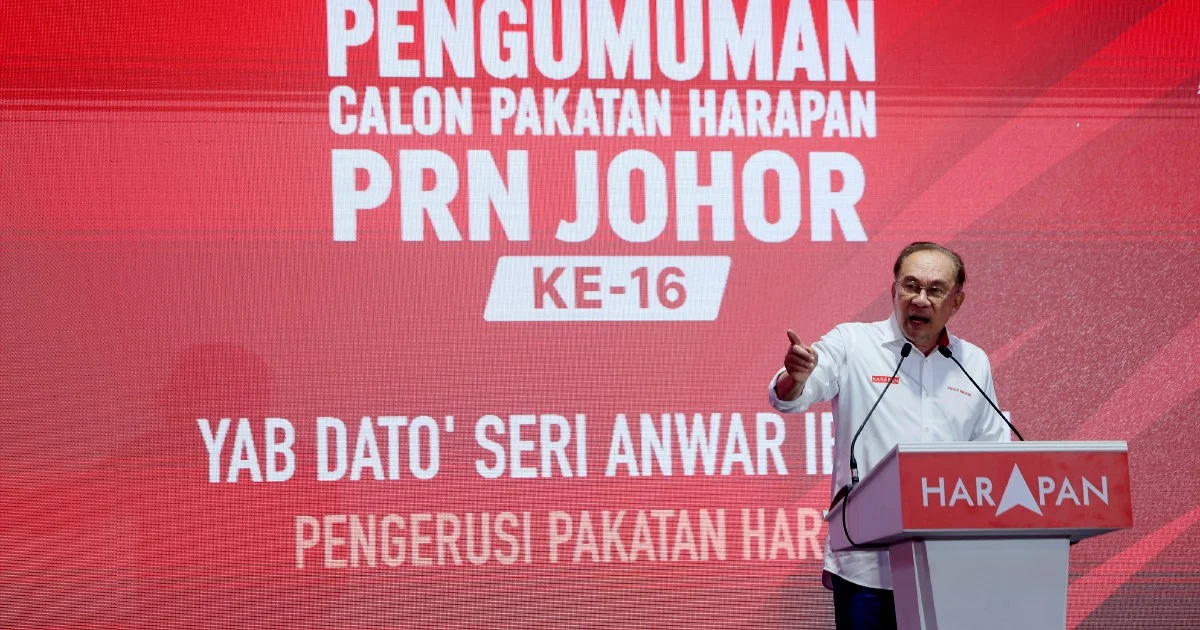
Prime Minister Datuk Seri Anwar Ibrahim has challenged Johor's state executive councillors to demand clarity from the administrations that preceded his own, specifically regarding longstanding grievances about the state's allocation of federal revenue. Speaking in Tangkak, Anwar emphasised that officials currently in office should take a more assertive stance in seeking answers from Barisan Nasional and Perikatan Nasional, the two coalitions that governed at the federal level before his administration took over.
The remarks underscore a broader tension within Malaysia's federal system, where state governments have repeatedly expressed concerns that their natural resource wealth and contributions to national economic growth do not translate adequately into their share of central government distributions. Johor, as one of Malaysia's economically significant states with substantial petroleum revenues and extensive trade linkages, has occasionally become a focal point in debates about fiscal federalism and revenue fairness. Anwar's intervention signals that his administration views transparency and retrospective accountability as important elements of building trust between Kuala Lumpur and the states.
For more than a decade, various Johor leaders have raised questions about whether the formula governing the distribution of federal revenue adequately compensates states for resources extracted or economic activity generated within their boundaries. These concerns gained particular prominence during the Perikatan Nasional period under former Prime Minister Muhyiddin Yassin, when several state governments, including Johor's leadership at the time, expressed frustration with their perceived treatment. The conversation has continued even as political alignments have shifted, reflecting a structural issue rather than a purely partisan dispute.
Anwar's directive appears intended to empower state-level representatives to pursue documentary evidence and formal explanations from their federal counterparts regarding how revenue allocation decisions were made. Such scrutiny could potentially illuminate the technical basis for distributions, including how much weight was assigned to factors such as state population, development needs, economic contribution, and resource endowment. Understanding these weightings would allow contemporary policymakers and the public to assess whether distributions adhered to stated principles or whether discretionary factors influenced outcomes.
The intervention also carries implications for Malaysia's broader fiscal governance conversation. As Malaysia seeks to strengthen its institutional frameworks and reduce perception of inequitable treatment across regions, questions about revenue distribution methodology become increasingly salient. The Prime Minister's encouragement suggests his administration recognises that historical grievances, if left unaddressed, can accumulate into broader disaffection. By directing state officials to demand answers, Anwar may be attempting to create space for these issues to be aired and potentially resolved through dialogue rather than through mounting political frustration.
Johor's particular position within Malaysian federalism makes these questions especially important. As a strategically located state with significant maritime trade activity, hydrocarbon resources, and manufacturing capacity, its relationship with the federal government carries economic weight beyond what a purely demographic analysis would suggest. When Johor's leadership voices concern about revenue fairness, federal policymakers cannot easily dismiss such complaints as parochial interests. The state's economic integration with neighbouring Singapore and its role as a major investor destination also mean that its internal satisfaction with the federal arrangement indirectly influences investor confidence throughout the region.
The historical context matters considerably here. The Barisan Nasional government, which ruled for six decades until 2018, developed revenue distribution mechanisms that reflected its particular political priorities and demographic assumptions. When the Perikatan Nasional coalition took office in 2020, initially without the Barisan's knowledge of existing arrangements, some states experienced shifts in their federal allocations. Whether these shifts reflected revised policy or simply different administrative approaches remains somewhat unclear, particularly given the relative opacity surrounding federal revenue distribution decisions in Malaysian governance practice.
Anwar's comments suggest he believes that transparency and retrospective accountability serve the interests of his administration even if they reveal imperfections or questionable decisions from the past. This approach differs from the defensive posture often adopted by new governments confronted with inherited systems. Rather than protecting the previous administration or deflecting blame, Anwar appears willing to encourage systematic questioning of past resource distribution patterns. Such willingness might reflect confidence that his own administration can distinguish itself through fairness, or it might represent a calculated political move to build credibility with state governments whose cooperation he requires for legislative and administrative effectiveness.
For Malaysia's federal system more broadly, whether Johor's executive council pursues Anwar's suggestion with vigour could set precedent for how transparently revenue allocation mechanisms operate. If state officials successfully extract detailed explanations and supporting documentation, it could establish an expectation that such information should be readily available rather than treated as confidential federal prerogative. This in turn might contribute to a broader evolution toward greater openness in Malaysian public administration, particularly regarding decisions that significantly affect state governments' capacity to deliver services and development projects.
The practical outcome will depend substantially on whether Johor's state leadership chooses to translate Anwar's urging into formal requests for information and documentation. If pursued seriously, such inquiries could reveal whether systematic biases existed in revenue allocation formulas, whether discretionary adjustments were made outside stated methodologies, and whether certain states were favoured over others based on political rather than policy considerations. These questions, while rooted in Johor-specific concerns, touch on broader principles of equitable federalism that resonate across Malaysia's constituent states and territories.