Prime Minister Datuk Seri Anwar Ibrahim has launched a pointed counteroffensive against the Opposition, accusing lawmakers of manufacturing political drama around the Lembaga Tabung Haji (TH) controversy instead of addressing substantive governance failures. In a lengthy Facebook statement released on August 11, Anwar framed the dispute as a question of competing priorities: whether elected representatives genuinely care about rectifying a major institutional breach of public trust or merely seek partisan advantage from the fallout.
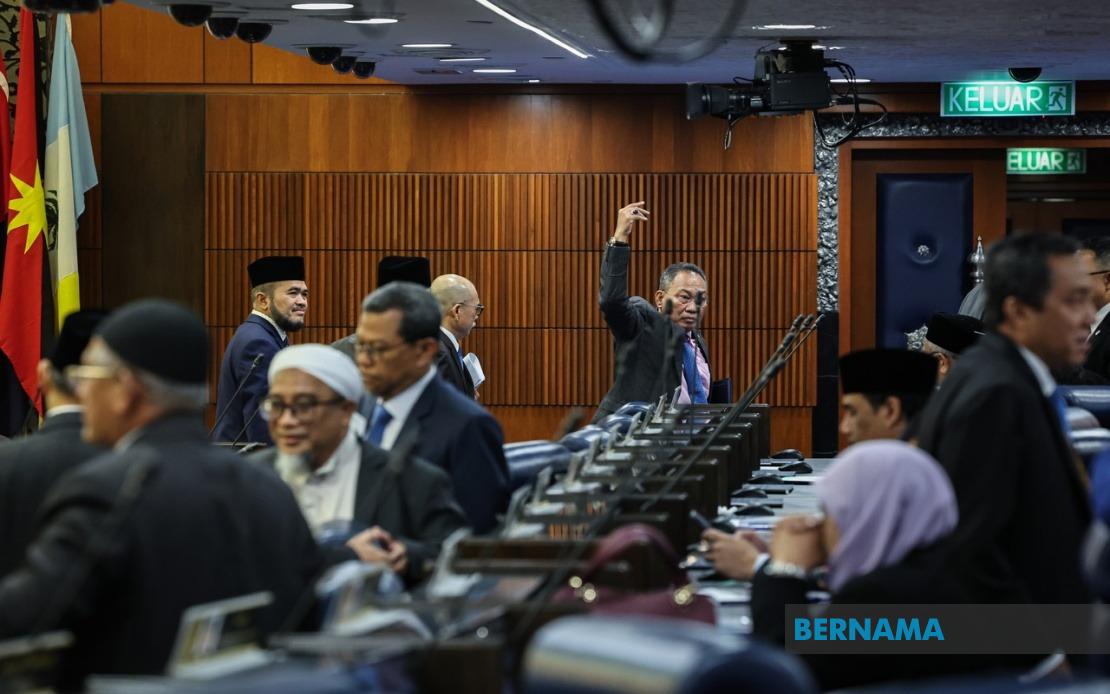
The Prime Minister's rebuke came in the immediate aftermath of a contentious special parliamentary sitting convened to hear ministerial briefings on the Royal Commission of Inquiry (RCI) report into TH's operations. Several Opposition Members of Parliament staged a walkout, refusing to participate in the session after Speaker Tan Sri Johari Abdul proceeded with the briefing despite the absence of Anwar himself. The Opposition benches had sought to adjourn the proceedings, with Perikatan Nasional Chief Whip Datuk Seri Takiyuddin Hassan arguing the debate should not proceed without the Prime Minister's presence.
Anwar's absence stemmed from legitimate medical reasons. The Prime Minister was undergoing physiotherapy following elective laparoscopic surgery to address a para-umbilical hernia, a procedure that prevented his attendance at the parliamentary session. Nevertheless, his inability to be present became the focal point of Opposition protest, suggesting the walkout was as much about denying the government a smooth legislative moment as about substantive parliamentary procedure. The timing highlighted the deep mistrust between the government and opposition benches when it comes to matters of institutional integrity and public accountability.
The underlying dispute concerns the 211-page RCI report released publicly on July 29, which detailed significant management weaknesses at TH spanning the 2014-2020 period. The inquiry, established by the government in 2021 with members appointed in January 2022, presented its findings to Yang di-Pertuan Agong on August 30, 2022. The report contained 25 recommendations for institutional improvement, with TH having implemented 75 per cent of these measures by July 30—a progress rate that the government clearly wished to highlight during the parliamentary briefing.
Anwar's rhetorical strategy in his statement was to reframe the Opposition's parliamentary tactics as indifference to the plight of ordinary Malaysians whose life savings are held in TH. He invoked the names of social groups whose trust had been violated: fishermen, farmers, teachers, police personnel, military personnel, and retirees who had scrimped and saved to accumulate funds for their hajj pilgrimages in fulfilment of Islamic obligations. By personalising the issue around these vulnerable constituencies, Anwar attempted to shift the moral high ground, positioning government efforts to address institutional reform as protective of ordinary Malaysians while opposition obstruction appeared callous.
The Prime Minister's statement also contained a pointed challenge directed specifically at Perikatan Nasional, the opposition coalition led by PAS. Anwar questioned whether PN leadership genuinely cares about the welfare of less privileged Malaysians whose TH deposits remain at risk due to institutional mismanagement. This line of attack was particularly barbed given that PAS and PN frequently position themselves as champions of Malay-Muslim interests, making them vulnerable to accusations that parliamentary obstruction—rather than solution-seeking—contradicted their stated values.
Anwar's framing of institutional lapses at TH as an act of "betrayal" against Muslim Malays served multiple rhetorical purposes. First, it established a clear moral wrong independent of political affiliation—the breach had occurred under previous administrations and represented institutional failure rather than partisan policy difference. Second, it positioned government reform efforts as redemptive action aimed at repairing this betrayal. Third, it rendered opposition obstruction morally indefensible: opposing or delaying scrutiny of this betrayal appeared equivalent to siding with the betrayers themselves.
The opposition walkout must be understood within the context of Malaysia's fractious coalition politics. With the government controlling a narrow parliamentary majority dependent on support from various factions including GPS and independent MPs, the opposition has limited tools to influence legislation or policy. Parliamentary theatrics—walkouts, disruptions, procedural objections—become mechanisms to deny the government the appearance of smooth governance and legislative achievement. The Opposition's refusal to participate in the TH briefing essentially prevented them from being part of a parliament that demonstrated institutional self-correction, thereby avoiding association with positive developments that might strengthen government credibility.
For Malaysian depositors and the broader public, this political clash obscures several substantive questions about TH's future. The RCI report identified serious governance lapses, yet the parliamentary debate that might have explored remedial measures and accountability mechanisms became derailed by inter-coalition recriminations. Whether the 75 per cent implementation rate of RCI recommendations represents adequate progress, what mechanisms will ensure continued compliance, and whether adequate compensation will reach affected depositors—these questions received less attention than the spectacle of parliamentary opposition.
The controversy also reflects deeper structural problems in Malaysia's political system. When major institutional crises occur, the response often becomes filtered through coalition competition rather than directed toward systemic repair. The Opposition's walkout, whether justified as protest against Anwar's absence or as tactical manoeuvre, reinforced the perception that parliament functions as theatre for inter-elite conflict rather than as a forum for collective problem-solving in the national interest.
Moving forward, the TH situation will likely remain a focal point of political conflict. The Opposition can maintain that the government, through Anwar's absence, failed to treat parliament with proper respect. The government can argue that opposition obstruction demonstrates indifference to depositor welfare. Meanwhile, the hard work of institutional reform, accountability, and restoration of public confidence in TH proceeds at bureaucratic pace, largely removed from parliamentary glare. The clash between these two narratives will likely persist until either trust between government and opposition deepens—unlikely in the current political climate—or public pressure forces greater parliamentary focus on substantive accountability rather than procedural point-scoring.
For Southeast Asian observers, the Malaysian episode offers a cautionary tale about how political fragmentation can complicate response to institutional crises. When coalitions are unstable and opposition parties see limited pathways to power, parliamentary debates become opportunities for delegitimisation rather than collaborative problem-solving. Building consensus around institutional reform becomes harder when the reform itself becomes a trophy claimed by one political side rather than a shared national achievement.

