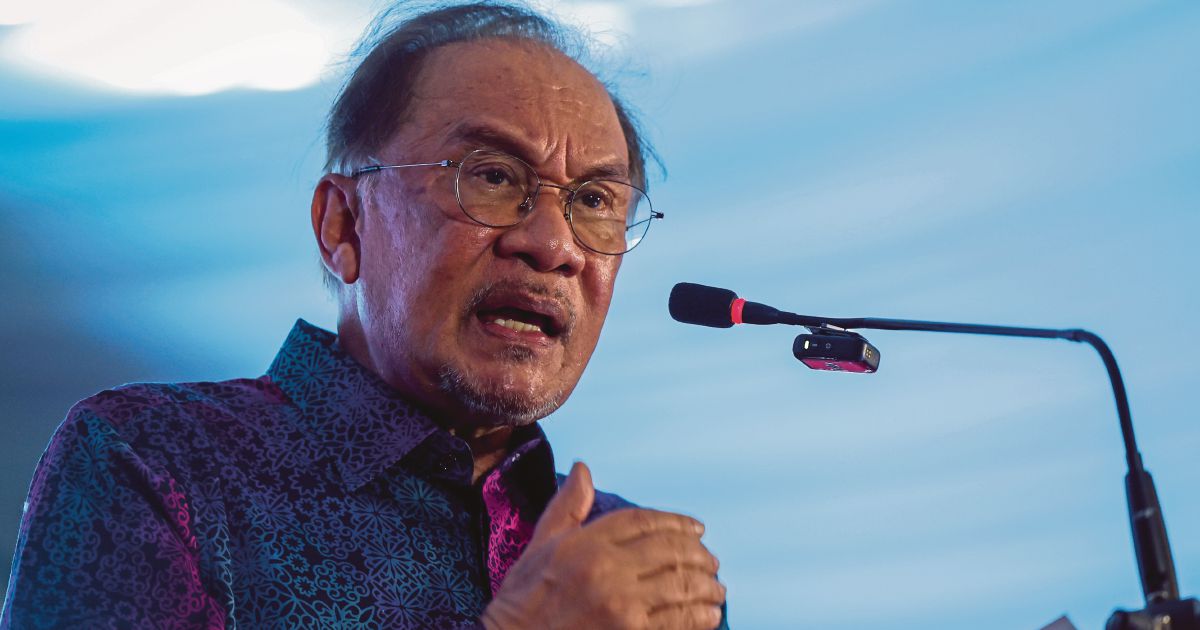
Prime Minister Datuk Seri Anwar Ibrahim has attempted to redirect the political narrative surrounding his recent absence from Parliament, contending that scrutiny of his personal attendance pales in comparison to the gravity of alleged misconduct at Tabung Haji. Speaking from his official residence, Anwar rejected Opposition assertions that his absence represented a dereliction of duty, framing the controversy as a distraction from more pressing governance failures that demand parliamentary and public attention.
The Tabung Haji controversy centres on findings from a Royal Commission of Inquiry established to investigate claims that the Islamic pilgrimage fund mismanaged depositor wealth and violated the trust of millions of Malaysian Muslims who have entrusted their savings to the institution. The RCI's report, which has emerged as a focal point of parliamentary debate, contains allegations spanning years of administrative and financial irregularities that have collectively undermined public confidence in one of Malaysia's most significant faith-based financial institutions.
Anwar's rhetorical strategy reflects a common approach in Malaysian politics: when facing parliamentary opposition on matters of personal conduct, prime ministers frequently pivot to substantive policy issues they believe resonate more powerfully with the electorate. By elevating the Tabung Haji matter above his own parliamentary record, Anwar seeks to position himself as focused on protecting ordinary Malaysians' financial interests rather than becoming embroiled in what he characterises as procedural disputes.
The Opposition's scrutiny of Anwar's parliamentary attendance has been consistent, with lawmakers questioning whether the Prime Minister's schedule permits adequate legislative engagement. Parliamentary attendance has long been a barometer of executive commitment to the legislative process in Westminster-style democracies, and Malaysia's system similarly values visible prime ministerial presence in the Dewan Rakyat during critical debates.
However, Anwar's pivot highlights a substantive tension within Malaysia's governance framework. The Tabung Haji situation carries enormous implications for approximately 8.5 million depositors, predominantly lower and middle-income Muslim Malaysians who depend on the fund for their Hajj savings. Any mismanagement or dereliction of fiduciary duty directly affects household financial security and religious aspirations, making the RCI inquiry's conclusions a matter of tangible consequence for a substantial voting bloc.
The timing of Anwar's remarks suggests a calculated political judgment. By insisting that parliamentary debate prioritise the RCI findings over procedural attacks on his attendance, he positions his critics as engaged in petty partisan point-scoring whilst governance failures affecting millions remain unaddressed. This framing allows the Prime Minister to occupy what he perceives as higher moral ground—advocate for depositors rather than defender of his own parliamentary calendar.
The Tabung Haji investigation extends beyond mere financial mismanagement accusations. Reports indicate that the inquiry examined governance structures, board-level decision-making, and the adequacy of regulatory oversight by relevant government agencies. Such systemic failures carry implications for how Malaysia structures oversight of faith-based institutions more broadly, a particularly sensitive issue in a predominantly Muslim nation where religious institutions occupy significant public trust.
For Malaysian readers, this dispute encapsulates a broader question about parliamentary accountability and executive priorities. Opposition members contend that prime ministerial presence in Parliament represents a fundamental democratic principle, whilst the government argues that substantive policy achievements matter more than symbolic attendance. Both positions contain validity, yet they reflect competing visions of how parliamentary democracy should function in Malaysia's context.
The Opposition's pursuit of Anwar's attendance records also reflects the broader political environment following the 2022 election. With coalition dynamics in Parliament remaining fluid and government majorities occasionally uncertain, parliamentary attendance carries heightened symbolic significance. Every prime minister's presence or absence communicates messages about confidence, engagement, and respect for legislative institutions.
Anwar's emphasis on Tabung Haji also carries implications for how his administration intends to address the findings. By making the RCI report a centrepiece of parliamentary discussion and public concern, the Prime Minister signals that remedial action and potential accountability measures will follow. The depth and scope of such measures will ultimately determine whether his rhetorical pivot succeeds in satisfying public expectations for genuine reform.
The broader context of this dispute reveals persistent tensions within Malaysian governance between executive flexibility and parliamentary tradition. Prime ministers require flexibility to manage national affairs, yet legislatures require adequate executive presence to fulfil their oversight function. Anwar's argument that substantive policy matters more than procedural attendance is debatable, but his identification of the Tabung Haji crisis as a priority certainly addresses a governance failure demanding urgent attention.
Moving forward, Malaysian observers will scrutinise both the government's substantive response to RCI findings and the Prime Minister's future parliamentary attendance patterns. Any genuine commitment to addressing Tabung Haji mismanagement will require sustained parliamentary engagement, making Anwar's current attempt to separate parliamentary presence from policy substance potentially unsustainable. How this dispute resolves will offer insights into whether Malaysian governance prioritises legislative accountability or executive expediency.

