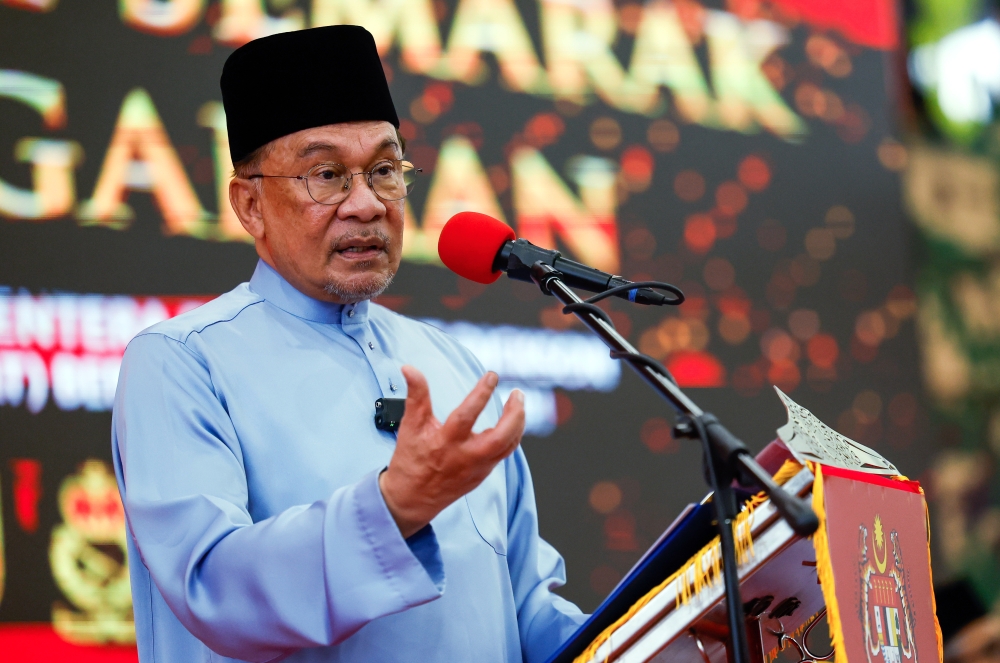
Prime Minister Anwar Ibrahim has provided a detailed rationale for maintaining confidentiality around the Royal Commission of Inquiry report into Lembaga Tabung Haji, asserting that immediate public disclosure would pose serious risks to the institution's financial stability and the welfare of millions of depositors. Speaking in Port Dickson on July 24, Anwar characterised the decision to withhold the RCI findings as a protective measure rooted in prudent governance rather than an attempt to obscure wrongdoing or mismanagement.
The Prime Minister's remarks represent the government's most substantive explanation to date regarding why the RCI report, completed following years of investigation into TH's operations and financial decisions, has not been made publicly available. Officials have long faced pressure from transparency advocates, opposition politicians, and concerned depositors seeking disclosure of the commission's conclusions about how the pilgrim fund accumulated significant losses and experienced governance challenges in recent years.
Anwar's reasoning centres on the behavioural economics of institutional confidence. He contended that releasing the full report without accompanying structural reforms or corrective actions in place could precipitate a rush of withdrawals by alarmed depositors, thereby transforming a solvency concern into an acute liquidity crisis. This domino effect, he suggested, would ultimately cause greater harm to ordinary Malaysians—particularly millions of lower-income pilgrims—than the temporary information asymmetry created by confidentiality. The logic mirrors central bank responses during financial emergencies, where controlled information management is prioritised over immediate transparency.
The Tabung Haji situation carries particular resonance for Malaysian society because the institution functions not merely as a financial entity but as a crucial religious and social infrastructure. For decades, TH has enabled Malaysians from modest backgrounds to accumulate savings specifically for the Hajj pilgrimage, one of Islam's five pillars. The fund had grown into a vast repository of public trust and billions in assets. When revelations emerged about significant losses stemming from questionable investments and management decisions, public confidence was visibly shaken, intensifying demands for accountability and full disclosure of exactly what went wrong.
Government strategy appears to centre on conducting comprehensive remedial reforms before releasing the RCI report's detailed findings. This sequencing suggests that officials believe presenting problems without simultaneously demonstrating solutions would amplify public anxiety. The approach reflects a calculation that stakeholders would react more constructively to a narrative framing institutional failures alongside concrete corrective measures than to a narrative presenting findings in isolation. Whether this paternalistic approach ultimately serves the public interest remains contested among analysts and civil society observers.
The withholding of the report also raises procedural questions about the purpose and function of royal commissions within Malaysia's governance framework. Traditionally, RCI findings have been treated as advisory documents intended to inform government decision-making rather than public accountability mechanisms with automatic release provisions. However, mounting expectations around institutional transparency and public participation in governance have created tension between confidential advisory processes and democratic demands for accessible information about matters affecting millions of citizens.
Tabung Haji's troubles have been particularly vexing because the fund operates with distinctive features that blur distinctions between private financial institutions and quasi-governmental bodies with social mandates. The institution accepts deposits from ordinary Malaysians under a specific religious compact, holds assets exceeding 100 billion ringgit, and operates under regulatory oversight that differs from conventional banking. This hybrid character means that institutional failure carries implications extending beyond private sector concerns into national religious, economic, and social policy domains.
Previous disclosures about TH's difficulties have already fuelled considerable public discussion and concern. The institution has faced years of scrutiny following revelations about underperforming investments, particularly in property ventures and domestic equities that accumulated substantial losses. Management changes, regulatory interventions, and various restructuring announcements have occurred in incremental fashion, creating a somewhat fragmented public narrative about the fund's actual condition and trajectory. Many depositors remain uncertain about the safety of their savings and the institution's medium-term viability.
The RCI investigation itself was initiated in response to accumulating evidence that TH's governance frameworks had permitted decisions inconsistent with prudent asset management principles. The commission undertook extensive examination of investment policies, board oversight, internal controls, and management accountability mechanisms. Its report presumably contains detailed findings about how such outcomes occurred and recommendations addressing systemic vulnerabilities. The fact that these findings remain undisclosed nearly two years after commission proceedings conclude has generated ongoing speculation about their contents and implications.
Anwar's statement suggests that the government is pursuing a path whereby the RCI report eventually enters public discourse, but only after implementing institutional reforms addressing identified vulnerabilities. This sequencing could theoretically reduce panic risk while ultimately fulfilling transparency obligations. However, the indefinite nature of the timeline and absence of publicly stated benchmarks for report release create ambiguity that itself can fuel public concern and conspiracy theorising.
For Malaysian stakeholders with deposits in Tabung Haji, the uncertainty presents genuine practical challenges. Depositors cannot make fully informed decisions about their financial arrangements without understanding institutional fundamentals. The government's protective rationale, while arguably rational from a systemic stability perspective, comes at the cost of individual agency and the ability of depositors to engage as informed participants in decisions about their own savings.

