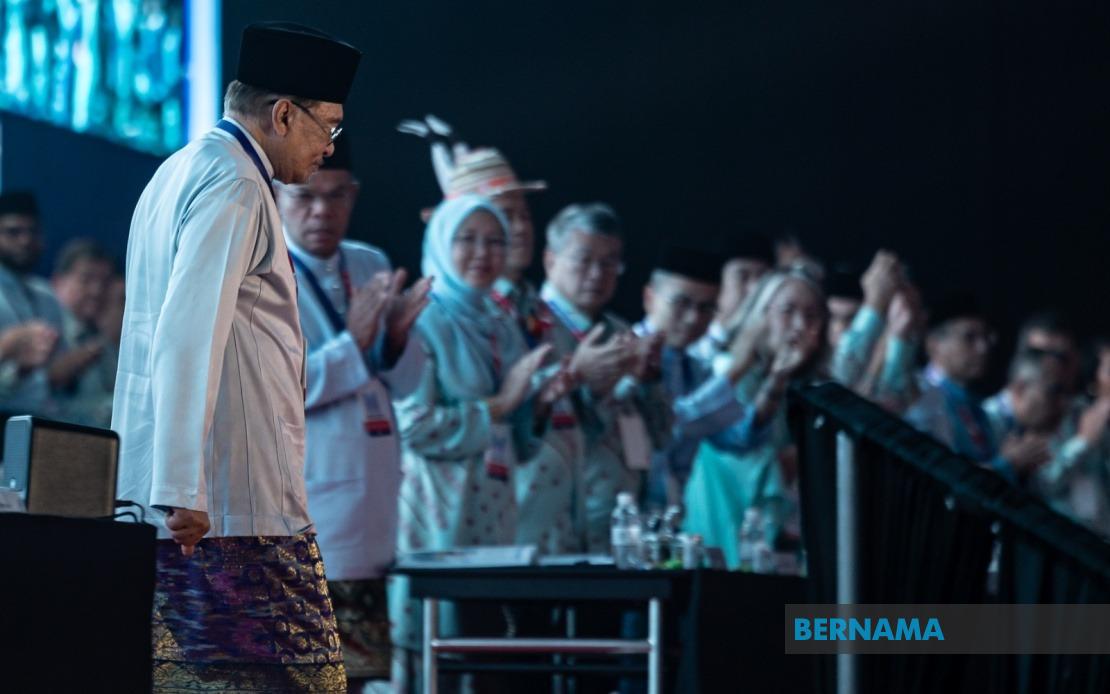
Prime Minister Datuk Seri Anwar Ibrahim has pushed back against critics demanding faster institutional change, insisting that his administration has delivered meaningful reforms that should not be overshadowed by the agenda still pending implementation. Speaking at the PKR National Congress in Melaka, Anwar acknowledged public impatience while making the case that recognition of accomplished reforms is essential, even as the government continues working toward further changes.
The defence comes amid ongoing pressure from civil society, opposition figures, and even within his own coalition for more aggressive action on anti-corruption measures, judicial independence, and democratic institutions. Anwar's remarks suggest the administration is conscious of a perception gap—that while reforms have progressed, public discourse remains focused on unfulfilled promises rather than incremental achievements.
During his presidential policy address, Anwar detailed concrete legislative successes achieved since taking office in late 2022. These include amendments to the Audit Act 1957, modifications to the Parliamentary Service Act, passage of the Public Finance and Fiscal Responsibility Act 2023, and the establishment of a Special Task Force on Agency Reform. Additionally, the government has enacted consumer protection legislation and passed laws addressing gig worker rights—areas that had languished without legislative attention for decades under previous administrations.
Yet the Prime Minister's acknowledgement that "not all steps taken by the government had been perfect" reveals an administration navigating the inherent tensions between ambition and implementation. This candour reflects political maturity, though it also hints at constraints the government faces. Anwar has consistently maintained that the formation of the Unity Government following the 2022 general election introduced complexities that required coalition negotiations and compromise. As Pakatan Harapan chairman, he chairs a coalition that, while the largest bloc in parliament, must accommodate coalition partners with different reform priorities and political sensitivities.
The staged approach Anwar advocates reflects pragmatic governance in a deeply divided political landscape. Malaysia's administrative machinery, inherited structures, and entrenched interests do not yield easily to wholesale transformation. Building consensus across coalition partners—particularly with Barisan Nasional components that joined the Unity Government—necessitates prioritization and sequencing. This reality has frustrated reformist constituencies who expect more aggressive dismantling of structures they view as compromised or unaccountable.
For Malaysian readers, the tension Anwar articulated carries significance beyond parliamentary discourse. Institutional reform directly affects government service delivery, transparency in public contracting, and public confidence in law enforcement and judiciary—issues that touch citizens' daily lives. The consumer credit and gig worker legislation, while less headline-grabbing than anti-corruption initiatives, represent tangible improvements in areas affecting working Malaysians and small entrepreneurs navigating informal economy sectors.
The Prime Minister's emphasis on "strong foundation" and staged implementation suggests a deliberate strategy of consolidating each reform layer before advancing to the next. This approach has historical precedent in successful institutional transitions globally, though patience tests citizens already weary from decades without reform. The question facing his administration is whether the window for meaningful change remains open long enough to complete the agenda—particularly given Malaysia's fractious politics and the 2026 general election looming.
Anwar's framing also addresses a political audience beyond domestic critics. By emphasizing reform achievements and the difficulty of governing by consensus, he signals to international observers and business partners that institutional modernization is progressing, even if incrementally. This messaging matters for Malaysia's investment climate and regional standing, where governance quality increasingly influences competitiveness.
The visibility of coalition partners at the congress—PKR deputy president Nurul Izzah Anwar, Amanah president Mohamad Sabu, and Sabah coalition chairman Hajiji Noor—underscores that reform progress depends on maintained coalition cohesion. Any fracturing could further slow the agenda or create political instability that derails reforms midway through implementation. Conversely, demonstrating tangible results becomes essential for justifying continued coalition participation among partners balancing their own electoral calculations.
Looking forward, Anwar's defence suggests the government will continue emphasizing completed reforms while maintaining realistic timelines for pending measures. The risk lies in further entrenchment of the perception that reform promises routinely exceed delivery. For reform advocates in civil society, the counter-argument—that sustainable institutional change requires careful implementation—carries weight, yet cannot indefinitely substitute for expanded substantive action.
The discourse Anwar opened at the PKR congress ultimately reflects a government at an inflection point. Three years into its mandate, substantial policy work has been accomplished, yet the sense of transformative change many expected remains elusive. Managing these expectations while maintaining momentum toward genuine institutional evolution will define whether the administration can claim comprehensive reform success when Malaysians next cast ballots.

