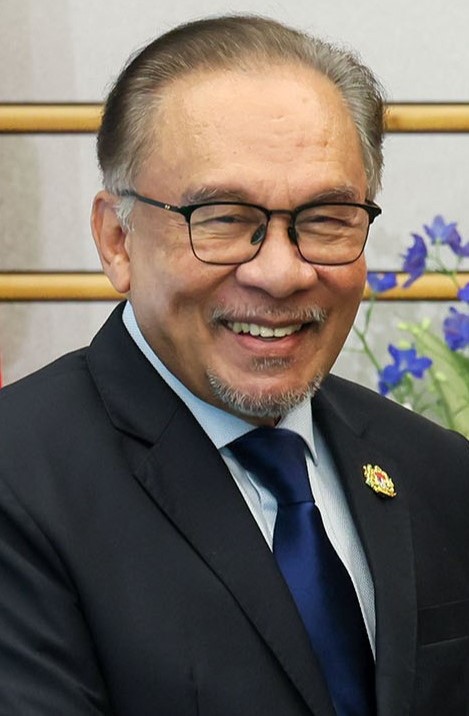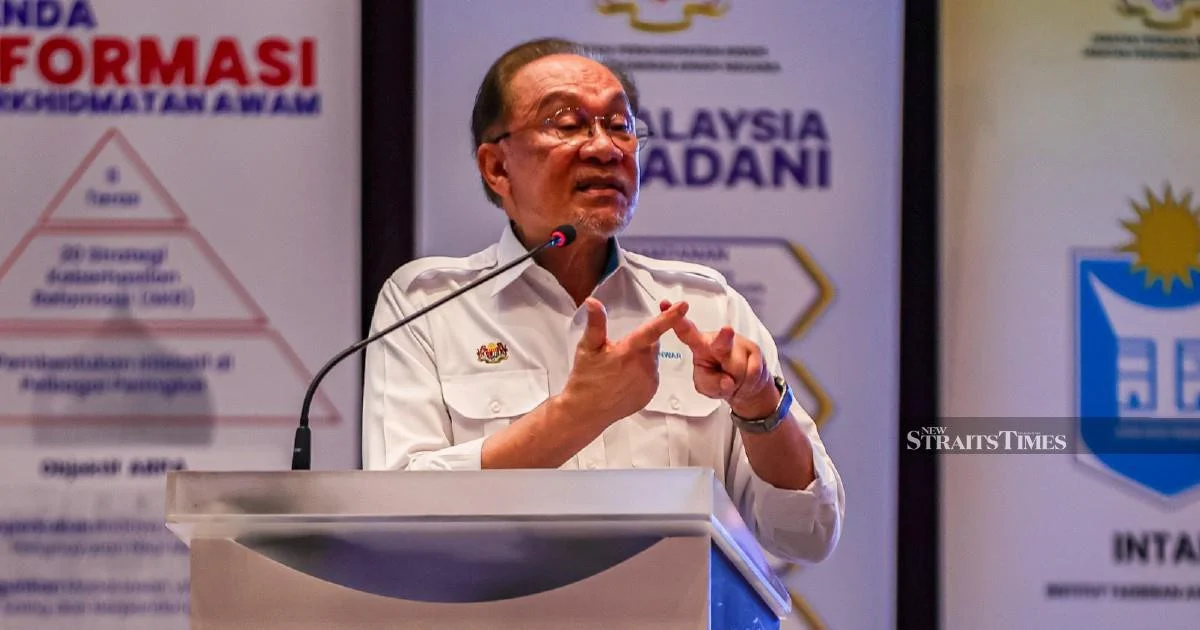
Prime Minister Datuk Seri Anwar Ibrahim on Saturday sought to calm escalating political friction by defending the remarks made by Amanah president Datuk Seri Mohamad Sabu during a Pakatan Harapan gathering, insisting the veteran party leader had made no disparaging comments about rival political organisations. The clarification came in the aftermath of the candidate announcement rally held in Tangkak on Friday, where Sabu's words had apparently drawn criticism from sections of the political opposition.
Anwar's intervention reflects the delicate dynamics within Malaysia's ruling coalition, where coalition partners must balance their political messaging with the need to maintain internal cohesion. The Prime Minister's willingness to publicly defend Sabu suggests concern about how the incident might be weaponised by the opposition or create fissures within Pakatan Harapan itself. The coalition, formed after the 2018 general election and reconstituted following the 2022 poll, remains dependent on maintaining trust among its constituent parties—a task complicated by competing political interests and the approach of the next election.
The Tangkak event itself was a significant campaign milestone for Pakatan Harapan, bringing together senior leadership to unveil candidates intended to contest in the coming electoral cycle. Such candidate announcements typically serve multiple purposes: they energise party machinery, signal continuity or change in party leadership, and allow coalition partners to demonstrate unity to the electorate. However, when speeches at such events become a source of inter-party tension, they risk undermining the very unity they are meant to showcase.
Mohamad Sabu, who serves as Defence Minister in addition to his party presidency, carries considerable influence within the coalition's left-leaning faction. Amanah, founded in 2015 as a breakaway from the Islamist Parti Islam Se-Malaysia (PAS), has positioned itself as a moderate Islamic alternative and a crucial bridge between secular and religious elements within Pakatan Harapan. Any perception that Sabu has overstepped in his rhetoric could potentially embarrass the Defence Ministry or create diplomatic friction with coalition partners who maintain their own Islamic credentials.
The Prime Minister's public statement represents an attempt at damage control that acknowledges sensitivity within the Malaysian political landscape regarding how religious and secular parties speak about one another. Malaysian politics has long featured sharp exchanges between conservative Islamic parties and more progressive coalitions, but such tensions are typically managed through careful public communication and behind-the-scenes diplomatic channels. When incidents break through into public dispute, they require senior leadership intervention to prevent escalation.
Anwar's intervention also underscores his role as coalition convenor and mediator. As Prime Minister leading a multi-party alliance, he must ensure that individual politicians or parties do not make statements that could splinter the coalition or provide ammunition to political opponents. The Tangkak incident, whatever its precise nature, apparently crossed a threshold that warranted his direct involvement. This suggests either that concerns about the remarks had reached significant proportions among coalition partners, or that Anwar recognised the potential for such concerns to develop if left unaddressed.
The broader context of Malaysian electoral politics cannot be ignored. The country has experienced considerable political volatility in recent years, with shifting coalitions and party realignments creating an atmosphere of uncertainty among voters and politicians alike. In such an environment, coalition partners become hyper-sensitive to public statements that might be construed as undermining confidence in joint endeavours. The urgency with which Anwar felt compelled to clarify Sabu's comments likely reflects awareness that political discord, however minor its origins, can rapidly escalate in the current climate.
For Amanah specifically, maintaining its position within the coalition remains strategically crucial. The party faced significant electoral setbacks in the 2022 general election, performing poorly even in states where it held ministerial positions. Rebuilding Amanah's voter appeal requires not only effective governance but also careful political messaging that does not create intra-coalition friction. Any suggestion that senior Amanah leaders are mocking coalition partners could reinforce voter perceptions that the party lacks serious commitment to collective endeavour.
The incident also illustrates how easily campaign events intended to project strength and unity can instead become sources of political complication. The Tangkak announcement was ostensibly a positive occasion—a chance for Pakatan Harapan to present its candidates and articulate its vision for the next electoral cycle. Yet if senior speakers at such events are perceived as making disparaging remarks about fellow coalition members or their constituencies, the entire occasion can be reframed as evidence of underlying coalition tensions rather than genuine solidarity.
Moving forward, Anwar's statement serves notice that he intends to maintain tight control over coalition messaging and will not tolerate public statements by party leaders that destabilise the alliance. This reflects both his experience in coalition management and his understanding that Pakatan Harapan's electoral fortunes depend fundamentally on maintaining public confidence in its stability and coherence. Whether this incident generates lasting friction or fades from public memory will depend partly on how coalition partners respond to Anwar's clarification and whether additional controversies emerge to resurrect it.
The political temperature surrounding the Tangkak event demonstrates that Malaysian coalitions operate in an environment where words carry significant weight and where even senior leaders must carefully calibrate their public remarks. Anwar's rapid response suggests a coalition leadership alert to risks and determined to prevent minor incidents from snowballing into serious divisions. Whether such management proves sufficient to maintain coalition stability through the electoral cycle ahead remains to be seen, but his intervention indicates recognition that political unity, in Malaysia's fragmented political landscape, requires constant active maintenance.