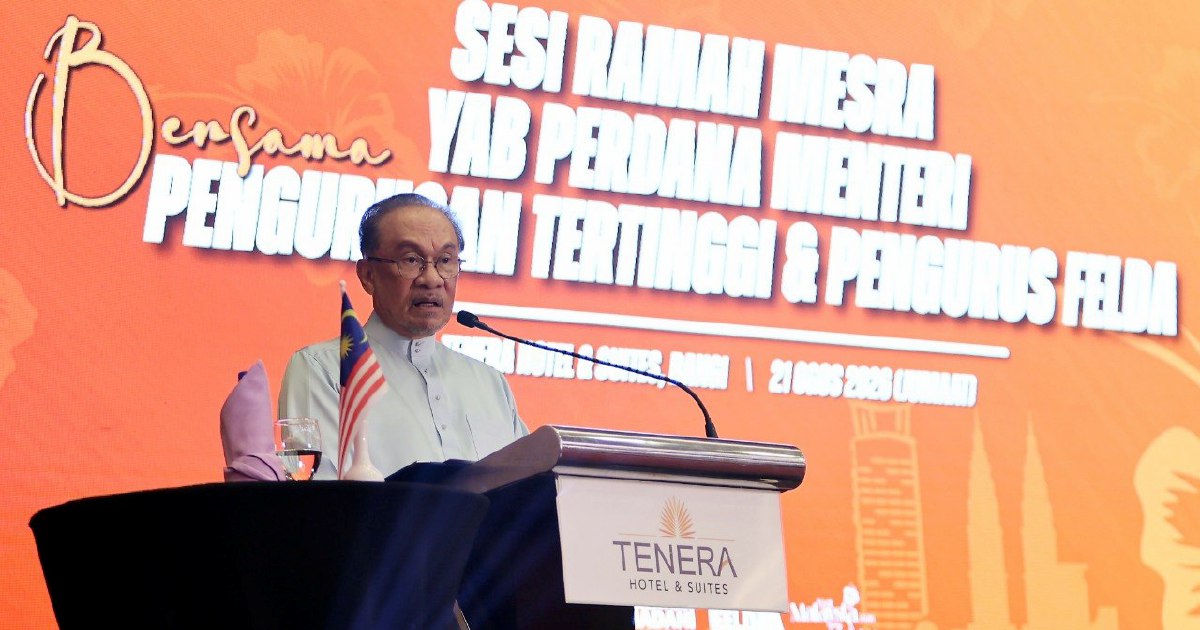
Prime Minister Datuk Seri Anwar Ibrahim confirmed today that a specially constituted task force has begun scrutinising long-standing issues at the Federal Land Development Authority (Felda), signalling the government's commitment to addressing challenges within Malaysia's historic agricultural development agency. Speaking in Bangi, Anwar indicated that the investigation would proceed methodically, with comprehensive findings to be disclosed once the review process reaches its conclusion.
The establishment of this task force represents a significant institutional response to mounting concerns about Felda's operational and financial performance over recent years. The authority, which has played a pivotal role in developing agricultural settlements across Malaysia since its founding, has faced various governance and management questions that have prompted calls for systematic evaluation and reform. The timing of this intervention reflects broader efforts by the current administration to ensure accountability and transparency across government-linked organisations.
Felda's challenges have become increasingly visible to the Malaysian public, particularly regarding agricultural productivity, settler welfare, and the economic sustainability of its operations. The task force's mandate appears designed to comprehensively examine these interconnected issues and identify root causes of persistent difficulties. Such investigations are crucial for an authority managing substantial land resources and affecting thousands of settler families whose livelihoods depend directly on Felda's effectiveness and support systems.
The composition and specific terms of reference for this task force remain important considerations for stakeholders including Felda settlers, agribusiness operators, and investors. The credibility of any investigation into a major government agency depends significantly on the expertise, independence, and resources allocated to it. Investors and industry observers will be watching to determine whether the task force has sufficient scope and authority to examine all relevant aspects of Felda's operations, including land management, agricultural practices, financial controls, and settler engagement mechanisms.
For the broader agricultural sector in Malaysia, Felda's performance carries strategic implications. The authority controls millions of hectares and represents a substantial portion of the nation's organised agricultural base. Weaknesses in Felda's operations can affect Malaysia's agricultural productivity metrics and global competitiveness in key commodities. A thorough investigation could therefore yield insights valuable not only for Felda's internal reforms but also for strengthening the agricultural sector more comprehensively.
The undertaking also reflects international best practices in governance, where major state institutions periodically undergo structured reviews to ensure they meet contemporary standards of efficiency and accountability. Such exercises, when conducted transparently with stakeholder engagement, can restore public confidence and provide clear blueprints for operational improvements. However, the effectiveness of the task force will ultimately depend on how comprehensively it investigates, how substantive its recommendations prove, and critically, the speed and rigour with which those recommendations are implemented.
For Felda settlers, many of whom have expressed frustrations about inadequate support, market access challenges, and declining returns on their land holdings, this investigation represents an opportunity for their voices to be heard systematically. The task force's findings could directly influence future policies affecting settler benefits, debt relief, agricultural assistance, and market-linked support mechanisms. Understanding settler perspectives will be essential for any task force seeking to provide practical, implementable solutions rather than purely structural reorganisations.
The announcement also carries implications for Felda's leadership and management teams, who will face scrutiny regarding decision-making processes, resource allocation, and the effectiveness of existing strategies. This heightened accountability environment may catalyse necessary changes in operational approaches and prioritisation of settler interests. Simultaneously, the process must balance critical evaluation with recognition of contextual constraints, including global commodity price fluctuations and broader agricultural industry transitions that have affected many agricultural schemes worldwide.
Southeast Asian observers may also view this investigation as indicative of Malaysia's approach to governance reform and institutional accountability. Neighbouring countries operate similar land development and agricultural settlement schemes, and outcomes from Malaysia's Felda review could offer instructive lessons for agricultural policy across the region. Successful institutional reform requires not just identifying problems but demonstrating the political will to implement solutions, which the government's commitment to releasing findings publicly suggests it intends to do.
The road ahead involves careful navigation of potentially competing interests—ensuring thorough investigation while maintaining operational continuity, implementing reforms without disrupting settler livelihoods, and balancing stakeholder demands with fiscal realities. The task force's ultimate value will be measured by whether its work produces actionable recommendations that genuinely address Felda's systemic challenges and position the authority to contribute effectively to Malaysia's agricultural future and settler prosperity.

