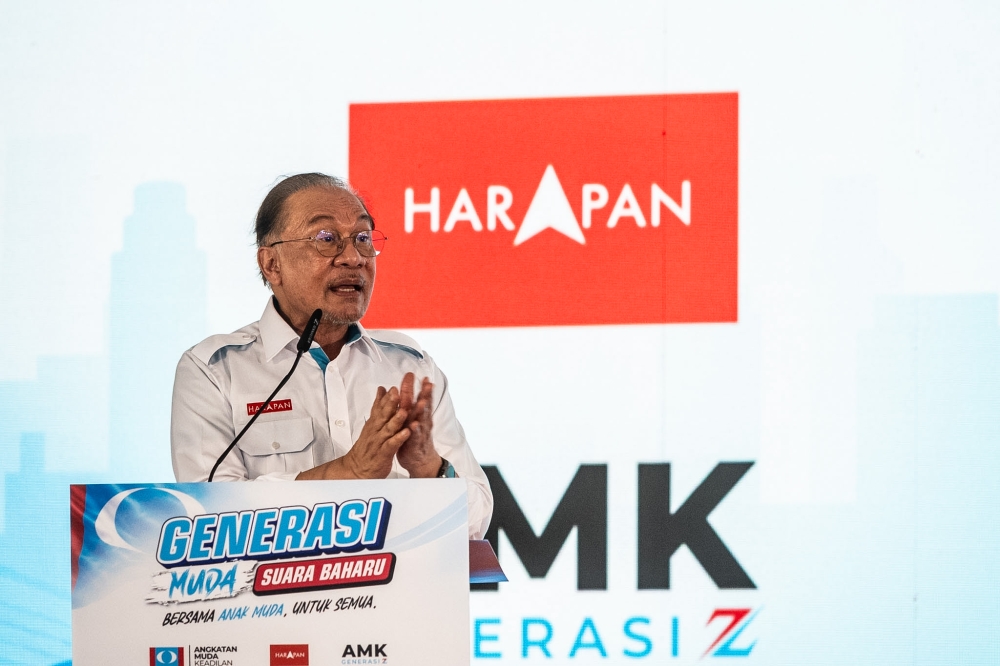
Prime Minister Datuk Seri Anwar Ibrahim has clarified that federal development allocations for Petaling Jaya and Subang have not been withdrawn, but the mechanism for their distribution will effectively exclude legislators who do not support the federal government. Speaking in Petaling Jaya on July 24, Anwar sought to address concerns that his administration had cancelled infrastructure funding for the Selangor constituencies, a narrative that had gained traction among opposition figures and their supporters in recent weeks.
The Prime Minister's remarks represent a recalibration of how development funds flow to parliamentary constituencies, linking infrastructure investment directly to political alignment rather than geographical need or conventional allocation formulas. This approach underscores a broader pattern within the Anwar administration of leveraging federal resources to incentivise political cooperation and consolidate support within parliament, where the coalition government operates with a relatively slim majority. The conditional nature of development funding has become increasingly visible in Malaysian politics, particularly as the government navigates a complex parliamentary arithmetic that requires careful management of political relationships.
Petaling Jaya and Subang, both located in Selangor, are constituencies of significant economic and strategic importance, home to middle-class communities and substantial commercial activity. The constituencies had been represented by opposition MPs whose presence in parliament had posed challenges to certain government legislative agendas. By reformulating how federal development resources reach these areas, Anwar's administration signals that the allocation of public funds operates within a framework that rewards political alignment and potentially penalises opposition. This represents a departure from conventional development administration, where funds are typically distributed according to parliamentary representation and need assessments rather than government support.
The statement itself contains a subtle but important message: the funds remain available, suggesting the government has not abandoned these constituencies economically, but their deployment will proceed through alternative channels. These channels could theoretically include local government structures, state-level administrations where government-aligned parties hold sway, or direct federal project implementation that bypasses the traditional MP-mediated disbursement mechanism. Such workarounds allow the government to claim it has not rescinded development commitments while simultaneously removing the political benefit that would accrue to opposition MPs who could otherwise claim credit for bringing infrastructure to their constituencies.
For Malaysian voters and observers of governance, this approach raises important questions about the relationship between political support and public resource allocation. Development funding forms a crucial component of parliamentary representation, allowing elected officials to deliver tangible benefits to constituents and justify their presence in parliament. When such funding becomes contingent on political alignment, it potentially constrains voter choice and the ability of opposition representatives to serve their communities effectively. It also reflects broader tensions within Malaysia's parliamentary democracy, where coalition governments with narrow majorities face pressure to maintain political discipline through resource allocation mechanisms.
The Selangor context adds another layer of complexity. Although the state is governed by a Pakatan Harapan-led administration, the federal government remains separate and exercises control over federal development funds and major infrastructure projects. Tensions between state and federal governments along political lines have historically created friction in Malaysian governance, and the conditional allocation of federal funds can exacerbate these dynamics. Selangor's position as Malaysia's economic engine means that infrastructure development in constituencies like Petaling Jaya and Subang carries implications for the state's broader competitiveness and growth trajectory.
The political calculation underlying Anwar's statement reflects the realities of managing a diverse coalition government. Since assuming office, the Prime Minister has pursued a strategy of consolidating support through various incentives, including ministerial positions, committee roles, and resource allocation. Development funds represent tangible currency in this political economy, and their deployment according to political loyalty rather than neutral criteria has become an established practice. Opposition MPs, by definition, do not support the government, and the conditional allocation of funds represents a logical extension of this political logic, even if it creates governance complications.
The availability of alternative distribution mechanisms offers the government plausible deniability regarding the politicisation of development funds. Projects can be implemented through federal agencies, state-level authorities aligned with the government, or even private-public partnerships, allowing infrastructure to be delivered without the political credit flowing to opposition representatives. However, this approach also risks creating inefficiencies, as the most direct route for community engagement and project selection—through elected MPs—is deliberately bypassed. It may also generate public cynicism about the politicisation of basic governance functions.
For Malaysian voters in opposition-held constituencies, the implications are potentially significant. Their elected representatives face constraints in their ability to secure and direct resources to their communities, potentially diminishing the tangible benefits of supporting opposition parties. This creates a structural advantage for government-aligned candidates in future elections, as voters may perceive greater returns from electing MPs from the ruling coalition. Such dynamics can gradually shift electoral patterns and political alignment, even in the absence of formal vote manipulation or electoral fraud.
The statement also reflects Anwar's broader governance philosophy, which emphasises pragmatic political management and resource leverage. Rather than simply cancelling allocations, which would provoke opposition and potentially galvanise constituencies against the government, the conditional approach maintains the appearance of fairness while achieving the political objective of rewarding allies. This reflects a sophisticated understanding of political communications and public perception, even as it represents a significant departure from development allocation practices based primarily on parliamentary representation.
Looking forward, the approach signals that development funding will remain an instrument of political management within the Anwar administration. Constituencies represented by opposition MPs should expect continued constraints on federal resource flows, while those represented by government-aligned legislators can anticipate better access. This creates a new reality for Malaysian parliamentarians, where development effectiveness becomes intertwined with political affiliation. The long-term implications for governance quality, constituency service, and democratic representation remain to be seen as this practice becomes further embedded within Malaysia's political system.

