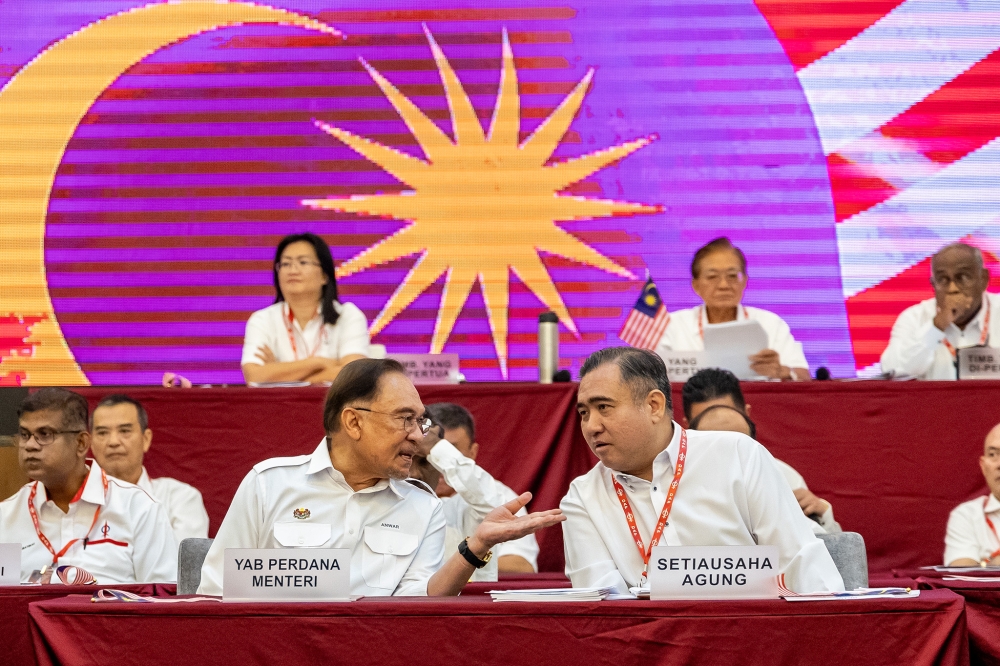
Prime Minister Datuk Seri Anwar Ibrahim has made a direct appeal to Melaka DAP, requesting the party leadership reconsider its announced withdrawal from the state government and remain actively involved in governance until the next state election is held. Speaking in Port Dickson on July 14, Anwar conveyed his position that the party would be better served by staying committed to its current responsibilities rather than exiting prematurely, reflecting his broader strategy of maintaining coalition cohesion within Pakatan Harapan.
The Melaka DAP had previously signalled its intention to step back from the state administration, a move that threatens to destabilise the ruling coalition in the state. This development comes at a sensitive time for the federal government, which continues to navigate the complex dynamics of its multi-party coalition. Anwar's intervention signals the gravity with which the federal leadership views potential fractures in regional power-sharing arrangements, particularly in a state where Pakatan Harapan has been consolidating its position.
Anwar's appeal underscores the delicate balance required to keep diverse political parties aligned within a coalition government. The DAP, which has historically been a significant player in Melaka politics, holds crucial seats within the state legislature. Any withdrawal would not only weaken Pakatan Harapan's legislative majority but also create a precedent that could embolden other component parties to reconsider their own commitments if political disagreements arise.
The timing of the Prime Minister's intervention is strategically important as it demonstrates the federal government's willingness to engage directly with state-level party leadership on governance matters. Rather than allowing the situation to drift toward an unmanaged exit, Anwar has chosen to personally advocate for a reversal, which suggests he views the stakes as substantial enough to warrant his direct involvement. This approach reflects a pragmatic understanding that maintaining the coalition's structural integrity at the state level is essential for its national stability.
Melaka's political landscape has been marked by considerable turbulence in recent years, with the state experiencing multiple transitions in government and recurring coalition tensions. The DAP's contemplated withdrawal must be understood within this broader context of regional political volatility. For a coalition that has faced criticism over leadership transitions and internal disagreements, another rupture in Melaka would represent a setback in demonstrating unified governance.
From a practical governance perspective, an unexpected exit by DAP would complicate the state government's ability to function effectively. Cabinet positions occupied by DAP representatives would need to be reshuffled, and legislative support for government initiatives might become uncertain. The resulting period of transition could expose the state administration to political risks, including challenges to government bills or loss of momentum on development projects.
Anwar's plea also reflects a broader Malaysian political reality: coalition governments require constant maintenance and attention to prevent parties from drifting apart. The statement serves as a public signal to other Pakatan Harapan components that the federal leadership values stability and continuity. It also demonstrates that while individual party autonomy is respected, strategic decisions with broader implications warrant consultation and dialogue at the highest levels.
For DAP, the party faces a decision that carries implications beyond Melaka. Withdrawing from state administration while remaining in the federal coalition could create an awkward position, and conversely, the party's negotiating position within the coalition framework might be affected by its willingness to remain engaged. The party leadership must weigh its internal concerns and grievances against the political costs of destabilising the broader coalition arrangement.
The situation also highlights the tension between party-level autonomy and coalition-wide interests. In Malaysian politics, where coalitions often comprise parties with distinct constituencies and ideological orientations, such friction is not uncommon. However, how these tensions are managed—through dialogue, compromise, or concession—often determines whether coalitions endure or fragment. Anwar's approach of seeking dialogue rather than imposing decisions aligns with the softer management style he has adopted since assuming office.
Looking ahead, the outcome of this intervention will likely set precedent for how future state-level disputes are handled within the Pakatan Harapan framework. If DAP accepts the appeal and remains in government, it would demonstrate the coalition's capacity for self-correction and compromise. Conversely, if the party proceeds with its withdrawal despite the Prime Minister's plea, it would signal that even federal-level pressure cannot always prevent coalition disruptions, raising questions about the robustness of the governing arrangement.
The road to the next Melaka state election remains uncertain in terms of timing, as state elections are not constitutionally bound to a fixed schedule. Anwar's framing of continued service until that election essentially asks DAP to commit to an undefined timeframe, though this is standard practice in Malaysian politics. The appeal ultimately rests on arguments of duty, coalition solidarity, and the importance of providing uninterrupted governance to Melaka's residents, a message designed to appeal to both party leadership and rank-and-file members.
This episode underscores the ongoing challenges facing Malaysia's coalition governments, where managing diverse political interests while maintaining governance effectiveness requires constant negotiation and leadership attention. For observers monitoring the health of Pakatan Harapan, the DAP's response will provide important signals about the coalition's durability and the relative influence of federal-level leadership in shaping state-level decisions.

