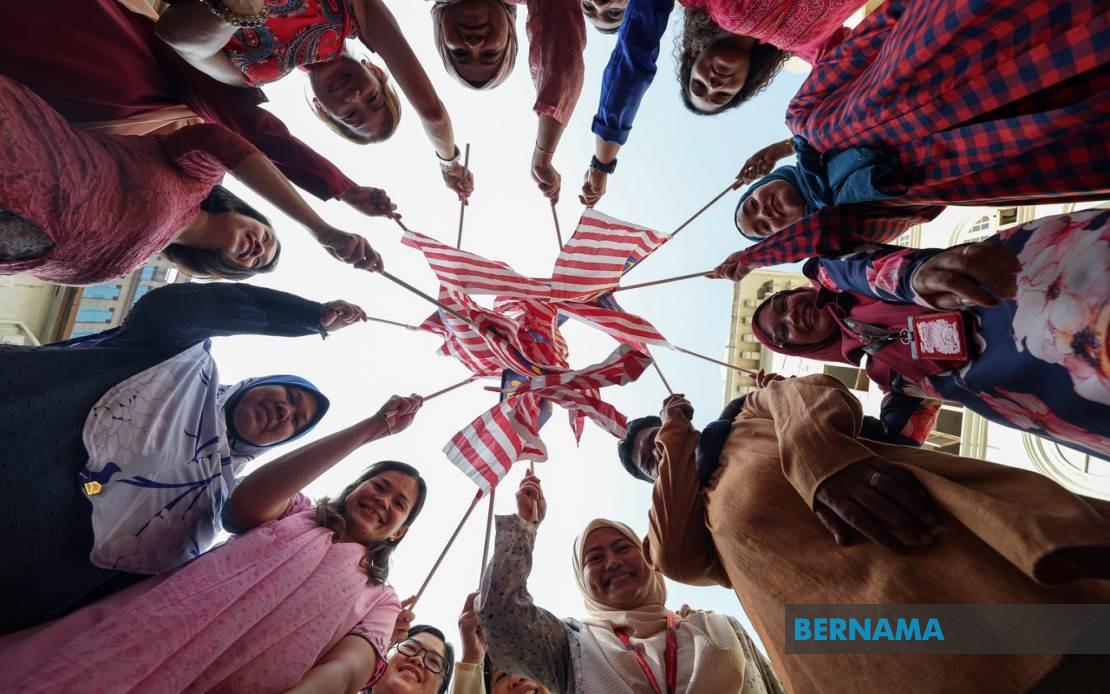
Prime Minister Datuk Seri Anwar Ibrahim issued a stirring call to Malaysians on Friday to serve as vigilant custodians of their nation while championing the cause of ethnic and regional harmony. Speaking through posts on social media and an accompanying video message, Anwar positioned national unity as the central pillar sustaining Malaysia's prosperity and stability, urging citizens to recognise independence not merely as freedom from colonial rule but as the capacity to chart one's own future with confidence and dignity.
Anwar's message arrives at a significant juncture in the national calendar, with Malaysia poised to commemorate its 69th National Day tomorrow under the banner "Malaysia MADANI: Kesejahteraan Dinikmati", a theme underscoring shared prosperity. His exhortation carries particular weight given the contemporary challenges facing multiethnic societies across Southeast Asia, where divisive forces frequently threaten social cohesion. By invoking the sacrifices of preceding generations, the Prime Minister sought to ground his appeal in historical consciousness, reminding Malaysians that the freedoms and institutions they currently enjoy were secured through considerable struggle and bloodshed.
Central to Anwar's articulation is his emphasis that independence represents far more than political sovereignty. Rather, he framed it as a psychological and spiritual condition requiring continuous cultivation—one demanding that citizens possess both the courage to defend their nation and the confidence to believe in their collective capacity to solve shared problems. This conceptualisation resonates with ongoing debates within Malaysian political discourse about what national identity should encompass in an era of competing globalisation and localisation pressures.
Recognising Malaysia's demographic composition, Anwar specifically invoked the country's major ethnic communities. By naming the Malay, Chinese, Indian, Iban, Kadazan, Murut, Bidayuh and Orang Ulu peoples as embodying Malaysian strength, he acknowledged the foundational reality that the nation's viability depends upon sustained intercommunal cooperation. This cataloguing serves a dual purpose: it celebrates Malaysia's diversity while simultaneously drawing attention to the political imperative of preventing ethnic or regional grievances from fragmenting national cohesion.
A notable dimension of Anwar's address concerns his insistence that national interests must supersede parochial ethnic and regional loyalties. This principle, while formally enshrined in Malaysia's founding constitutional arrangements, remains perpetually contested in practical politics. By reasserting it prominently as National Day approaches, the Prime Minister tacitly acknowledged that such tensions persist and require periodic reaffirmation from political leadership. The statement implicitly cautions against the rising tide of identity politics that has characterised recent Southeast Asian elections across multiple jurisdictions.
Anwar furthermore stressed that Malaysia must establish itself as a nation committed to dispensing justice equitably across all segments of its population, with particular attention to marginalised and excluded communities. This framing connects national unity not to abstract patriotic sentiment but to concrete institutional performance. Should the Malaysian state fail to provide fair treatment and economic opportunity to all citizens regardless of background, Anwar suggested, the social compact underpinning national cohesion would face severe strain. This observation carries implications for policymakers tasked with addressing persistent socioeconomic disparities and ensuring inclusive development.
The Prime Minister's call for Malaysians to operate as a unified team, fortify their collective resolve, and defend the nation with maximum vigour echoes rhetoric employed during critical moments in Malaysia's post-independence trajectory. Yet its reiteration serves contemporary purposes, signalling to international observers and domestic audiences alike that the Malaysian government prioritises stability and intercommunal peace. In a region witnessing escalating geopolitical competition and occasional communal tensions, such messaging carries strategic significance beyond its domestic audience.
Anwar's invocation of the "collective strength of all Malaysians" through which independence was attained reframes the independence struggle as a fundamentally multiethnic achievement rather than the triumph of any single community. This historical interpretation, while contested by some Malaysian commentators, aligns with official national narratives that have gradually evolved since Merdeka. By emphasising collective contribution, Anwar sought to establish psychological ownership of the national project across Malaysia's diverse population, fostering identification with shared historical memory and common destiny.
The timing of these remarks, delivered immediately before National Day, reflects standard practice whereby senior Malaysian leaders use the occasion to reflect upon national character and reaffirm foundational principles. However, the particular emphasis upon unity and justice suggests deliberate messaging about contemporary challenges. Whether addressing concerns about rising polarisation, economic inequality, or regional disparities, Anwar's framing positions these issues as existential threats requiring renewed national commitment to founding principles.
For Malaysian readers and observers elsewhere in Southeast Asia, Anwar's message carries broader implications regarding how multiethnic democracies navigate the tension between celebrating diversity and maintaining cohesion. The repeated emphasis upon safeguarding the nation and preserving unity reflects recognition that neither outcome is automatic or guaranteed. Instead, both require conscious effort, mutual respect, and political leadership willing to challenge divisive tendencies. As Malaysia observes National Day tomorrow, these themes will likely reverberate through official ceremonies and public discourse, reaffirming commitments tested periodically by competing visions of national identity and interest.

