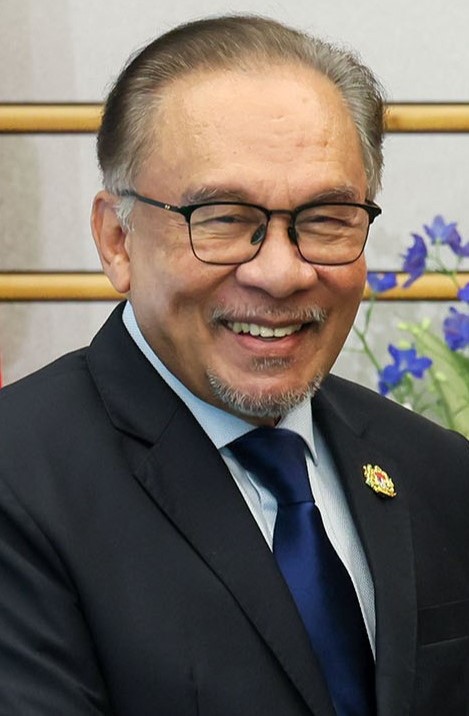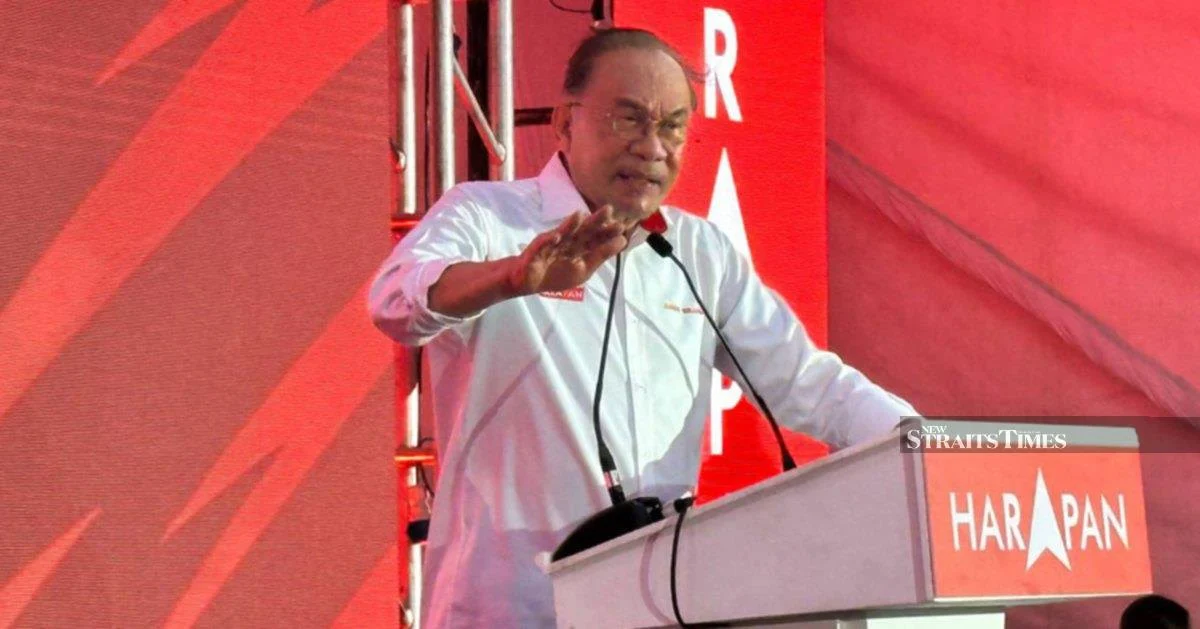
Datuk Seri Anwar Ibrahim, steering Pakatan Harapan through a critical phase of political consolidation, delivered a forceful message to party operatives and coalition leaders gathering in Johor, emphasising the need to maintain internal discipline and focus energy on productive campaign activities rather than public disputes with their government partners. Speaking in Tangkak, the Pakatan Harapan chairman addressed an audience of party machinery responsible for ground-level mobilisation, underscoring that the coalition's strength depends on cohesion and directed effort.
The directive carries particular weight given the delicate balance Pakatan Harapan must maintain within Malaysia's current political architecture. As the largest component of the Madani government formed following the 2022 general election, Pakatan Harapan shares federal power with Barisan Nasional, Gabungan Parti Sarawak, and other coalition partners. This arrangement, while affording the opposition-turned-government the numbers to govern, demands careful management of potentially competing interests and messaging.
Anwar's emphasis on avoiding bickering signals an awareness that public disputes between coalition allies can undermine voter confidence and distract from the substantive work of governance. In Malaysian politics, where perceptions of internal conflict within governing coalitions can rapidly erode public support, such messaging from the top leadership serves as both guidance and recalibration for party activists whose enthusiasm might otherwise translate into counterproductive confrontation.
Johor holds particular strategic significance within this framework. As Malaysia's second-largest state by population and a traditional battleground between competing political forces, the state's political mood often signals broader national trends. The Johor machinery represents crucial ground forces for Pakatan Harapan, tasked with the daily work of voter contact, community organising, and grassroots mobilisation that determines electoral success or failure. By addressing them directly, Anwar was reinforcing expectations about how campaign conduct should proceed.
The coalition's position in Johor has been subject to considerable flux over recent years. The state witnessed significant realignments following the 2020 elections and subsequent political developments, with voter preferences shifting between competing coalitions. For Pakatan Harapan to consolidate support and potentially expand its footprint in the state, maintaining focus on constructive campaign messaging rather than engaging in public disputes with fellow government members becomes strategically essential.
Anwar's message also reflects broader maturation within the coalition's approach to governance. Having transitioned from opposition politics to governing responsibility, Pakatan Harapan leaders have learned that sustaining public confidence requires demonstrating stability and purposefulness. Internecine disputes, particularly those playing out in public forums, undermine that projection and provide ammunition to critics questioning the government's effectiveness and cohesion.
The emphasis on hard work alongside conflict avoidance represents a deliberate calibration. Anwar was not suggesting passivity or compromise on policy positions, but rather that the machinery focus on mobilising supporters, addressing community concerns, and articulating the government's achievements without expending energy on disputes with coalition partners. This approach maximises the political resources available while minimising internal friction.
Within the Malaysian political context, where state-level and federal-level dynamics often diverge, Johor's particular importance to Pakatan Harapan's overall electoral strategy cannot be overstated. The state possesses sufficient seats in parliament to significantly influence national legislative balance. Instructions from the central leadership regarding campaign conduct in the state thus carry implications extending well beyond Johor's borders, setting expectations for how affiliated parties should operate nationwide.
Anwar's intervention also suggests awareness of potential flashpoints within the coalition's Johor operations. Competition for resources, disputes over seat allocation in future elections, or disagreements over policy emphasis could generate public disputes if left unmanaged. By preemptively emphasising the importance of unity and constructive engagement, the party chairman was establishing clear boundaries for acceptable behaviour and signalling that maintaining coalition cohesion trumps internal scoring of points.
The broader context encompasses Malaysia's shifting political landscape, where electoral arithmetic frequently demands coalition-building and cooperation between former adversaries. Under such circumstances, the ability to work professionally with partners while maintaining distinct party identities and policy platforms becomes a defining competency. Pakatan Harapan's electoral success ultimately depends on demonstrating that it can govern responsibly while maintaining the internal discipline necessary for sustained political performance.
For observers monitoring Malaysian politics, Anwar's remarks reflect the complex realities facing any governing coalition in a fractionalised political system. The tension between maintaining coalition unity and preserving party distinctiveness requires constant navigation. His emphasis on work and the avoidance of bickering thus represents not merely a procedural directive but an acknowledgment of these underlying pressures and an attempt to manage them before they metastasise into serious internal divisions.