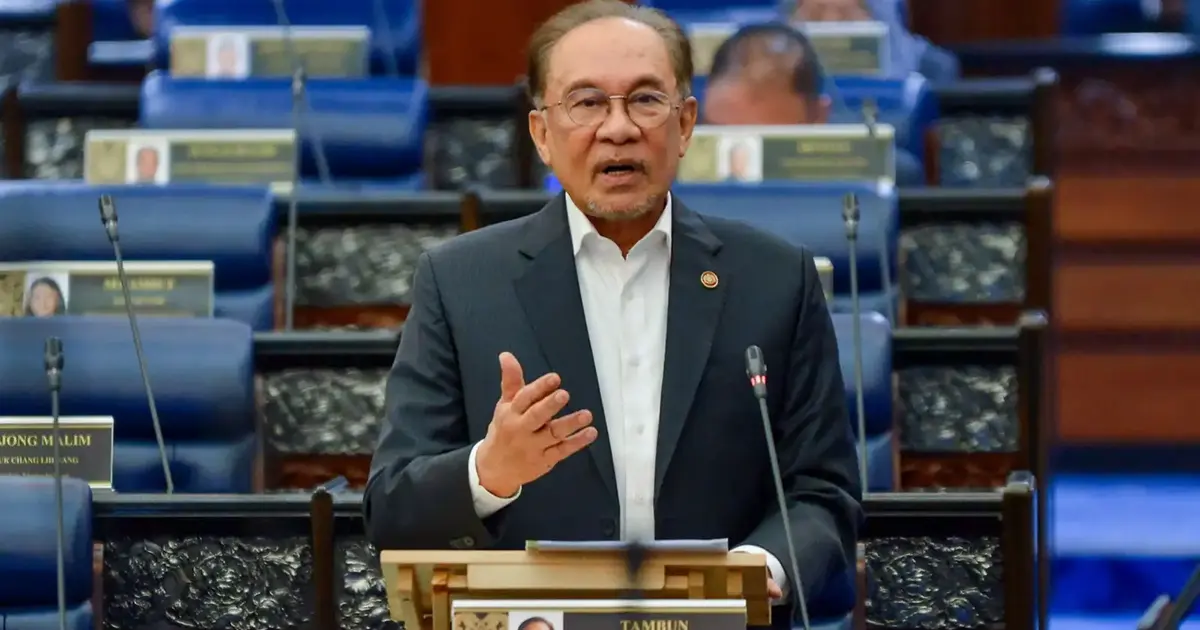
Prime Minister Anwar Ibrahim has once again firmly pushed back against mounting pressure to call an early general election, contending that the electorate would rather see the government complete its reform programme than face yet another round of political upheaval. The assertion underscores a strategic decision by the administration to maintain its current parliamentary majority and pursue its economic agenda without the disruption of premature polling, a position that reflects broader concerns about the cost of frequent electoral contests in a nation already grappling with fiscal challenges.
The Malaysian leader's stance addresses a persistent undercurrent of speculation within political circles regarding the timing of the next general election, which under normal circumstances is not constitutionally required until 2027. Various factions have periodically called for an earlier mandate renewal, citing their own electoral confidence or policy disagreements. However, Anwar's repeated rejection of these overtures signals an unwavering commitment to the current timeframe and suggests the administration believes it can accomplish its objectives within this window.
Anwar's reasoning hinges on a fundamental assertion about voter preferences: that Malaysians, particularly those grappling with inflation, employment concerns, and cost-of-living pressures, harbour little appetite for the uncertainty and expense inherent in electoral campaigns. This framing positions the government as servant of the electorate's pragmatic interests rather than captive to the ambitions of rival political operators seeking opportunities to reshape the parliamentary landscape. By invoking economic imperatives and public sentiment, the Prime Minister creates a narrative in which electoral stability directly correlates with prosperity.
The government's emphasis on stability resonates against a backdrop of macroeconomic challenges that have defined much of Southeast Asia's recent experience. Malaysia's economy, whilst relatively resilient compared to several regional peers, has nonetheless faced headwinds from global supply chain disruptions, shifting monetary policy in developed economies, and sector-specific vulnerabilities. Within this context, the constant speculation surrounding early elections could theoretically dampen business confidence and investor sentiment, creating additional friction for policymakers attempting to sustain growth momentum.
Beyond abstract economic arguments, the government's desire to avoid early elections carries practical parliamentary implications. The current coalition configuration, particularly the mechanisms through which Anwar secured his position as Prime Minister, represents a delicate equilibrium involving multiple political entities with sometimes competing objectives. An early election would fundamentally disrupt this arrangement and introduce considerable uncertainty about which coalition might ultimately govern. The administration's stability position therefore reflects not merely economic philosophy but also realpolitik assessment of the risks inherent in returning to the polls prematurely.
The rejection of early election calls also permits the government to pursue potentially contentious reforms that, whilst economically sound, might prove temporarily unpopular. Subsidy restructuring, fiscal consolidation measures, and targeted tax adjustments often face public resistance in their initial phases, though they may yield benefits over longer horizons. An electoral calendar measured in years rather than months provides breathing room for such policies to generate observable improvements before the government faces voter judgment. This temporal advantage could prove decisive in determining whether reform initiatives achieve their intended outcomes or become political liabilities.
For Malaysian business leaders and investors, Anwar's position offers an implicit guarantee of continuity, at least through the medium term. This certainty permits more confident medium-term planning, capital allocation decisions, and sectoral investment strategies that might otherwise remain constrained by electoral uncertainty. Foreign direct investment flows similarly benefit from reduced political risk premiums, a consideration of particular importance for Malaysia's positioning as a regional investment destination relative to competitors in Thailand, Vietnam, and Indonesia.
The Prime Minister's repeated emphasis on voter preferences for stability over campaigns also functions as a rhetorical tool to delegitimise opposition calls for early elections. By claiming to channel popular sentiment rather than partisan interest, Anwar occupies higher moral ground in political discourse, characterising those demanding earlier polling as self-interested politicians disconnected from public wishes. This framing strategy becomes particularly potent if public opinion data consistently validates the assertion that Malaysians do indeed prioritise economic performance over electoral activity.
However, the sustained rejection of early election calls raises questions about the robustness of the current coalition's parliamentary position. If the government truly possessed commanding electoral confidence and stable legislative support, early elections might appear less threatening. The repeated emphasis on patience and completion of the mandate potentially signals awareness that current political arithmetic remains sufficiently delicate that any dissolution would introduce unacceptable risk. This dynamic underscores the degree to which Malaysian governance continues to operate within margins that preclude comfortable majorities and therefore depends heavily on coalition discipline and willingness to weather criticism.
The government's position also reflects international considerations. Regional stability and Malaysia's economic relationships with major trading partners arguably benefit from predictable governance transitions and policy continuity. A government consumed by electoral campaigning might struggle to maintain focus on bilateral relationships, multilateral engagement, and institutional coordination. In this sense, Anwar's emphasis on completing the mandate encompasses not merely domestic economic objectives but also Malaysia's broader strategic positioning within regional and global contexts.
Looking forward, the dynamic between the government's stability narrative and opposition pressure for early elections will likely define much of Malaysian political discourse through 2026. The Prime Minister's consistent messaging suggests this represents a deliberate, sustained strategy rather than ad hoc response to particular criticism. If economic performance validates the stability argument, Anwar's position will strengthen considerably. Conversely, if Malaysia's economic trajectory disappoints or significant policy failures emerge, early election demands may gain considerable traction despite current official resistance.

