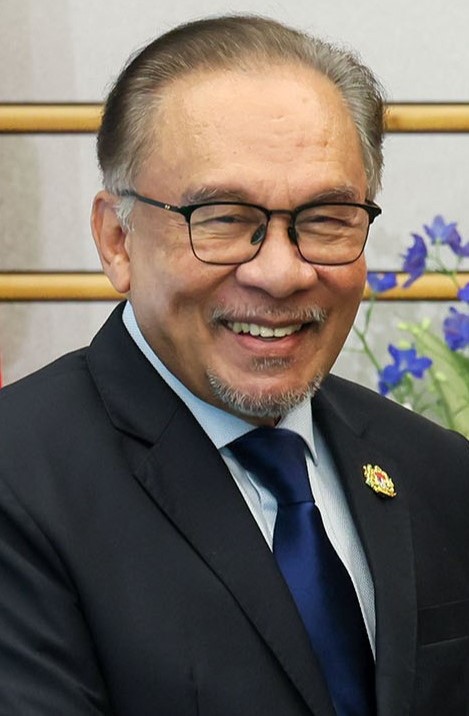
Pakatan Harapan (PH) chairman Datuk Seri Anwar Ibrahim has drawn a clear line between electoral competition and institutional boundaries, calling for the forthcoming Johor state election to unfold as a purely political contest without the participation of Malay Rulers' institutions. Speaking in Tangkak, Anwar articulated a vision of democratic elections that remains insulated from royal involvement, a stance reflecting broader questions about the separation of electoral processes from traditional monarchical structures in Malaysian politics.
The timing of Anwar's remarks carries significance given the historical relationship between Johor's sultanate and state governance. The Johor sultanate has long occupied a prominent position in the state's political landscape, with the institution wielding considerable cultural and symbolic authority. Anwar's intervention suggests underlying concerns about the boundaries of institutional influence during electoral cycles, particularly in a state where royal and political structures have traditionally maintained close connections. His emphasis on keeping the election within the political realm indicates an effort to establish clarity about appropriate roles during campaign periods.
The Pakatan Harapan coalition has positioned itself as an advocate for institutional boundaries and constitutional propriety since returning to electoral prominence. By explicitly stating that the election should remain a political battle, Anwar underscores his commitment to protecting the integrity of democratic processes from external institutional pressures. This messaging resonates with coalition supporters who view the separation of powers and institutional independence as fundamental democratic principles. The clarity of Anwar's position suggests that the coalition intends to actively protect electoral autonomy from any perceived encroachments.
For the Johor electorate, these remarks establish a framework for evaluating campaign conduct in the coming months. Voters concerned about the propriety of institutional involvement in electoral matters have received explicit assurance from opposition leadership that the coalition will oppose any blurring of lines between traditional institutions and political competition. This positioning may prove influential among urban and younger voters who place particular emphasis on institutional neutrality during elections. The message appeals to those who view the role of sultans as ceremonial rather than interventionist in electoral outcomes.
The broader context involves Johor's status as a strategically important state that has been ruled by Barisan Nasional (BN) for decades. Control of Johor would represent a significant achievement for Pakatan Harapan and fundamentally alter the political map in the crucial southern region adjacent to Singapore. Any suggestion of external institutional support for either coalition carries potential ramifications for perceptions of electoral fairness. Anwar's preemptive clarification may be partly defensive, establishing a narrative where the opposition frames itself as the guardian of proper institutional conduct.
For Malaysian constitutional scholars and observers of democratic practice, the demarcation between royal institutions and electoral processes remains an evolving question. While sultans in Malaysia retain significant ceremonial roles and symbolic authority, the extent to which such institutions should engage during electoral campaigns continues to generate discussion. Anwar's statement reflects a particular interpretation of constitutional propriety, one that argues for maximum separation between traditional rulers and electoral competition. This perspective aligns with Westminster-style separation concepts though it may differ from other constitutional interpretations that view royal institutions as entitled to more active roles in political matters.
The statement also addresses regional considerations important to Malaysian politics. As Southeast Asian democracies continue developing governance frameworks balancing traditional institutions with modern democratic principles, Malaysia's approach carries regional significance. How the country manages the relationship between sultanates and electoral processes influences broader patterns of institutional development across the region. Anwar's position signals that opposition leadership intends to monitor this boundary carefully throughout the campaign.
From a practical campaign standpoint, Anwar's remarks establish expectations for both coalition behavior and acceptable conduct from other actors. By explicitly prohibiting royal institutional involvement, the statement creates benchmarks against which Johor voters can evaluate all political actors' adherence to democratic norms. Should any instances arise where royal institutions appear to favor particular candidates or parties, Anwar's pronouncement provides a reference point for public scrutiny and criticism. This preemptive clarity serves tactical purposes while also articulating genuine principles about democratic governance.
The Johor election represents a crucial test of electoral competition in a state long dominated by BN governance. Pakatan Harapan's growing presence in Johor has created genuine two-coalition contest dynamics not witnessed previously in decades. Against this backdrop of intensifying political competition, clear institutional boundaries become particularly important for maintaining public confidence in electoral integrity. Anwar's intervention acknowledges this reality by seeking to establish and reinforce those boundaries before the campaign formally intensifies. How strictly these principles are observed throughout the election campaign will provide important lessons about Malaysian political maturity and institutional respect across the opposition and government coalitions alike.