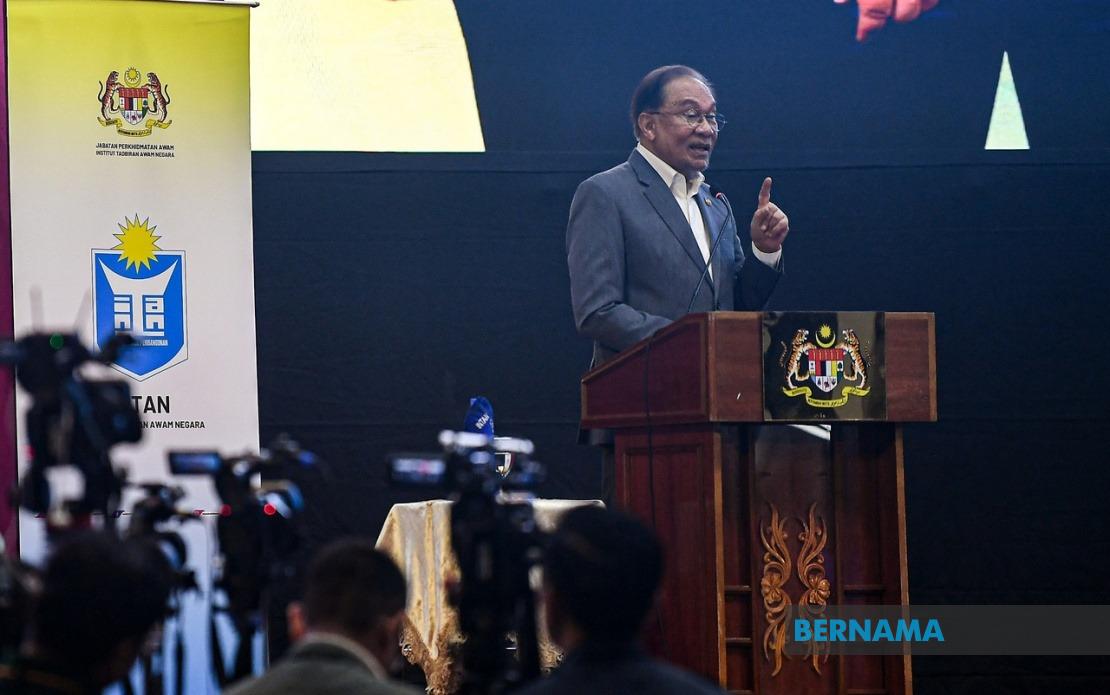
Prime Minister Datuk Seri Anwar Ibrahim acknowledged on July 20 that his direct and forceful manner when addressing civil servants at recent engagements may have struck some observers as excessively stern, offering an apology for any negative impression created. Speaking from an address delivered at Universiti Islam Selangor alongside Chief Secretary to the Government Tan Sri Shamsul Azri Abu Bakar during a gathering with Central Zone civil servants, Anwar issued his comments through a Facebook video, suggesting that he had received feedback about his communication style warranting a public clarification.
The Prime Minister indicated that he was conscious of the expectations placed upon the nation's chief executive regarding demeanor and composure. He noted that various observers had counselled him that his elevated voice and forceful delivery did not align with the traditional expectations of a Prime Minister's public presence. According to Anwar, the guidance he had received stressed that projecting calm, measured speech and maintaining collegial engagement represented the preferred approach to addressing audiences. He underscored that he was consciously attempting to moderate his communication style in response to this feedback, suggesting an awareness of the gap between his natural inclination toward passionate expression and the conventions governing high office.
However, Anwar clarified that his firmness stemmed not from a desire to intimidate or demean the civil service but rather from genuine conviction about critical governance matters. He explained that when subjects aligned with his core values or triggered emotional resonance, he found himself compelled to articulate his position with considerable force. This distinction proved crucial to understanding his position: the Prime Minister was not rejecting the notion that his tone required adjustment, but rather contextualising why he believed such passionate expression remained warranted in certain circumstances. He appealed for understanding that his emotional engagement with policy matters reflected authentic commitment rather than inappropriate presidential comportment.
Anwar's framing of his relationship with the civil service revealed important assumptions about accountability within Malaysia's bureaucratic apparatus. By directing his firm words toward the Central Zone civil servants gathered at Universiti Islam Selangor, Anwar positioned the administrative machinery as the crucial instrument through which his government's ambitions would either succeed or falter. His argument implied that insufficient urgency or commitment among civil servants represented an existential threat to national development objectives. This perspective suggests a Prime Minister deeply concerned that the pace and quality of policy implementation may not match the scale of challenges confronting Malaysia.
The incident reflects broader questions about leadership style and effectiveness in Malaysian politics. While previous Prime Ministers have occasionally adopted stern approaches toward the civil service, the public acknowledgment of criticism and the accompanying apology suggested either that the feedback had been more pointed than usual or that Anwar remained sensitive to perceptions of aggressive governance. The decision to address the matter through social media rather than in parliament or through formal government channels indicated an attempt to reach ordinary Malaysians directly and frame the narrative around his leadership philosophy.
From a civil service perspective, Anwar's comments carried implications for workplace morale and institutional relationships. Public acknowledgment that the Prime Minister's manner had been perceived as harsh risked demoralising those already operating under considerable pressure to deliver tangible results. Conversely, his emphasis on the civil service's centrality to national success could be read as recognition that improved performance required more than criticism alone. The apology, qualified though it was, represented a gesture toward rebuilding any fractured confidence between the executive and the administrative apparatus.
The timing of Anwar's clarification during a direct engagement with Central Zone civil servants suggested a deliberate attempt to reset the relationship in person. By speaking to administrators responsible for implementing policies across a substantial portion of the country, Anwar was signalling that he valued their contributions sufficiently to address their concerns directly. The presence of Tan Sri Shamsul Azri Abu Bakar, the country's highest civil servant, lent institutional weight to the occasion and suggested that the civil service leadership endorsed this reconciliatory approach.
Anwar's broader point about the legitimate grounds for passionate advocacy revealed something about his self-conception as Prime Minister. He articulated a vision in which the nation's leader ought to possess the prerogative to express strong feelings about matters of national importance, particularly when directing those feelings toward a receptive audience of governmental machinery. This stance positioned emotional intensity as compatible with effective leadership, provided that the intensity served genuine national interests rather than personal grievance. For Anwar, the distinction between appropriate and inappropriate demonstrations of feeling hinged on whether his words aimed at spurring better policy delivery.
The Facebook video format itself represented a strategic choice in crisis communication. Rather than issuing a formal statement or permitting his words to be mediated through traditional news organisations, Anwar presented his apology and explanation directly to the public in a conversational tone. This approach allowed him to modulate his message in ways that a pure text statement might not permit, conveying sincerity through facial expression and vocal delivery while avoiding the appearance of coldly calculated political damage control.
Looking forward, Anwar's comments suggested that Malaysia's bureaucracy would likely face continued pressure to accelerate implementation of government priorities, regardless of any adjustment in the Prime Minister's communicative style. The underlying message remained that the civil service bore substantial responsibility for the government's success or failure. Whether Anwar could maintain a modified approach to public engagement with civil servants while preserving the urgency he clearly felt about policy delivery would test his capacity to balance institutional relationships with his deeply felt convictions about leadership.

