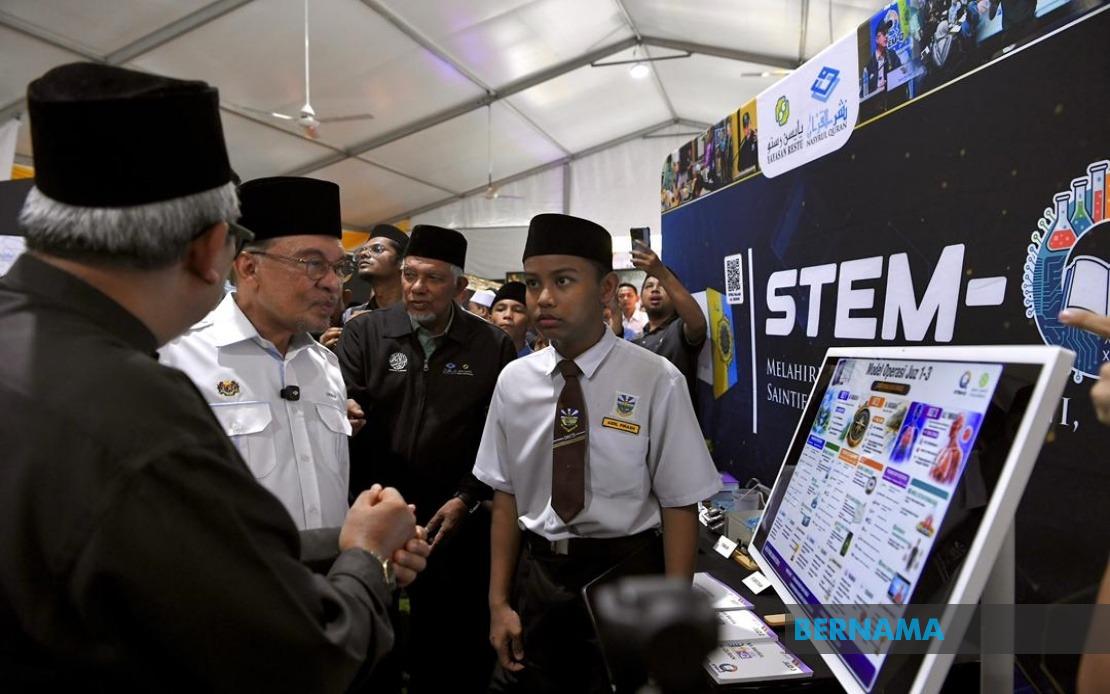
Prime Minister Datuk Seri Anwar Ibrahim has greenlit a significantly expanded funding package worth RM4.6 million to support infrastructure improvements across 27 Islamic educational institutions throughout Penang this year. The substantial injection of resources marks a substantial escalation from the prior year's investment, when the federal government channelled RM2.11 million towards upgrading facilities at 11 Islamic schools in the state. Speaking at the National Tadabbur Perdana and Maidah Wanita MADANI Permatang Pauh programmes at Masjid Muhajirin in Butterworth, Anwar, who concurrently serves as Finance Minister, outlined the breadth of the renovation initiatives that the fresh allocation would enable.
The upgrading works encompassed by this year's funding envelope represent a comprehensive approach to modernising the physical infrastructure supporting Islamic religious education across Penang. The improvements span construction of protective structures such as walls and fencing, structural enhancements to madrasahs and conventional schools, development of dedicated kindergarten facilities for younger learners, and establishment or expansion of tahfiz academies designed specifically for Quranic memorisation programmes. This diversified portfolio of projects reflects government recognition that robust physical environments are foundational to delivering quality Islamic education, from early childhood through to advanced Quranic studies.
The doubling of financial commitment year-on-year signals the administration's prioritisation of religious education infrastructure within its broader developmental agenda. For stakeholders in Penang's Islamic educational sector, the accelerated funding trajectory provides greater certainty for planning multi-year renovation projects that require sustained investment. The expansion also suggests the government perceives inadequacies in existing facilities that warrant urgent remediation, particularly given the proliferation of Islamic learning institutions across a densely populated state.
Anwar emphasised during his remarks that the government remains steadfastly committed to identifying and addressing the material needs of religious schools operated by communities, framing such support as essential to fortifying the broader ecosystem of religious education throughout Malaysia. This positioning reflects a strategic understanding that Islamic schools, many operating with limited independent resources, depend on government partnership to maintain standards and expand capacity. The allocation demonstrates practical governmental commitment beyond rhetorical endorsements of religious education's societal importance.
Beyond conventional infrastructure development, the Prime Minister articulated a forward-looking vision for Islamic education that integrates technological advancement with traditional scholarship. He advocated for Islamic institutions to embrace artificial intelligence and digital tools as means of enhancing instructional delivery in Quranic studies and broader Islamic curriculum. This perspective acknowledges that contemporary Islamic education cannot remain isolated from technological transformation reshaping educational delivery globally, and that Quranic scholarship and Islamic jurisprudence remain intellectually robust disciplines capable of benefiting from computational innovations.
Yet Anwar introduced an important caveat into this technology-adoption narrative, stressing that artificial intelligence and other digital tools must remain firmly anchored to robust ethical and moral frameworks. His warning that AI should not be deployed merely for skills development divorced from values and moral grounding reflects anxieties prevalent across Muslim-majority societies regarding algorithmic systems potentially operating outside traditional Islamic normative constraints. This cautionary stance balances technological optimism with concern that automation might bypass rather than strengthen the moral and spiritual dimensions essential to Islamic pedagogy.
The Prime Minister further encouraged Malaysian society to utilise the freedoms guaranteed within the country's constitutional and political framework to independently organise and expand religious educational programming at community level. He specifically highlighted the pedagogical value of sustained Quranic study circles (Quran classes), tadabbur sessions focused on deep reflection and interpretation of Quranic meanings, and scholarly religious lectures delivered by qualified teachers. This encouragement acknowledges that formal institutional structures, while important, represent only one dimension of Islamic educational transmission, and that supplementary community-based learning activities strengthen believers' comprehension and appreciation of Islamic teachings.
Anwar's remarks underscored a government perspective that understanding Islam authentically requires ongoing, systematic engagement with religious texts and teachings rather than passive reception of inherited traditions. The emphasis on continuous programming and deepening public understanding suggests concern that Islamic knowledge and practice in contemporary Malaysia risks becoming superficial or disconnected from foundational theological and ethical sources. By promoting robust learning initiatives, the government positions itself as supporting the conditions enabling Muslim Malaysians to develop coherent, intellectually grounded Islamic worldviews.
For Penang specifically, this funding allocation carries particular significance given the state's distinct political trajectory and the historical tensions between state-level and federal administration over religious affairs policy. The substantial federal investment in Penang's Islamic institutions may be interpreted partly as demonstration of inclusive governance extending federal resources across states regardless of partisan political divisions. For observers tracking centre-state relations and federalism in Malaysia, the allocation exemplifies how religious education funding can function as tool of political integration and national cohesion.
The expansion of support for Islamic educational institutions also resonates within Malaysia's broader policy environment addressing concerns about religious education quality, standardisation, and alignment with national development objectives. By directing federal resources toward infrastructure improvements enabling institutional modernisation, the government addresses complaints that many Islamic schools operate with inadequate facilities. The particular emphasis on early-childhood Islamic education through new kindergarten buildings reflects recognition that foundational religious formation at younger ages may produce lasting effects on societal religiosity and social cohesion throughout subsequent life stages.

